

This post contains affiliate links. Please see our disclosure policy.
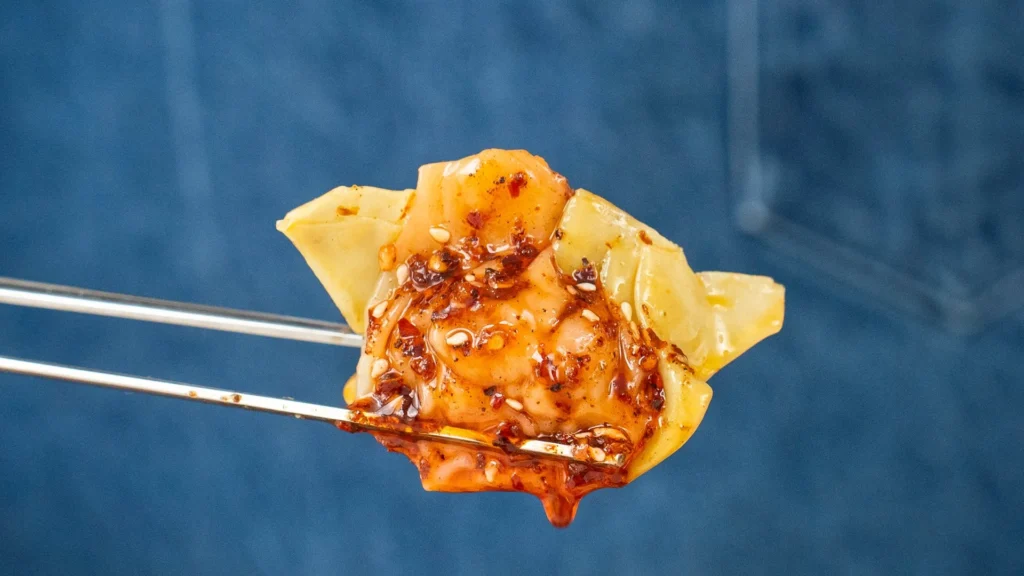
Silky pork wontons, drowned in a glossy szechuan-style chili oil that’s spicy, fruity, sweet, and tongue buzzing… the best dumpling experience I’ve had. Possibly Ever.
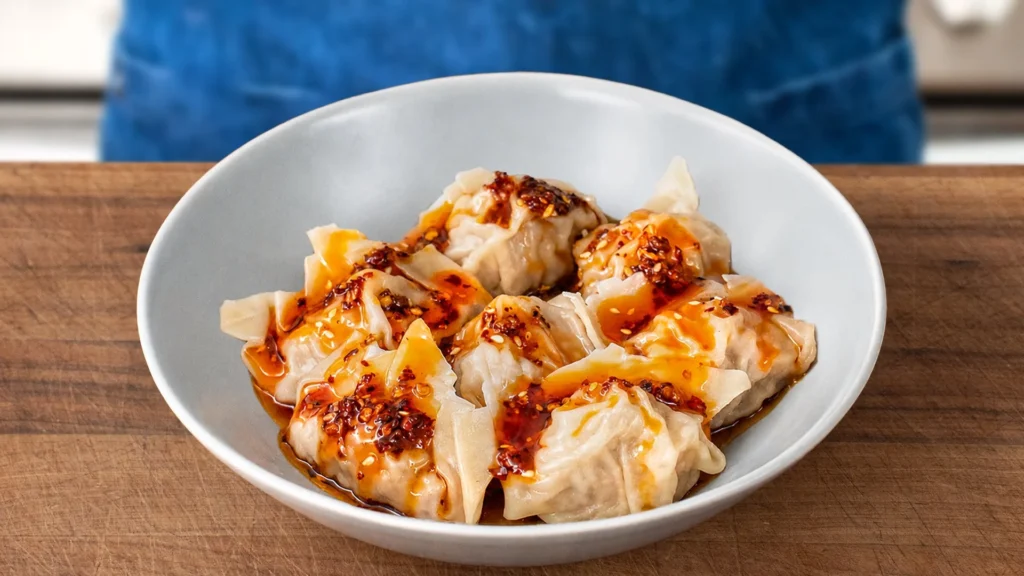
Table of Contents
Why This Chili Wonton Recipe Delivers
Most wontons made at home have a dry, crumbly filling that falls out of the wrapper. Here, we fix that by adding an egg and whipping the pork until it gets very sticky and springy. The whipping keeps the filling juicy, helps hold its shape, and bond it tightly to the wonton wrapper.
For the chili oil, I use a combination of chili products and a two-stage infusion to pull out maximum fruity chile flavor while keeping the heat level in check. Then, to make sure the sauce actually clings to the wontons instead of sliding off, I use a Chinese restaurant trick to thicken the sauce and help it coat every wonton in glossy, spicy, savory flavor.
Brian’s Pro Tips
Sticky Meat – Don’t just mix the pork with the seasonings, WHIP IT. Aggressively. Imagine your hand is a stand mixer and work the mixture until it is VERY sticky. This develops “myosin” which is one of the proteins that binds meat proteins. It will help the dumpling adhere to the starch in the wrapper and will make for a unified dumpling experience. I hate it when the filling falls out once you bite into it.
2-Stage Chile Infusion – I like to split the gochugaru in half. If all of it goes into the bowl with the rest of the chili oil ingredients, the oil ends up with too much “stuff” in it and it eats more sludgy than saucy. So I infuse half in the oil as it heats, then strain it out. That gives me all the gochugaru flavor and color without all the extra texture.
Refrigerate Resting Dumplings – Once your wontons are folded, put them in the fridge, covered, for 30 minutes. This allows time for the wrapper to pull a little moisture from the filling and helps the two bond together. And a rested wonton holds itself together better in simmering water; a freshly wrapped one tends to split open.
Cook At Lower Temps – Keep the water just below a simmer, about 190-200°F (90°C). A hard boil thrashes the wontons, tears the wrappers, and squeezes the juice right out of the pork. The gentler heat will keep the meat juicy and will make the wrappers silky and tender.
Add Dumpling Water to the Chili Oil – Right before you sauce the wontons, ladle 50-60g of the starchy poaching water into the chili oil and whisk it in. This is a clever trick that good Chinese restaurants use. The starchy water turns the oil into an emulsified, sauce-like glaze that actually clings to the dumpling instead of sliding off. I cannot stress enough how much better the eating experience is with this little bit of water added.
Key Ingredient Notes & Substitutions
Below are some of the key ingredients that I want to call out in this recipe. You’ll find the full list of ingredients and amounts in the recipe card below.
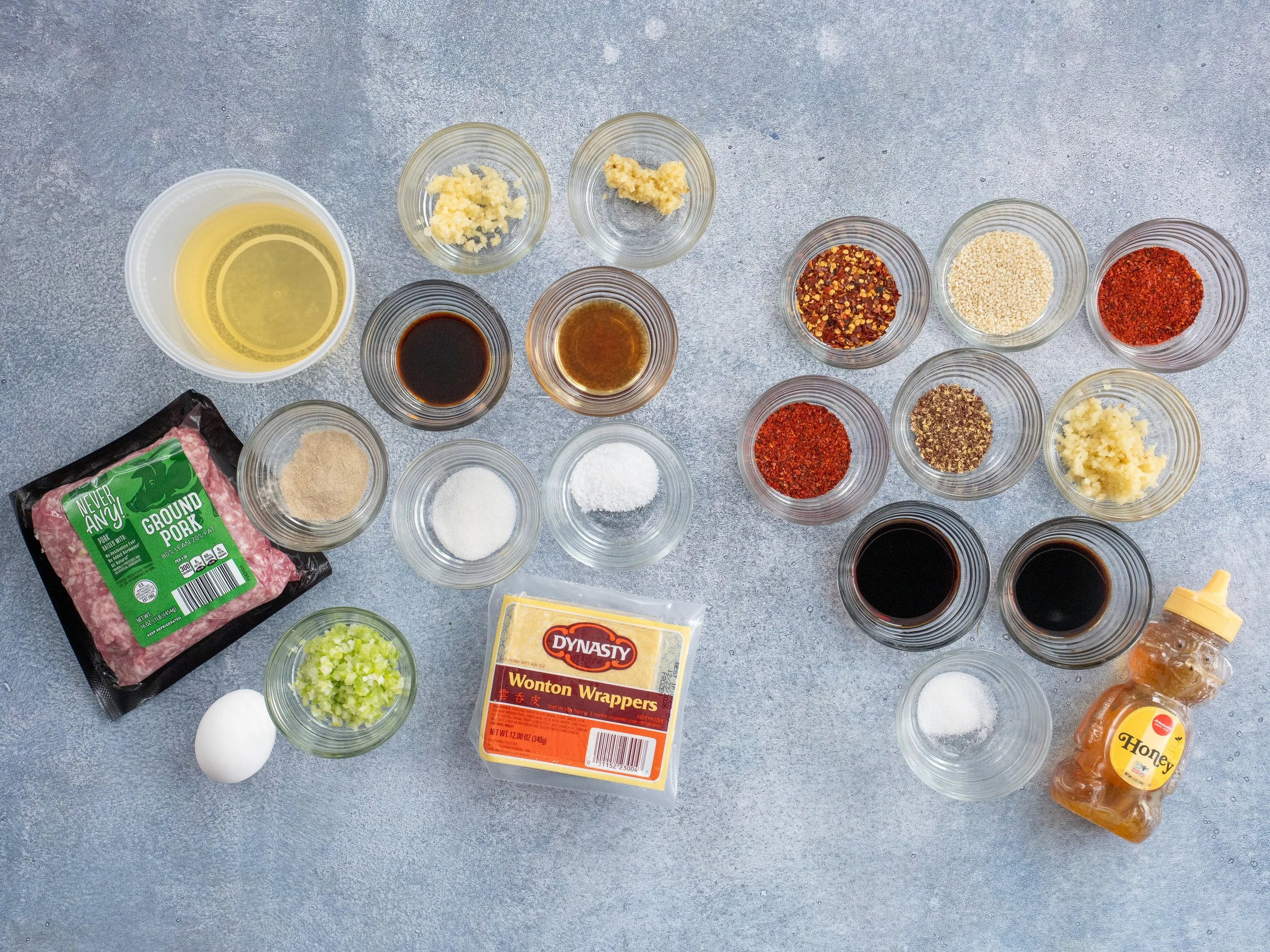
Gochugaru – I know it’s not technically a Szechuan ingredient, but I’m using it for 3 reasons:
- It gives the oil that beautiful deep crimson red color
- Its coarse, flaky texture resists burning in 350°F/175°C oil better than finer grind chili flakes AND…
- Its flavor is intensely fruity with only mild heat. If you want to throttle spice, it’s easier to do that with the chile flakes. A lot of Chinese chile powders I’ve used are insanely hot and ground fine, so they are harder to work with.
Szechuan Peppercorn – Non-negotiable for this oil. Nothing else gives you that specific tongue buzzing numbness. Or “má” flavor. Black pepper would be tasty in a pinch but it’s not a substitute. Grind the szechuan peppercorns fresh and into a relatively fine powder. Large pieces will explode your palette. If you can’t find szechuan peppercorns locally, here’s a link to where you can get some online. It’s pretty cheap, fun to use, and keeps for a long time.
Chinese Black Vinegar – Adds a deep, slightly funky, almost roasted-fruit acidity that brightens the oil and balances the honey and chili heat. Balsamic is the closest sub if you’re stuck. It has a similar roasted/rotten-fruit thing going on. Rice vinegar can also be subbed in a pinch, but you’ll lose the depth.
Wonton Wrappers – The best place to find wonton wrappers is the international grocery store. That said, a lot of conventional groceries also have them in the freezer section. I prefer to thaw in the fridge. If you thaw them at room temp the wontons can sweat, which slightly increases the likelihood that they stick together and tear when you go to wrap. That’s no bueno.
How To Make Chili Oil Wontons
1. Combine the dry chili oil ingredients. In a heat-resistant mixing bowl, combine 10g of the gochugaru with the chili flake, sesame seeds, ground szechuan peppercorn, and minced garlic. Set the bowl right next to the stove. You’ll be pouring hot oil over this in a few minutes.
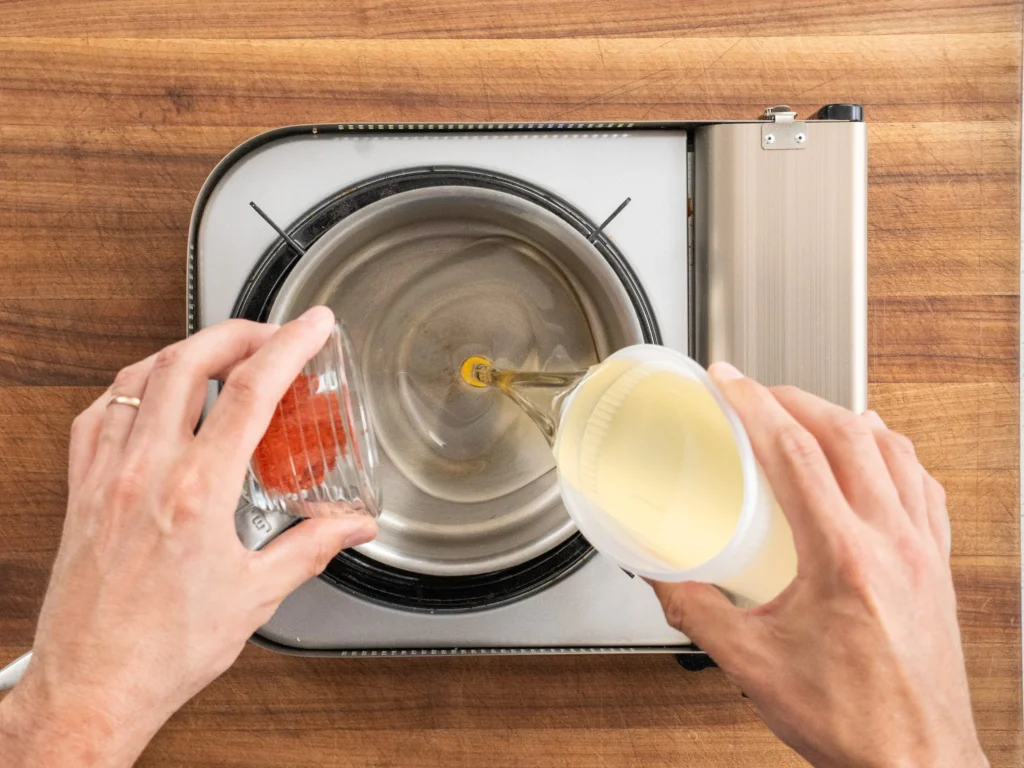
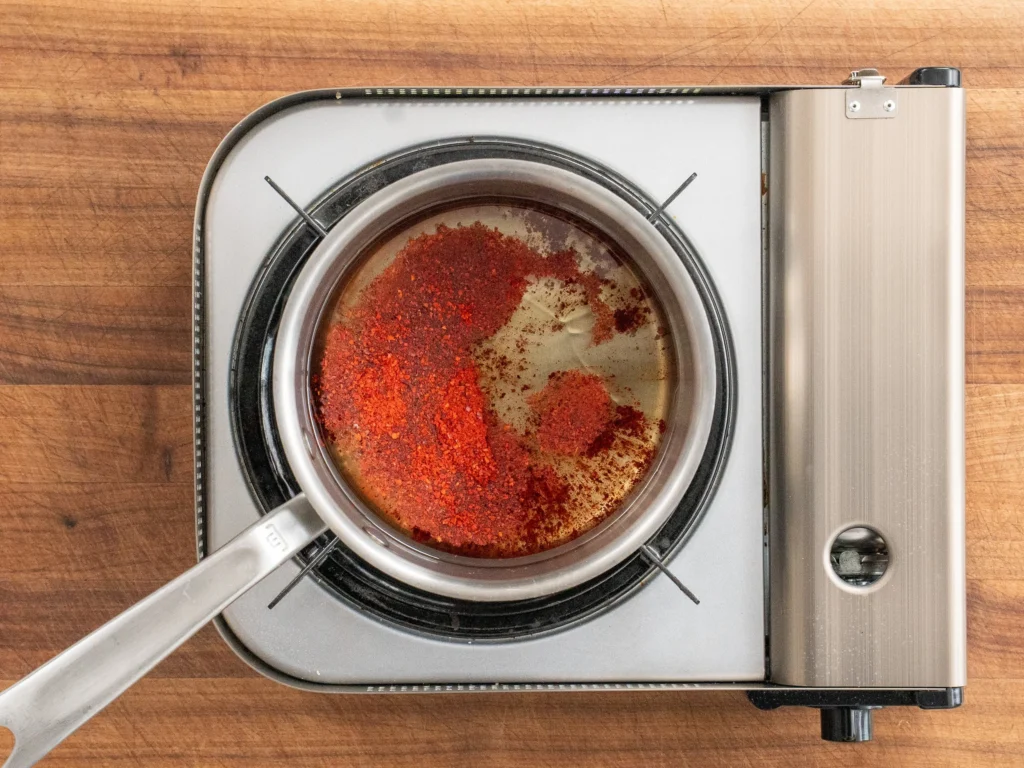
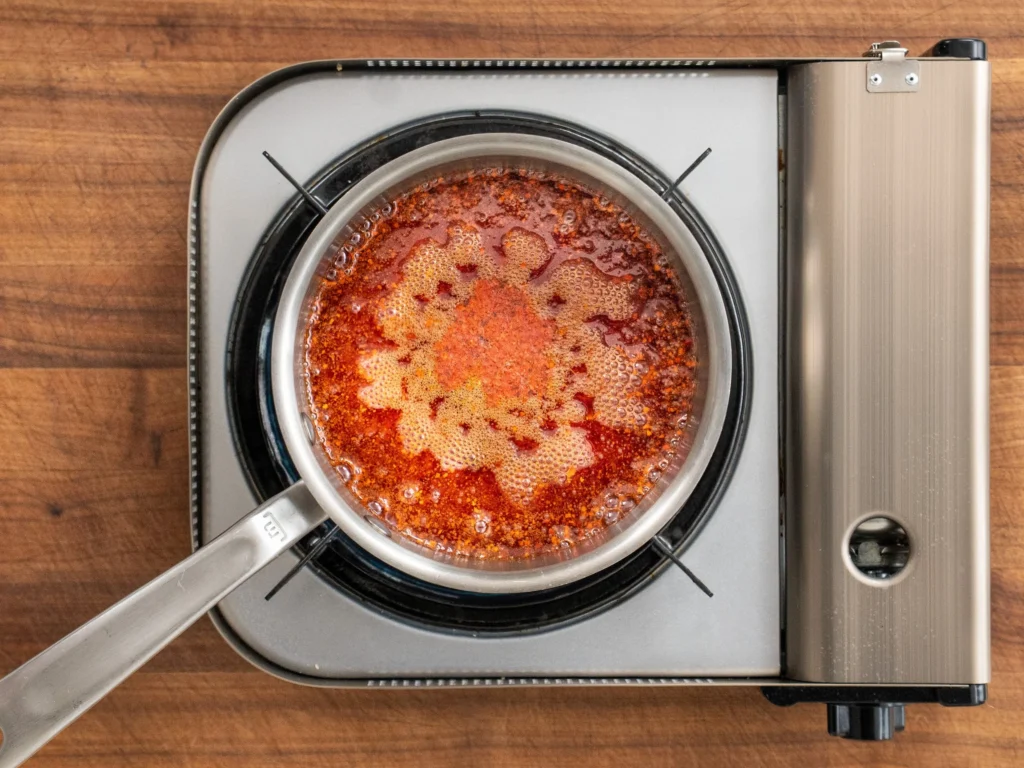
2. Bloom the gochugaru in hot oil. In a small saucepan, add the remaining 10g of gochugaru to 400g of peanut oil. Place over medium heat and bring the oil up to 350°F/175°C, stirring occasionally. Once the chili powder starts to sizzle steadily and turn a darker red, and the oil itself takes on a deep orangish-red color, it’s ready to strain. This usually takes 4-5 minutes.
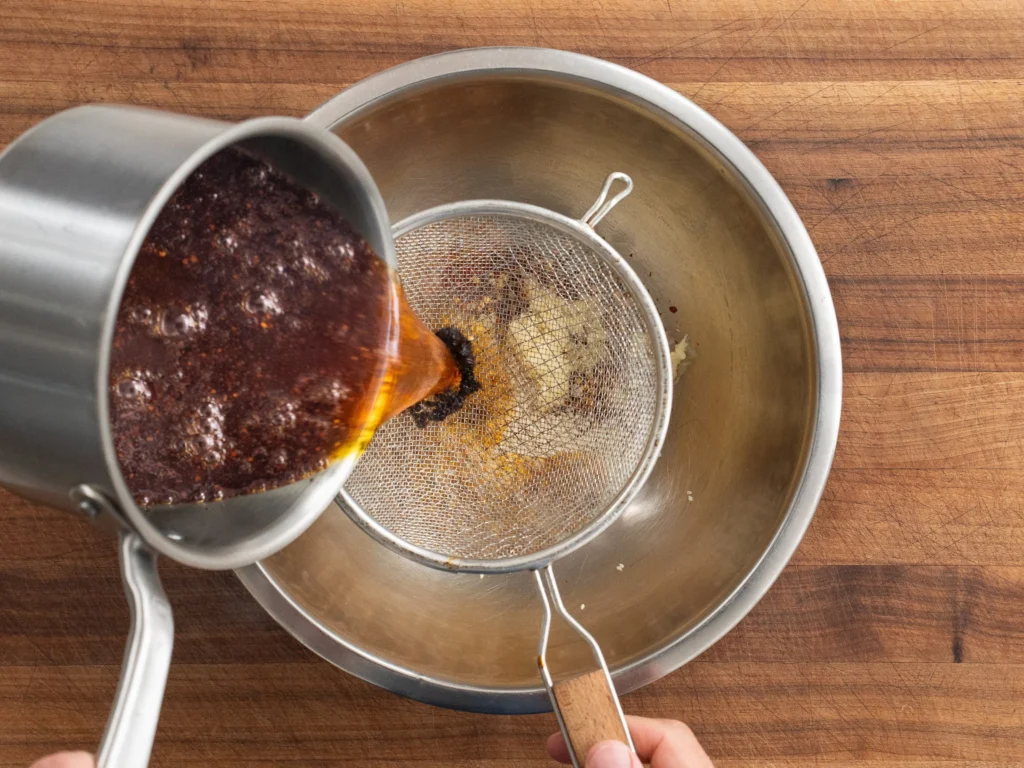
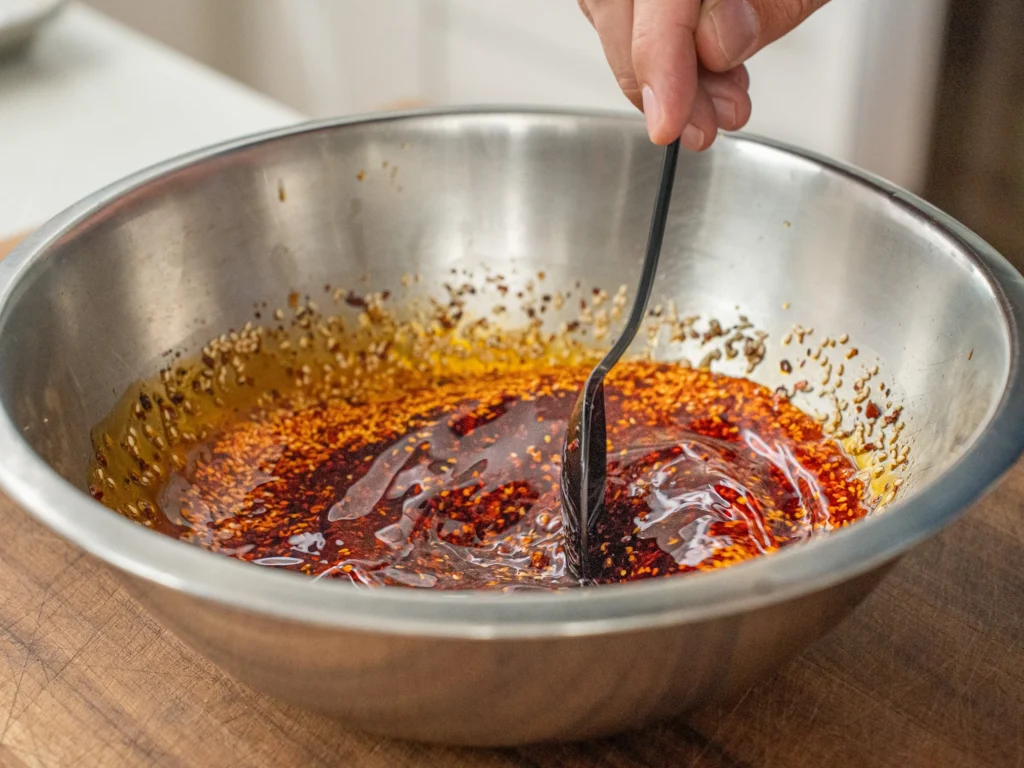
3. Strain the hot oil over the dry mix. Carefully strain the hot oil over the bowl of aromatics. You’ll hear an aggressive sizzle and smell the chili and garlic bloom. Stir gently to make sure everything in the bowl gets coated and the heat penetrates evenly.
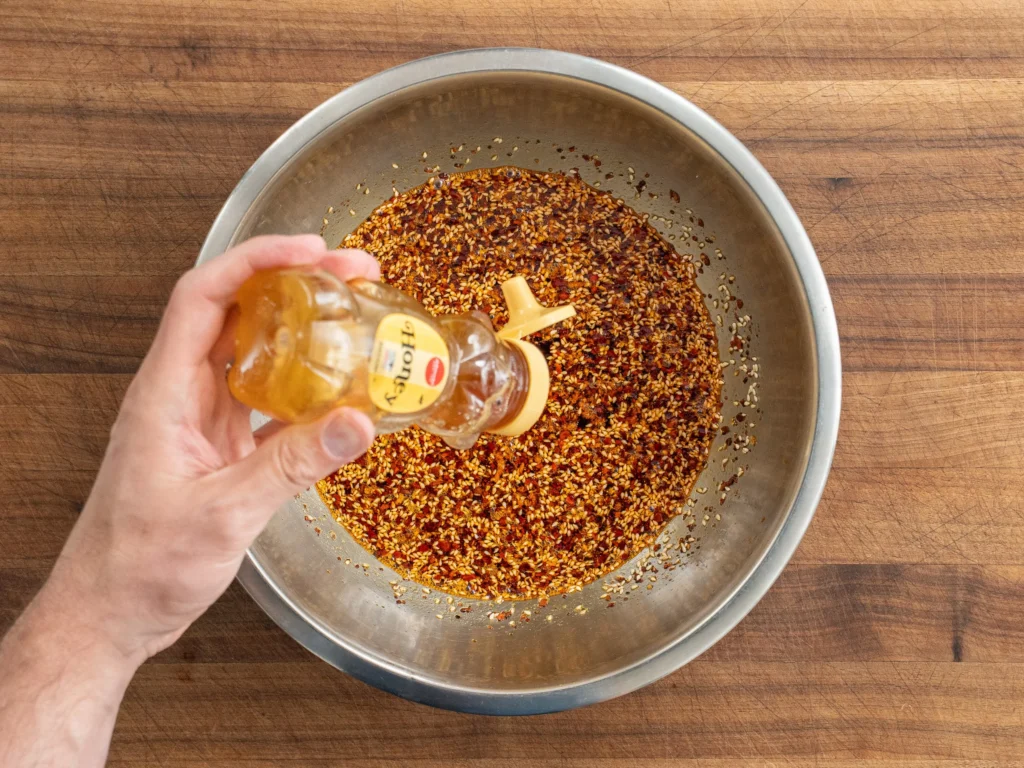
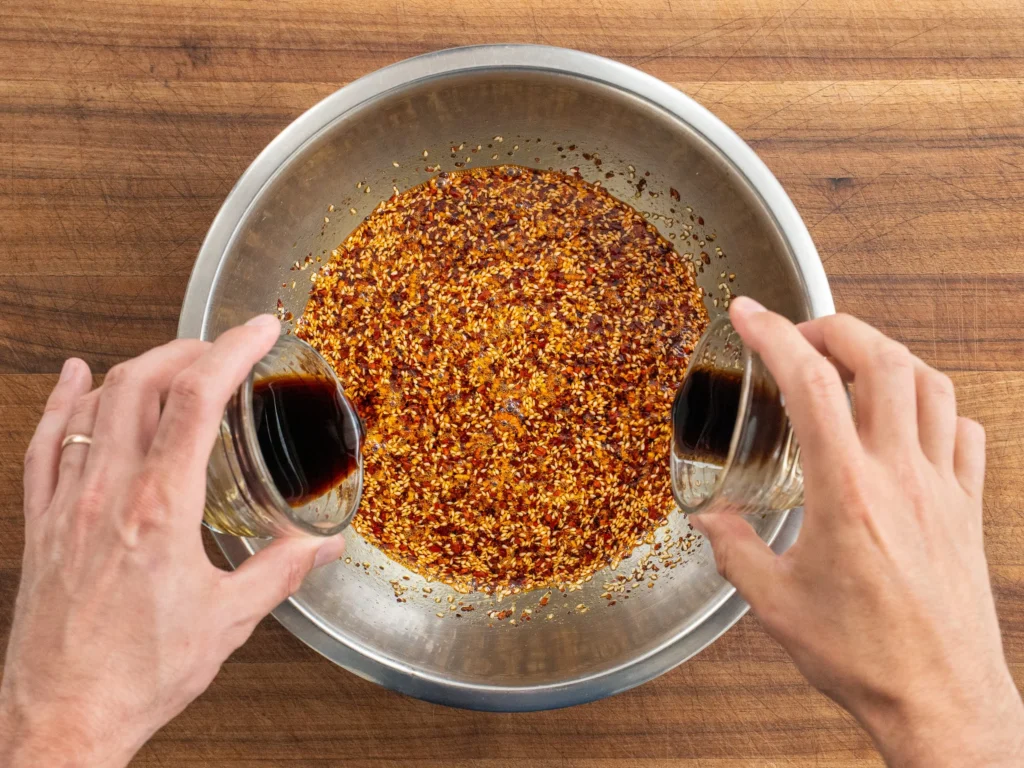
4. Cool the oil, then add the wet ingredients. Let the oil cool for a few minutes until the side of the bowl is no hotter than a hot coffee cup. Then add the black vinegar, soy sauce, MSG, and honey. Stir to combine. The chili oil is now ready and will hold in a sealed jar in the fridge for months. Set it aside while you make the filling.
Why wait for the oil to cool? Adding vinegar and honey to ripping-hot oil causes them to steam and spit hot liquid
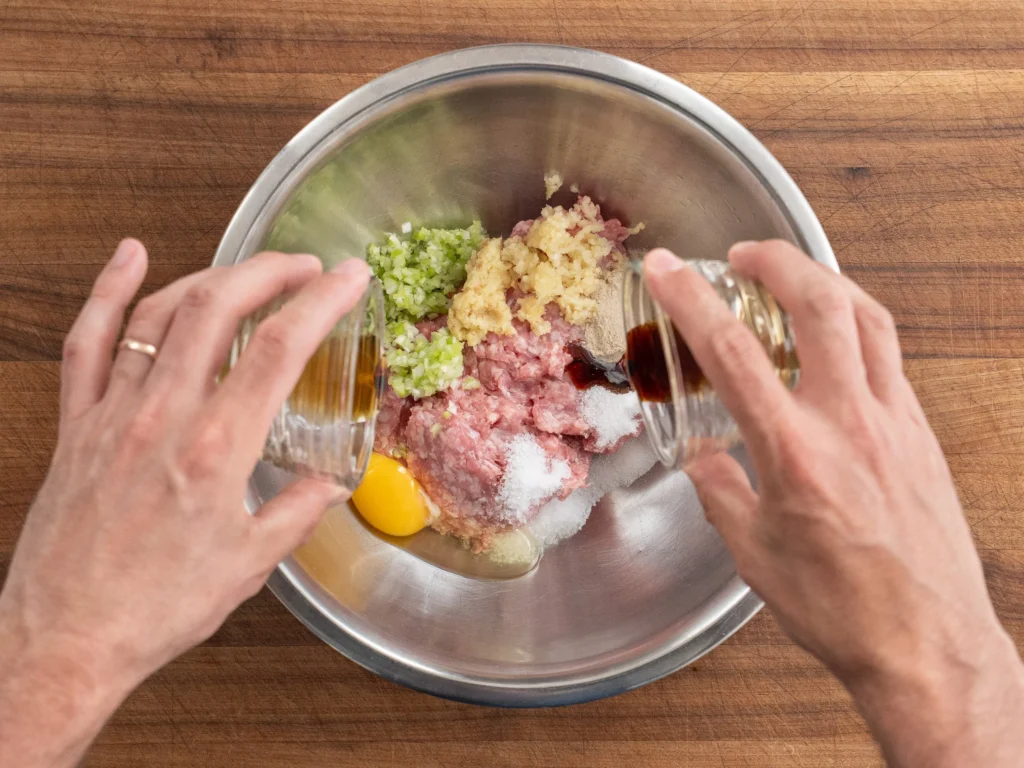
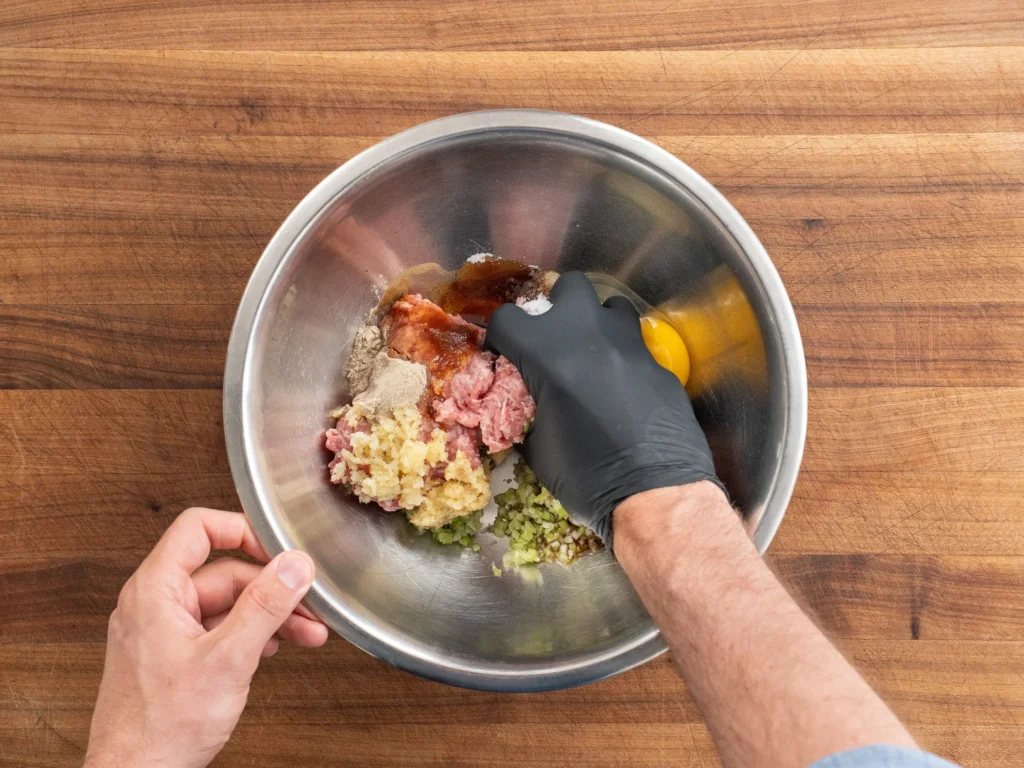
5. Mix the pork filling. In a large mixing bowl, combine the ground pork with the white pepper, sesame oil, soy sauce, garlic, ginger, scallions, salt, sugar, and egg.
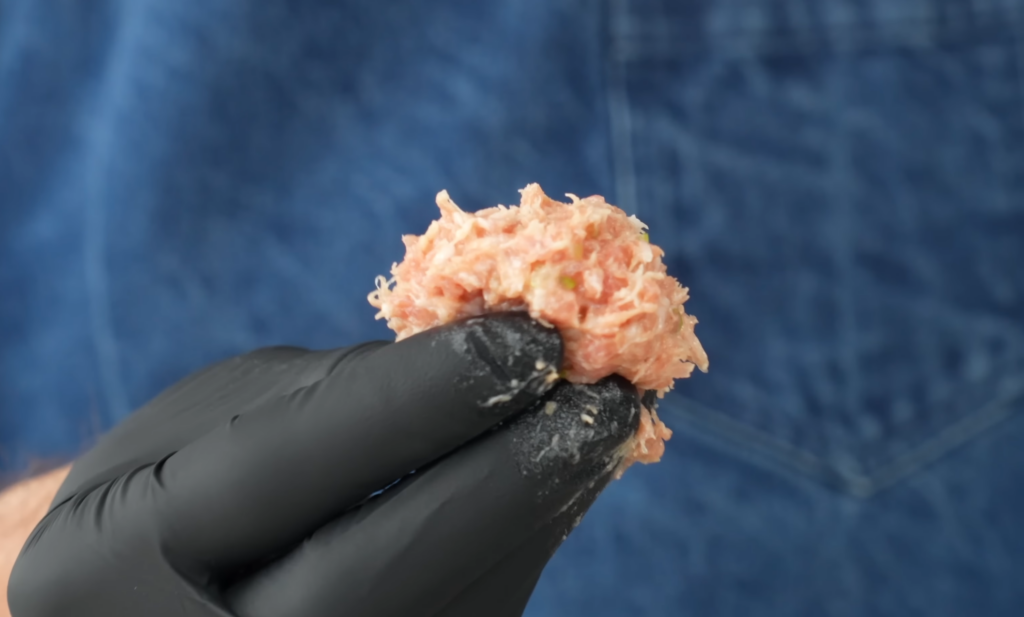
6. Whip the meat to develop myosin. Mix by hand and aggressively agitate the meat. The texture will shift from loose, raw ground pork, to a sticky, almost paste-like mass that holds itself together in a ball. That’s myosin development. The muscle protein has linked up and the fat has started to emulsify into the mix. This is what gives the wonton filling its springy, bouncy bite and what bonds it to the wrapper so it doesn’t fall out in the water.
Can I use a stand mixer? Yes. Use the paddle attachment on medium speed, 2-3 minutes. Stop and scrape once. By hand takes 4-5 minutes of real effort. Both work; the mixer is just easier on your forearm.
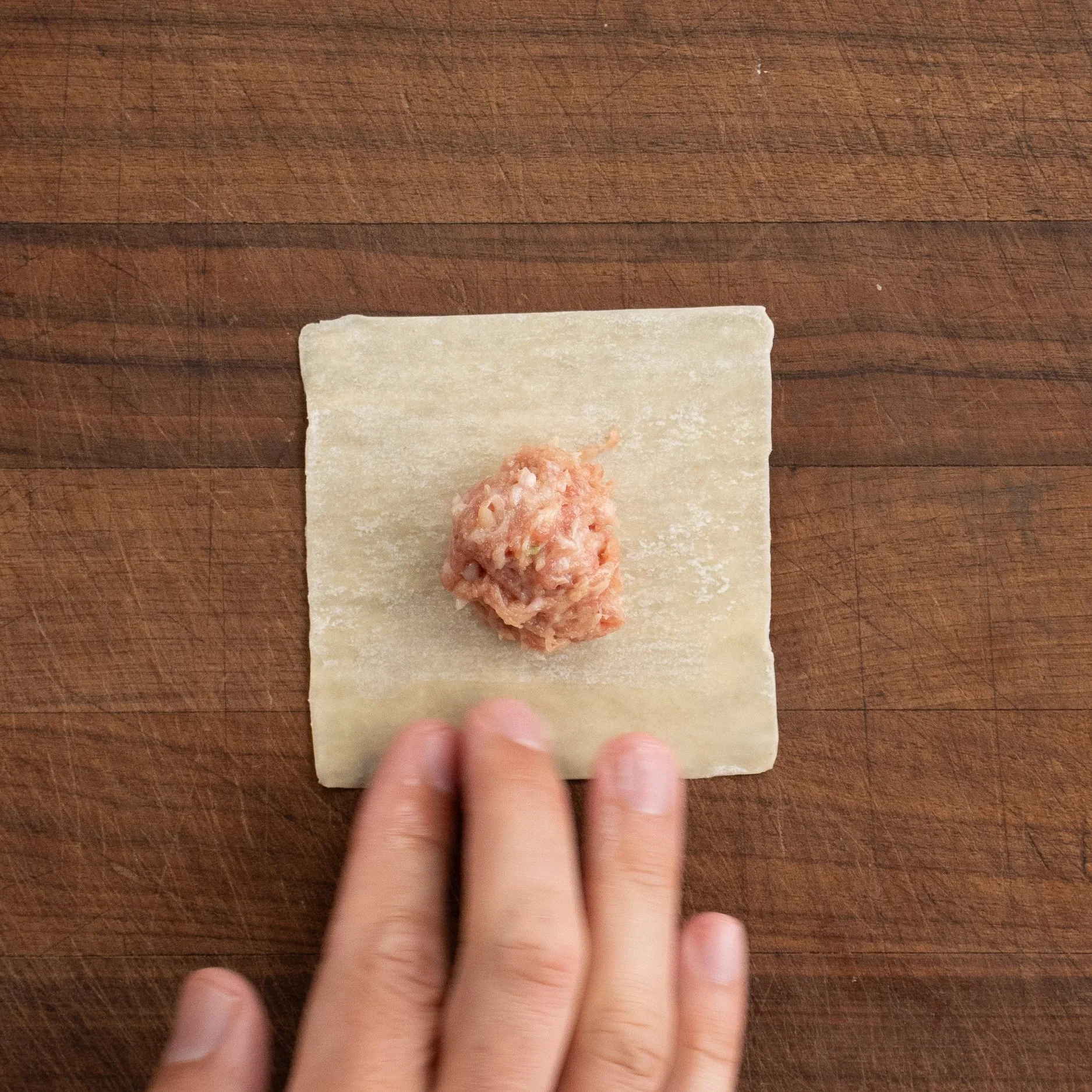
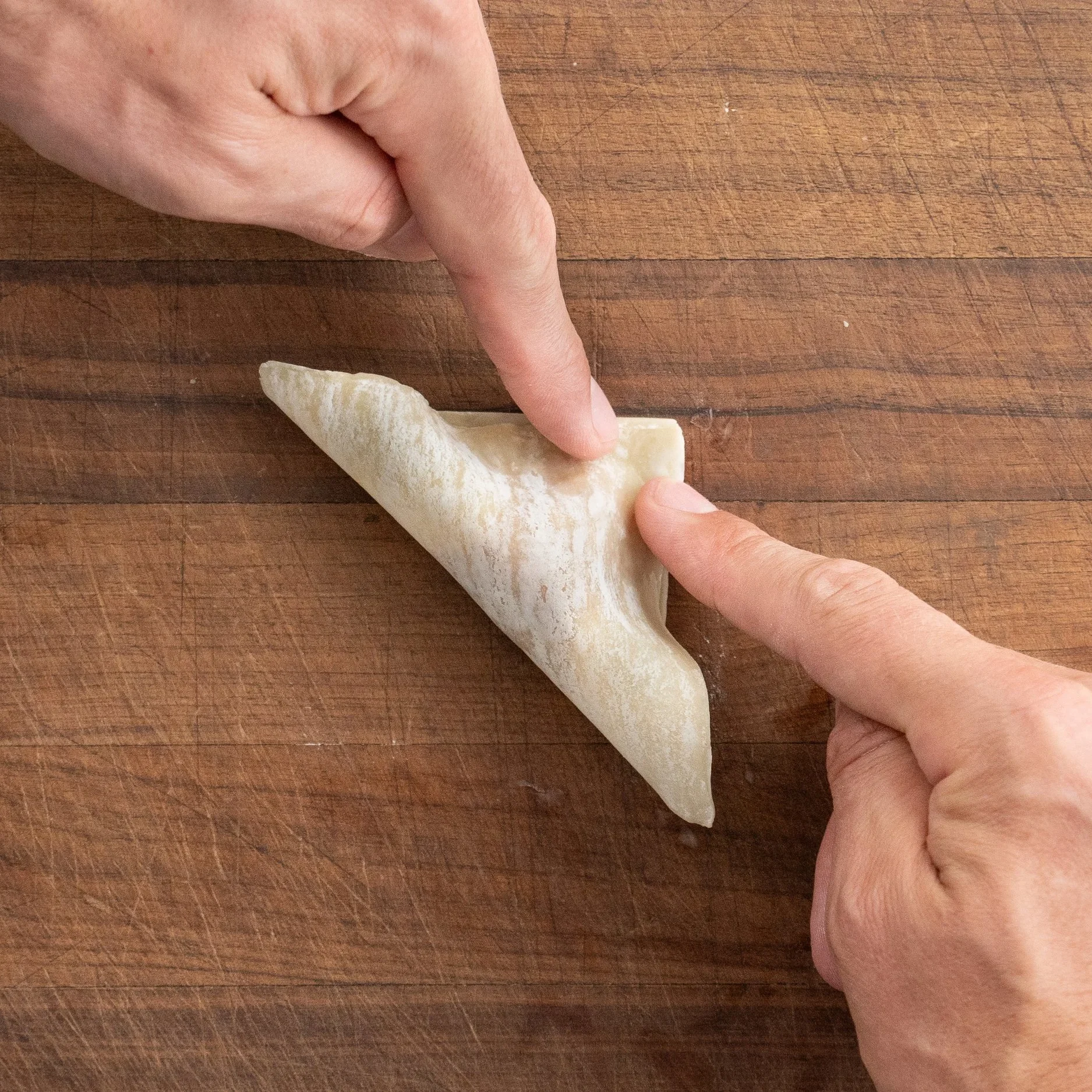
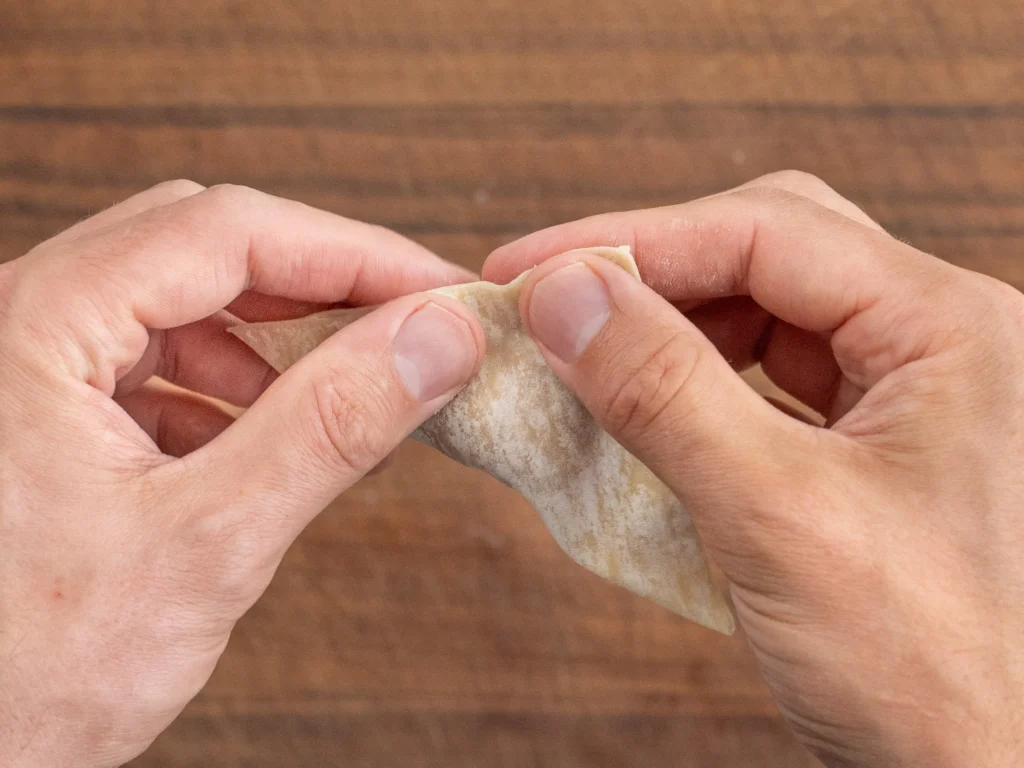
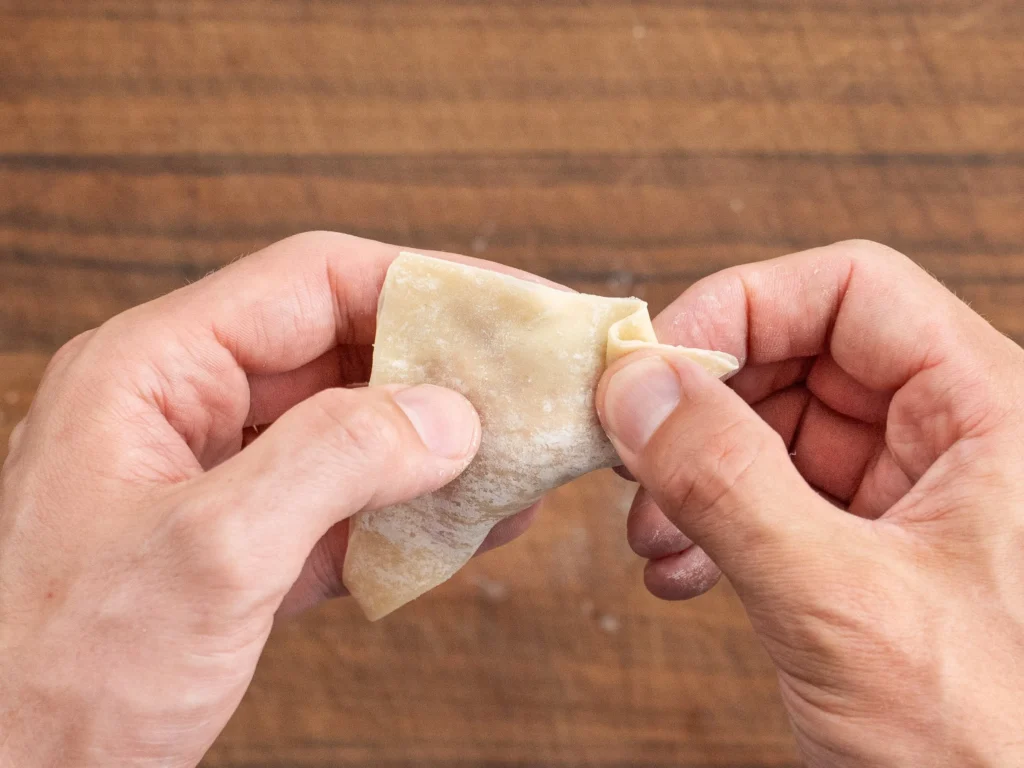
7. Wrap the wontons. Start by placing your stack of wonton wrappers under a damp paper towel to keep them moist while you work. To form the wontons, place a wonton wrapper in your palm or on a work surface and add 15g (1 tbsp) of filling to the center.
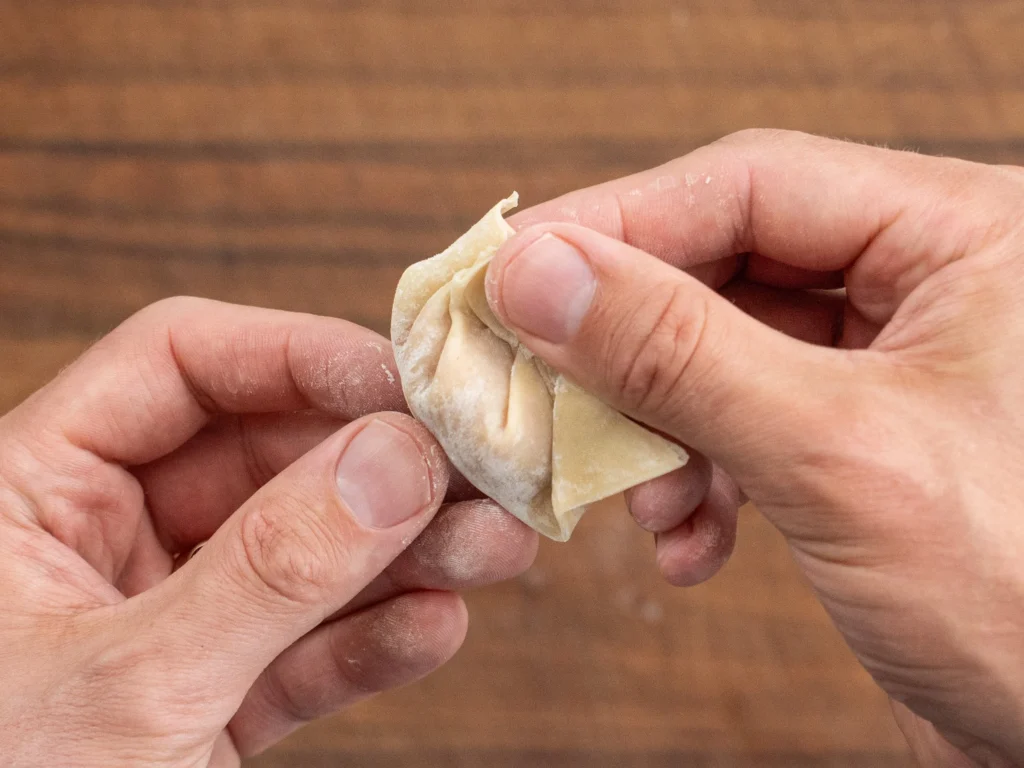
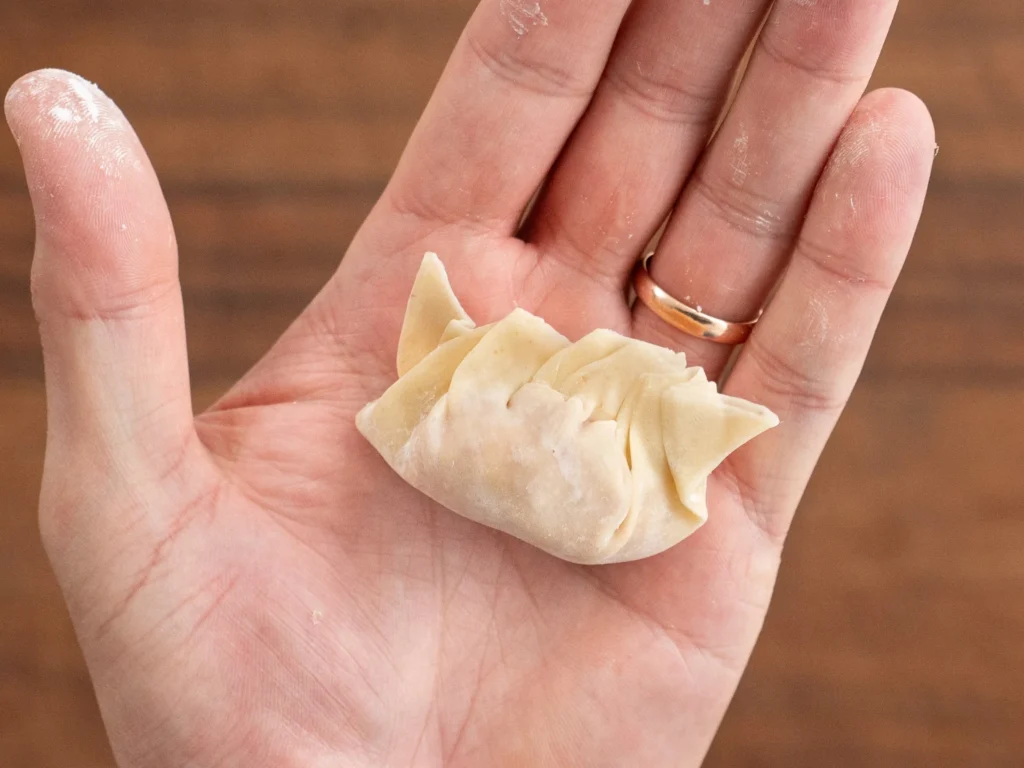
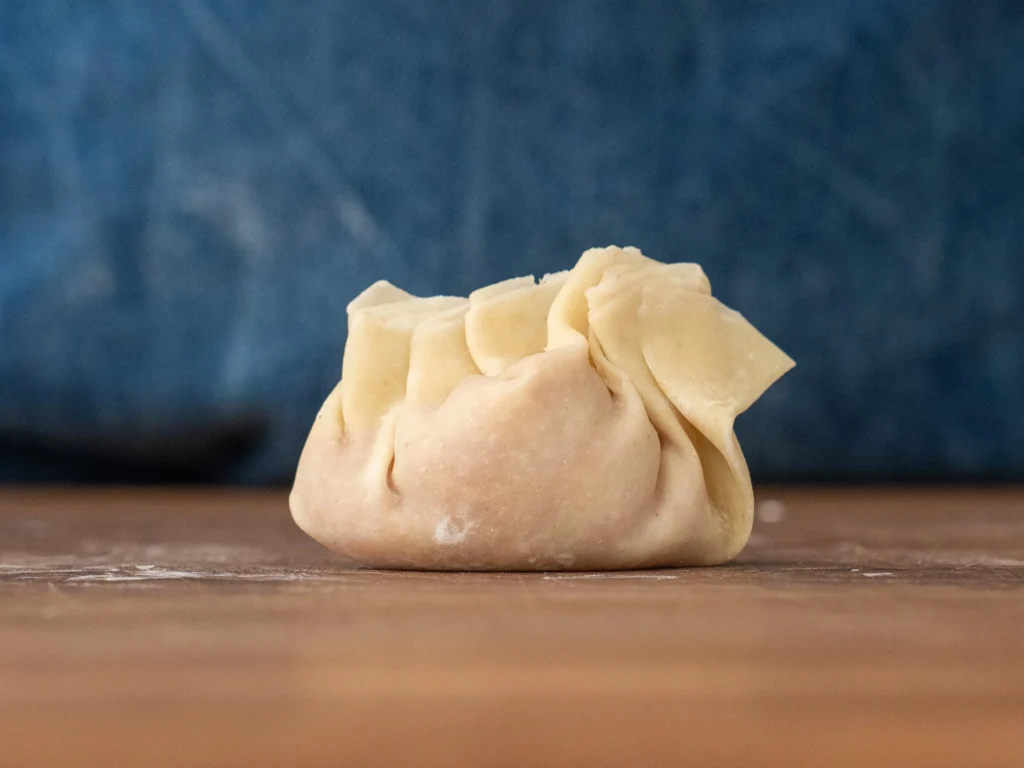
Wet the edges of the wrapper then fold one corner over to the opposite corner to form a triangle, pressing out any remaining air as you seal. Next crimp the edges of the wrapper around the filling 5-6 times by folding a small section of the wrapper edge over, pressing, and gathering the folds up like a little beggar’s purse. Squeeze the wrapper tightly to make sure it’s sealed and double check for air pockets. Those will create voids in the dumpling that disconnect the wrapper and meat.
Place each finished wonton on a sheet tray lined with parchment paper. You should have 30-36 dumpers.
How do I keep them from tearing or popping open while wrapping? Don’t overfill. 15g/1 scant tablespoon is the sweet spot. Press out all the trapped air before sealing – air expands when boiling and blows the wrapper open. Don’t forget to keep the unwrapped stack covered since dry edges won’t seal.
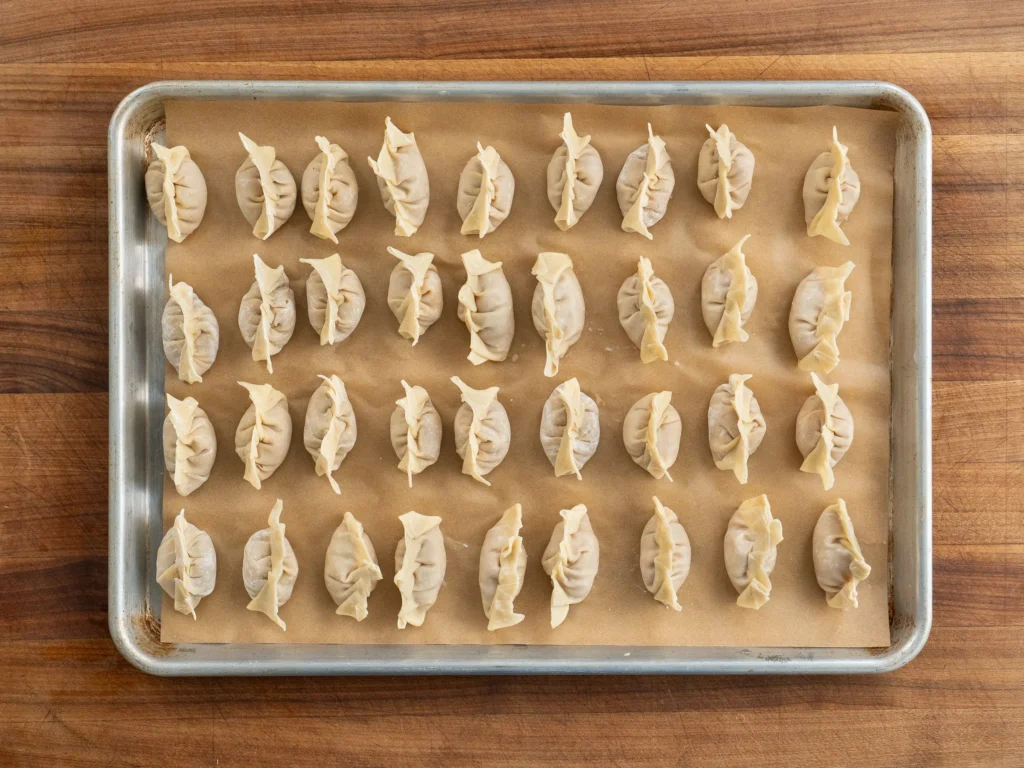
8. Refrigerate before cooking. Once you’ve wrapped the 30-36 wontons, slide the tray into the fridge COVERED with a lid or towel for at least 30 minutes. The wrapper pulls a little moisture from the filling and bonds tightly to it.
Can I freeze them? Yes. Freeze them flat on the cornstarch-dusted tray until solid (about 2 hours), then transfer to a zip-top bag. To cook from frozen you’ll use the same gentle simmer, just add 1-2 minutes to the cook time.
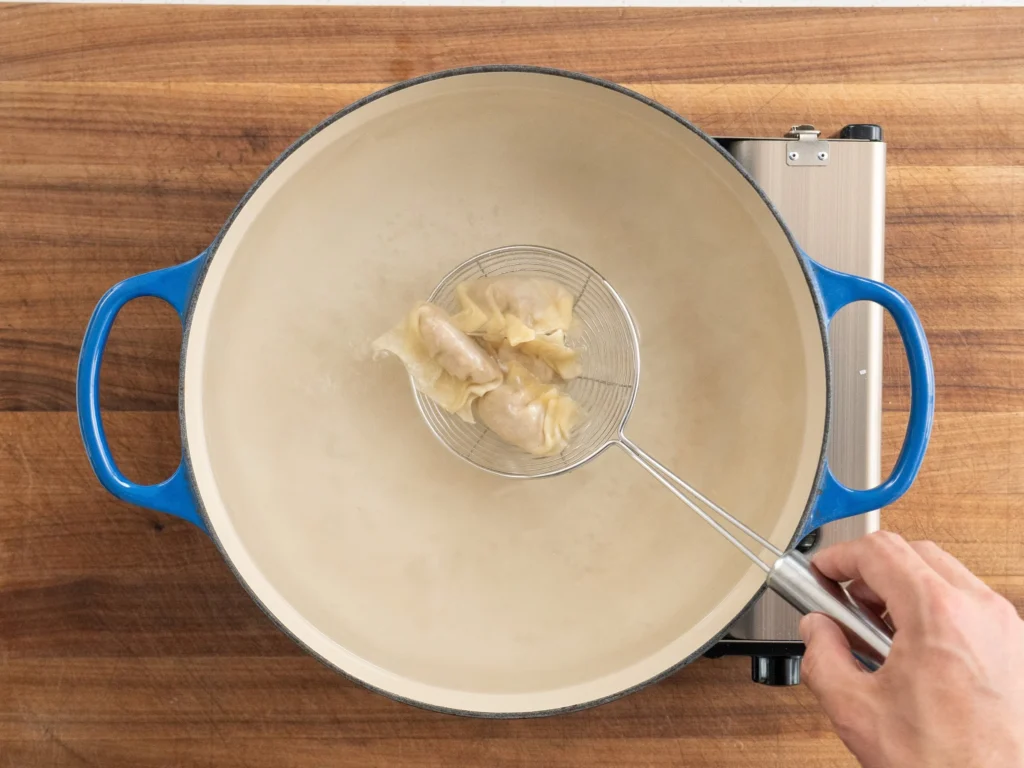
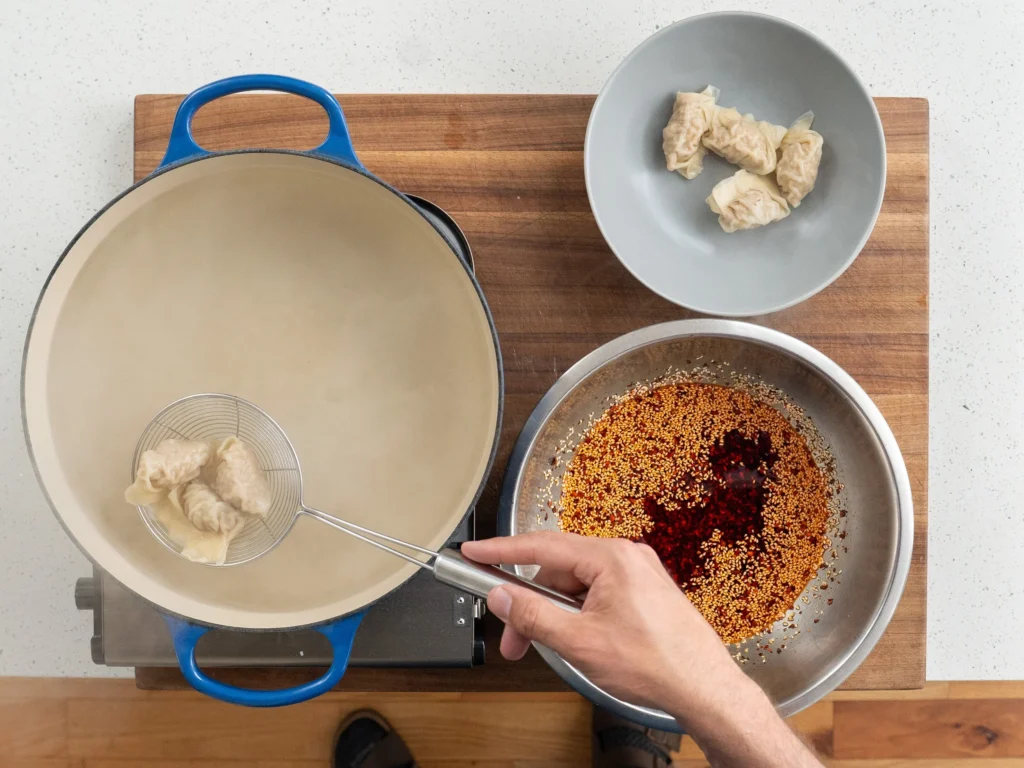
9. Poach the wontons. Bring a medium pot of well-salted water to a high simmer — steady bubbles but not a violent rolling boil. Use a spider strainer or long slotted spoon to add the wontons slowly and gently, swirling them for about 10 seconds before releasing them into the water to prevent sticking, then reduce heat to low. Cook in batches of 12-15 on low or just below a simmer for 4 minutes in total. You’re looking for a cooking temp of around. 190°F(90°C) Pull the wontons out with a spider strainer, dab off any excess water, and place them in serving bowls.
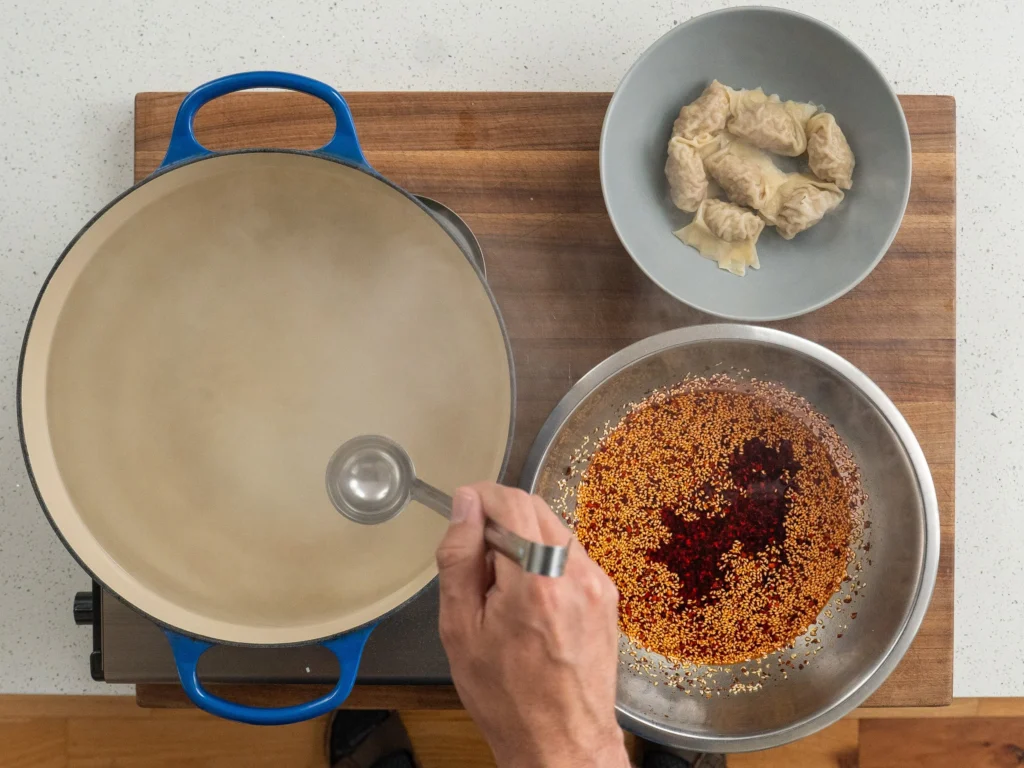
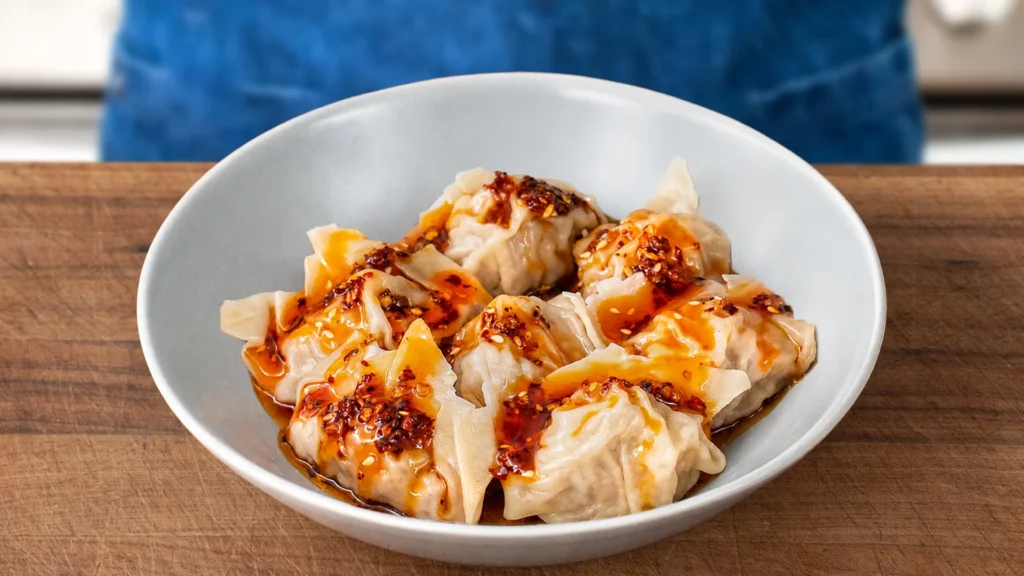
10. Finish the chili oil with dumpling water and plate. While the wontons are simmering, scoop 60g (about ¼ cup) of the starchy poaching water and stir it into the chili oil. The starch emulsifies the oil into a glossy, sauce-like glaze. Pull the wontons out with a spider strainer, dab off any excess water, and place them in serving bowls. Generously spoon the chili oil over the top. Make sure to grab some of the chili solids from the bottom of the jar here – not just the oil floating on top – because that’s where most of the flavor lives.
Hot Tip: set some of the chili oil aside and only add water to what you want to use. The oil will keep better in the fridge without it and goes great on rice bowls, pasta, eggs, etc.
Serving suggestions
I like to serve these wontons with plain steamed rice on the side. It stretches a portion and soaks up any leftover oil. Steamed greens like bok choy or gai lan cut the richness if you want a fuller meal.
Storage & Make-Ahead
The wontons themselves freeze beautifully. Freeze them flat on a cornstarch-dusted or parchment lined sheet tray until solid (about 2 hours). Then transfer to a zip-top bag. They’ll keep for 2-3 months in the freezer. Cook them straight from frozen — same gentle simmer, just add 1-2 minutes to the cook time. Don’t try to thaw them first; they’ll get gummy and stick together.
The chili oil is its own little miracle. Set some aside BEFORE adding poaching liquid to it and it will keep in a sealed jar in the fridge for several months…honestly probably longer, but I always finish mine before that. The recipe makes more oil than you’ll need for one batch of wontons, which is on purpose. Spoon it over rice bowls, fried eggs, ramen, dumplings, or anything that needs a hit of fruity, numbing, sweet-spicy heat. It’s a workhorse condiment.
Cooked wontons don’t reheat well – The wrapper turns gummy and the filling overcooks into a tight little pellet. Boil only what you’re going to eat in one sitting and store the rest of the raw, wrapped wontons in the freezer for the next round.
Chili Oil Wonton Recipe
Ingredients
For the Wonton Filling
- 30-40 square wonton wrappers
- 450 g ground pork
- 4 g white pepper
- 10 g sesame oil
- 10 g soy sauce
- 10 g garlic (2 cloves), minced
- 10 g ginger, minced
- 25 g scallions, sliced
- 10 g salt
- 5 g granulated sugar
- 1 egg, large
For the Chili Oil
- 400 g peanut oil
- 20 g gochugaru, divided into 2 equal portions
- 10 g red pepper flakes
- 15 g sesame seeds
- 2 g Szechuan peppercorns, ground
- 20 g garlic (4-5 cloves), minced
- 50 g honey
- 2 g MSG
- 15 g Chinese black vinegar
- 30 g soy sauce
- 60 g hot wonton poaching water
Instructions
- In a heat-resistant bowl, combine aromatics: 10g (half) the gochugaru, red pepper flake, sesame seeds, ground Szechuan peppercorn, and minced garlic. Set aside.
- In a small saucepan, combine the remaining 10g of gochugaru with the peanut oil. Place over medium heat and bring to 350°F/175°C. When the mixture starts to sizzle, the chili powder turns a darker red, and the oil becomes a deep orangish-red color, it’s ready to strain. This usually takes 4-5 minutes.
- Carefully strain the hot oil over the bowl of aromatics. You’ll hear a sizzle and smell the chili and garlic bloom. Stir gently to coat evenly.
- Once the oil mixture has cooled for about 10 minutes to the point that you can easily touch the side of the bowl, add the honey, soy sauce, black vinegar, and MSG. Stir to combine. Set it aside while you make the filling.
- In a large bowl, combine the filling ingredients: ground pork, white pepper, sesame oil, soy sauce, garlic, ginger, scallions, salt, sugar, and egg.
- Mix by hand and aggressively agitate the meat for 4-5 minutes or until the texture turns from being loose into a paste-like sticky mass that holds itself together a bit.
- To wrap the wontons, place a wonton wrapper on a work surface (keep wrappers-in-waiting under a damp towel to stay moist). Add 15g (1 tbsp) of filling to the center. Wet the edges of the wrapper, fold one corner over to the opposite corner to form a triangle, pressing out any remaining air as you seal. Then crimp the edges of the wrapper around the filling 5-6 times, gathering them up into a beggar’s purse shape.Squeeze the wrapper tightly to make sure it's sealed and has no air pockets. Place each finished wonton on a sheet tray lined with parchment paper.
- Cover the sheet tray with a lid or towel and refrigerate for at least 30 minutes.
- Bring a pot of well-salted water to a high simmer, just under rolling boil. Use a spider strainer to add the wontons slowly in batches of 12-15, allowing them to set up for 10 seconds in the water before releasing. Reduce heat to low-ish (around 190°F/90°C) and cook at just below a simmer for 4 minutes per batch.
- When cooked, pull the wontons and dab off any excess water before transferring to serving bowl.
- Before serving, whisk 60g (about ¼ cup) of the starchy poaching water into the chili oil. The starch emulsifies the oil into a glossy, sauce-like glaze. Generously spoon the chili oil over the wontons.
Notes
 Like this? Leave a comment below!
My Go-To Gear For Chili Oil Wontons
Below are the tools I actually use when making this recipe. Some of these are affiliate links, which means I may earn a small commission if you purchase through them—at no extra cost to you.
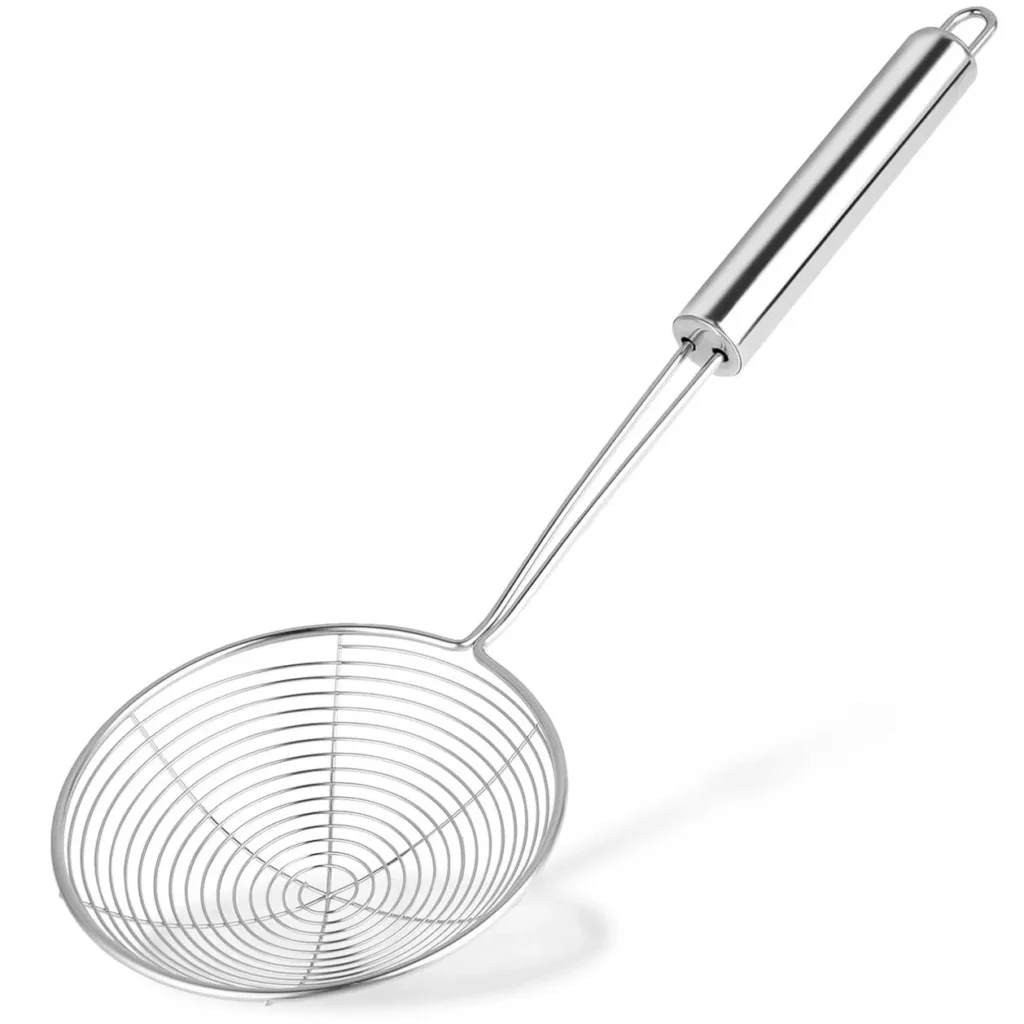
The right tool for fishing wontons out of simmering water without tearing them. A slotted spoon works in a pinch, but the wide, shallow basket of a spider lets you scoop multiple wontons at once and drain them gently.
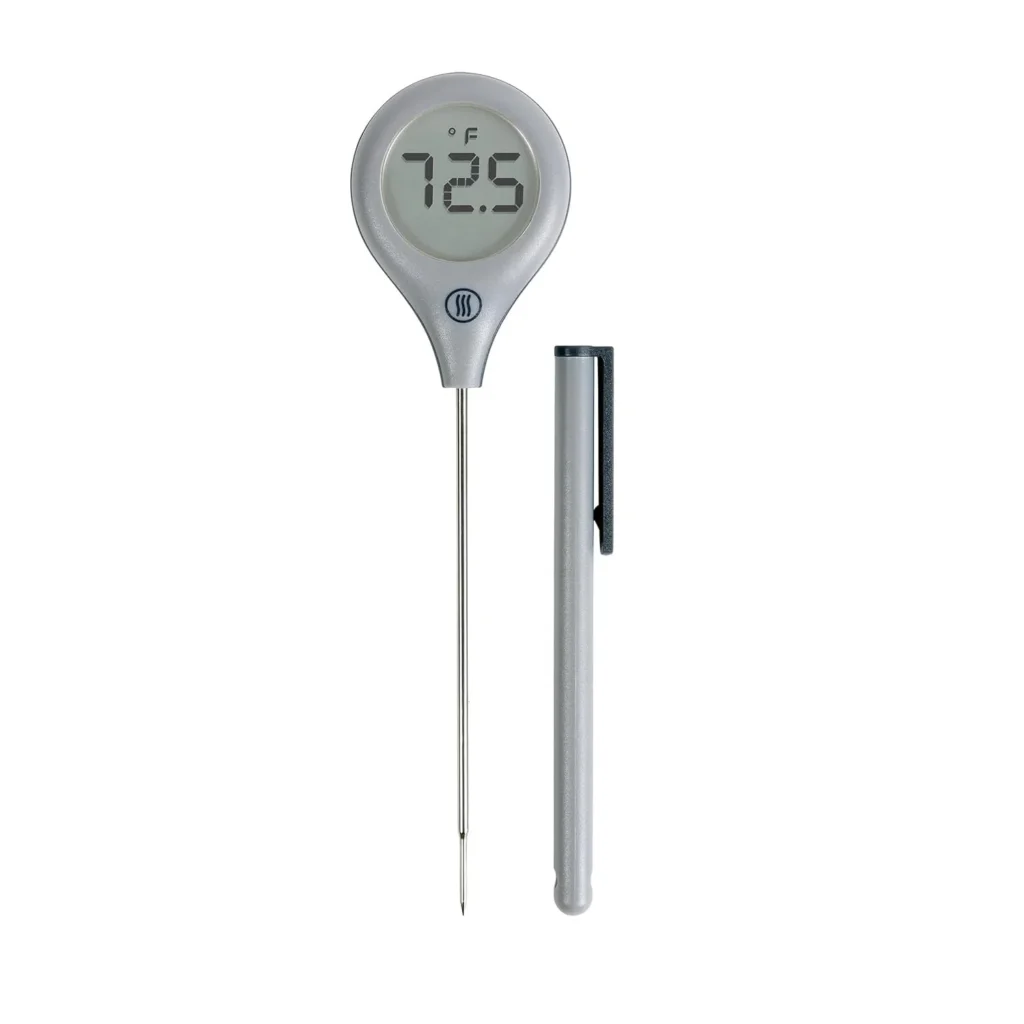
Hitting 350°F on the chili oil is the difference between a deep, fruity bloom and burnt, bitter chili powder. Eyeballing it works once you’ve made the oil a few times, but a thermometer is foolproof.
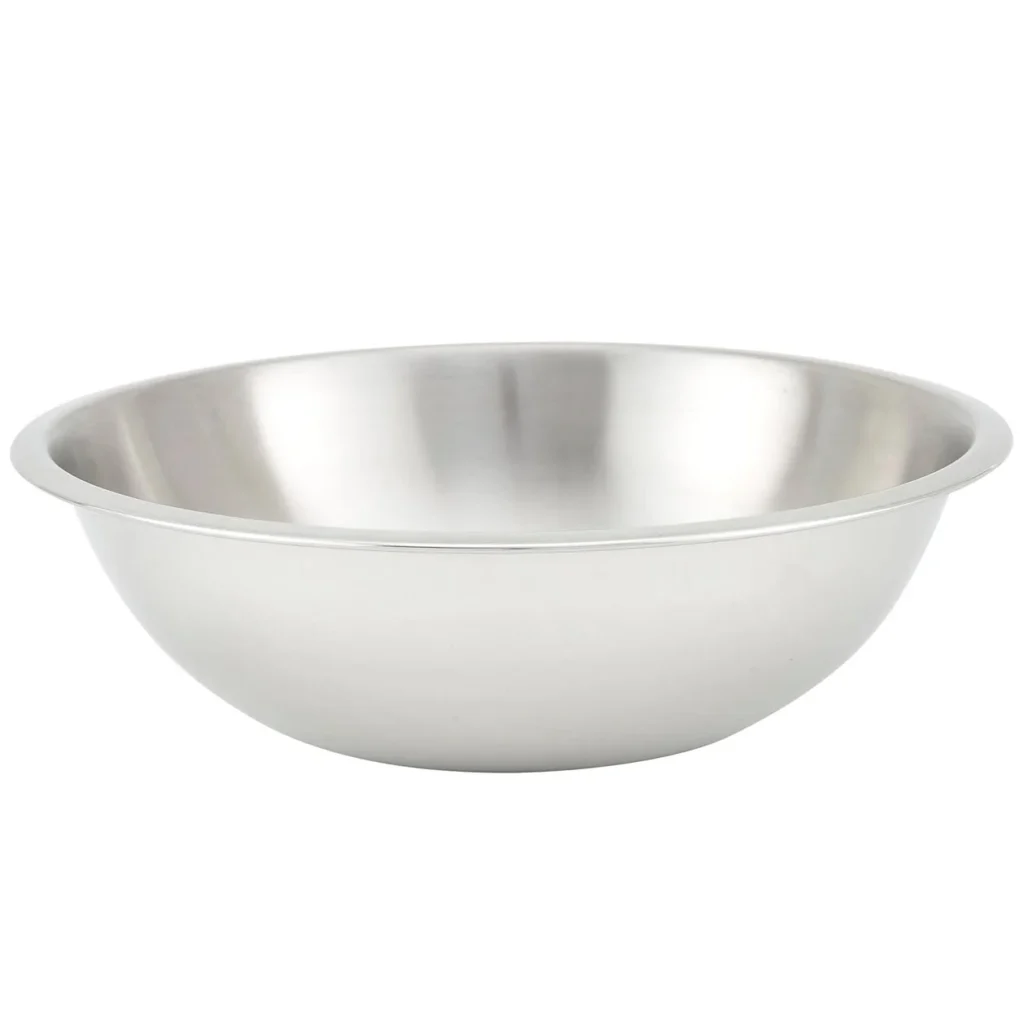
When you’re pouring 350°F oil over dry aromatics, a thin glass or plastic bowl is going to crack or warp. A thick-walled stainless or tempered glass bowl handles the heat without flinching.
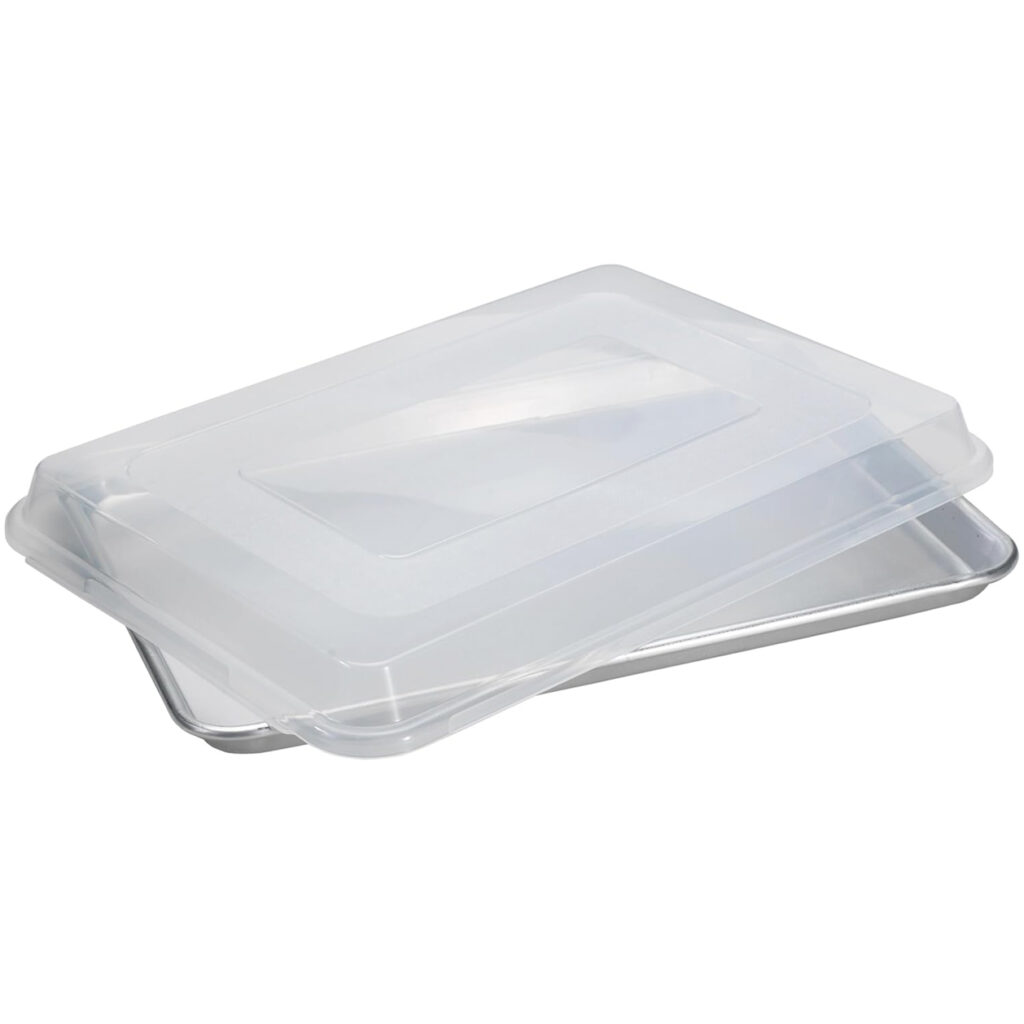
You need flat, even space to lay out 30-some wontons without them touching. A standard half sheet tray dusted with cornstarch is perfect for both the fridge rest and the freeze. It’s also one of the most used pieces in my kitchen.
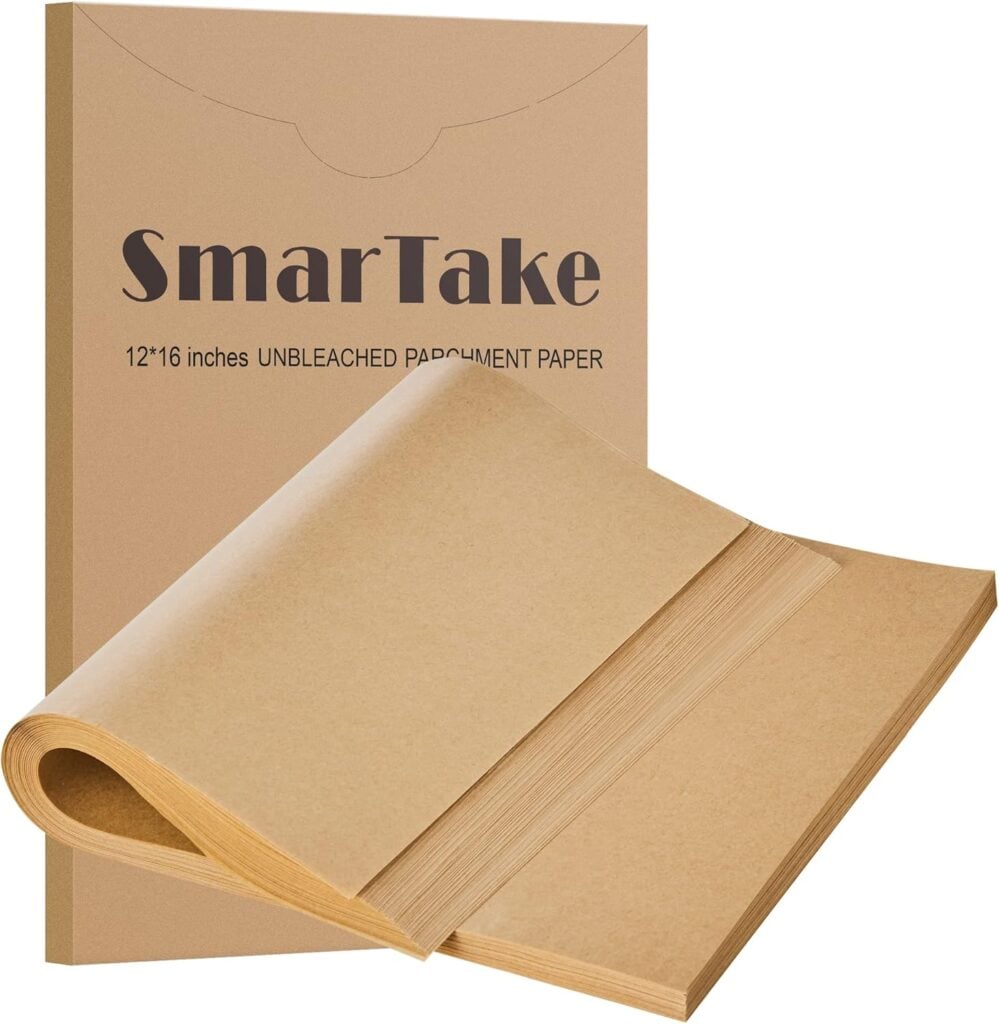
A great solution for keeping dumplings from sticking to the sheet tray and an item I’m never without in my kitchen. So much easier and more convenient than standard rolls.
Frequently Asked Questions
Honestly, no. Black pepper is fine in the abstract but it doesn’t give you the má…that tongue-numbing tingle that defines this style of chili oil. If your local store doesn’t carry szechuan peppercorn, order a bag online. It keeps for months and you’ll find a hundred other places to use it.
Can I skip the MSG?
You can. Sub in 3g of salt to keep the flavor balanced. The oil will still be great. MSG just adds a round, savory depth that’s hard to get any other way.
Ground chicken thigh is the best swap. It has the same fat content and same texture potential when you whip the myosin in. Ground beef changes the dish enough that it tastes more like a Chinese-style meatball than a wonton so I wouldn’t use it. Ground turkey breast or anything labeled extra-lean will be dry and crumbly. Skip it.
No. The corner-to-corner triangle fold is also legitimate. That’s how a lot of Szechuan restaurants serve them. The pouch shape just catches more chili oil in its folds AND gives you a nice bite of pure wonton texture that the triangle doesn’t. Pick whichever fold you like and run with it.







Can I pre-make the meat filling for the wonton?
I’m talking a day or so.
it’s best when made fresh for flavor and moisture reasons, but you CAN make the filling a day ahead. any longer and the scallion flavor could become too overpowering.