
Shrimp Roll (The Easier Cheaper Lobster Roll)

Updated Jul 28, 2026, Published Jun 22, 2026
This post contains affiliate links. Please see our disclosure policy.
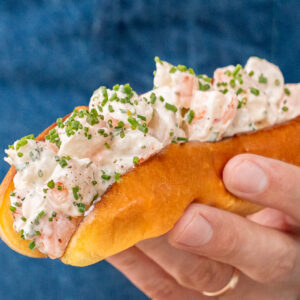
This shrimp roll is actually a lobster roll in every way but the price. It has sweet, plump Argentine red shrimp tossed in a bright lemon mayo and piled into a toasted, buttery bun.
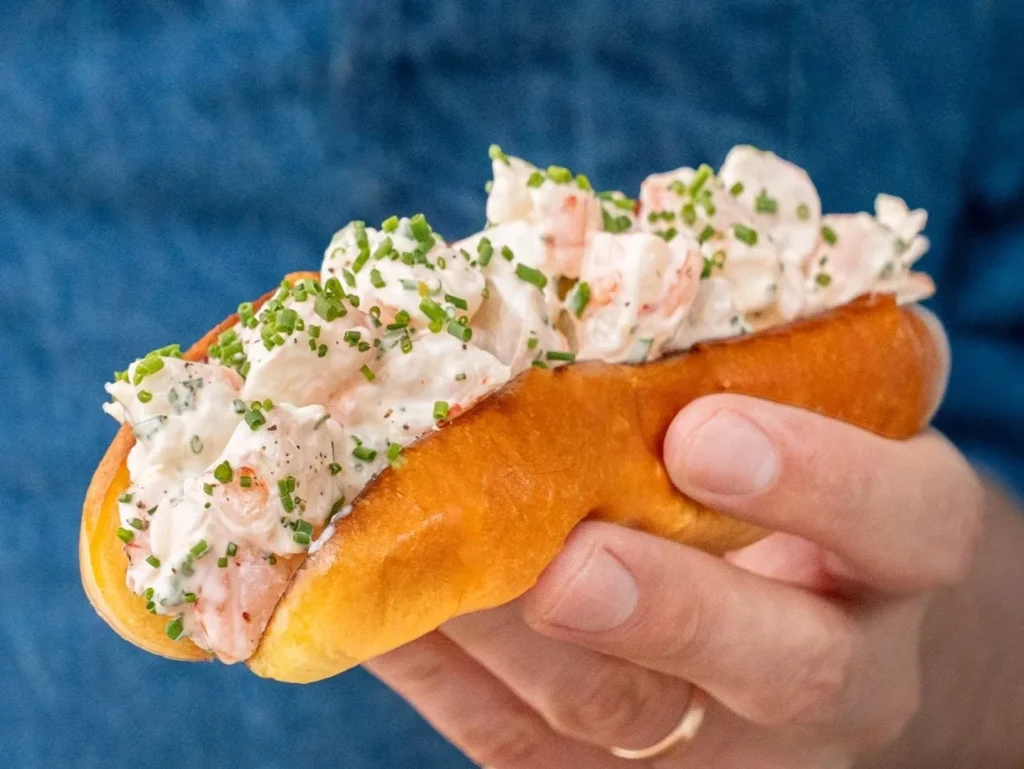
Table of Contents
Why This Recipe Delivers
In this recipe I use an old trick usually reserved for cooking peel and eat shrimp. We’ll do a low temp poach in heavily salted water, with lemons and sugar. Instead of cooking the shrimp at a hard boil, which makes them rubbery, the salty sweet brine cooks the protein super gently. That’s gonna prevent overcooking and give us a much more pleasant, plump texture. The other move is using Argentine red shrimp, which are wild-caught in the cold South Atlantic and have a naturally sweeter, softer texture and richer flavor than typical white shrimp. I’m not saying they are lobster, but in a mayo-and-lemon-dressed roll on a toasted bun, they get shockingly close.
Brian’s Pro Tips
Salty Sweet Cooking Liquid – The poaching liquid uses a lot of salt and a little sugar. Because the shrimp are only in there for about 3 minutes, the seasoning needs to work fast. The salt level is almost ocean-like, which is exactly what you want for shellfish, and it seasons the shrimp quickly without needing a long brine. The sugar doesn’t make them sweet so much as it reinforces their natural sweetness. Then the lemon is there to bring brightness and a little acidity.
Poach Off Heat – Bring the brine to a boil, drop in the shrimp, then kill the heat and let them coast for about 3 minutes. That gentler heat works way better than a rolling boil. Boiling water is too aggressive for peeled shrimp and can overcook the outside before the center is done. The stored heat in the water cooks them slowly and evenly, which makes the whole process a lot more forgiving. Even if they sit a little long, they’re much less likely to turn rubbery.
Dry SUPER Well After Cooking – After poaching and chilling, the shrimp will have some residual water on the surface, plus a little condensation from the fridge. Before dressing them, dab them off really well so that extra water doesn’t loosen the mayo. This helps the dressing cling to the shrimp instead of sliding off and getting soupy. It sounds small, but it makes a surprisingly big difference in the final roll.
Key Ingredient Notes and Substitutions
These are some of the important ingredients worth calling out in this recipe. You’ll find the full list of ingredients and amounts in the recipe below.
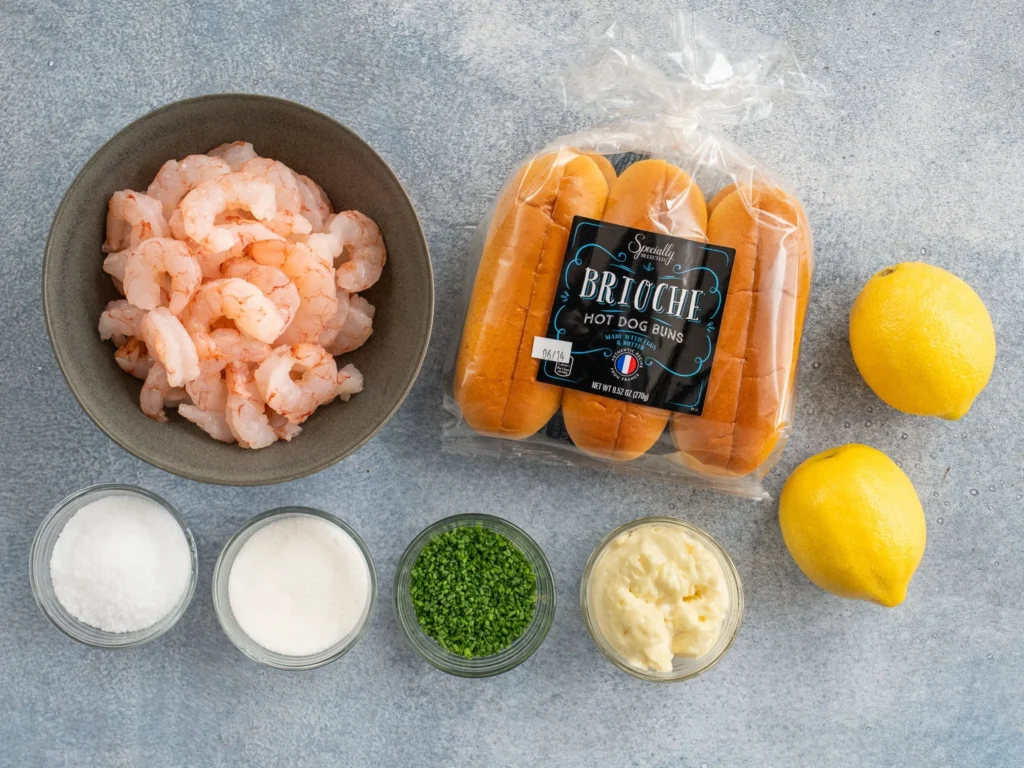
Argentine Red Shrimp
These shrimp are wild-caught in the cold, deep waters off Argentina, which gives them a sweeter flavor, softer texture, and richer shellfish taste. The meat is delicate, almost buttery, and much closer to lobster than regular farmed white shrimp. Honestly, they’re a better option than lobster for most people because they’re cheaper, easier to cook, and you don’t have to kill anything. You can usually find them frozen at Costco, Whole Foods, Fresh Thyme, or a specialty seafood market. If you can’t track them down, use wild-caught Gulf shrimp around 16/20 count. Just avoid the small farmed white shrimp from the freezer aisle. Those are often pumped with phosphates which gives them a hot dog snap that I hate.
Split Top Brioche Hot Dog Buns
I’m using store bought brioche split-top hot dog buns that have the same dough as the mass market burger buns I’ve used in my recipes a bunch of times. They’re soft and squishy but have enough structure to hold the filling. Their slight sweetness works really well with the shrimp, and the split-top shape is classic lobster-roll. They’re easy to find now at Whole Foods, Aldi, and most regular grocery stores. Regular side-split hot dog buns work fine too. If you want a recipe for DIY lobster rolls, here’s a link to mine.
How to Make Shrimp Rolls
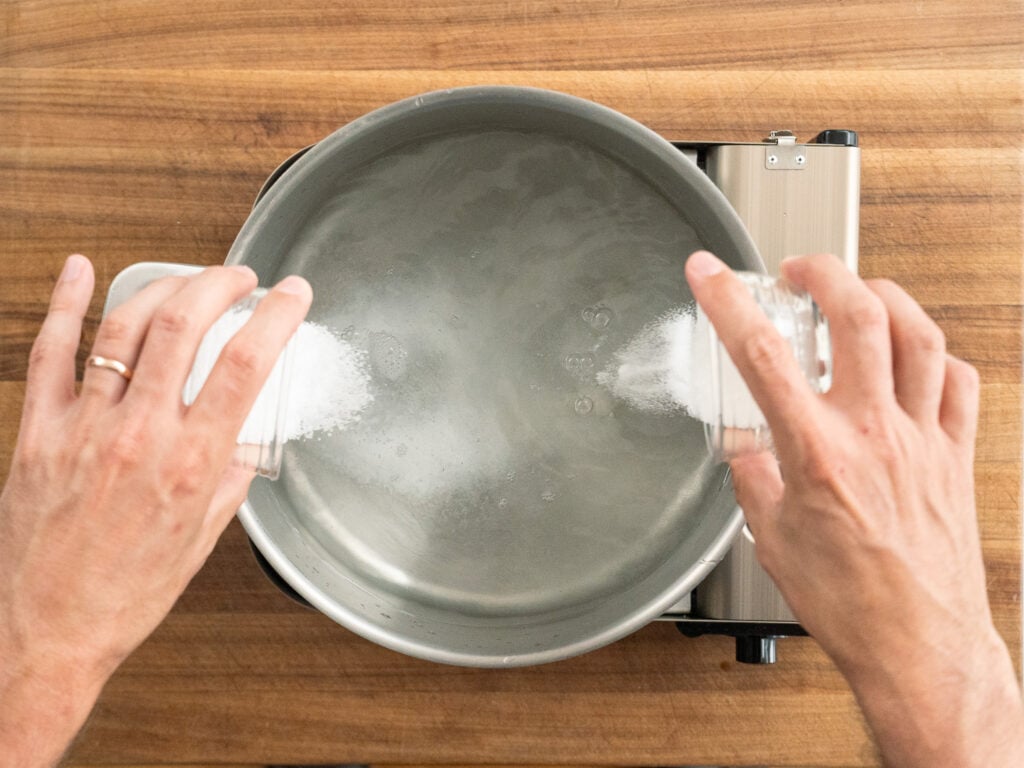
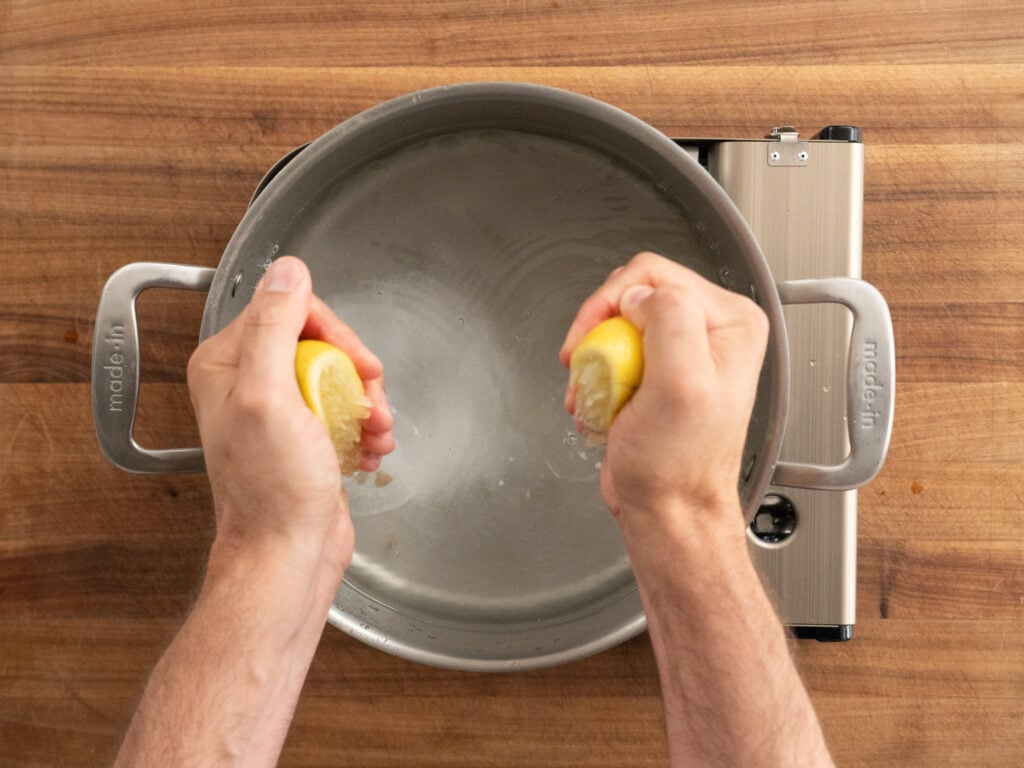
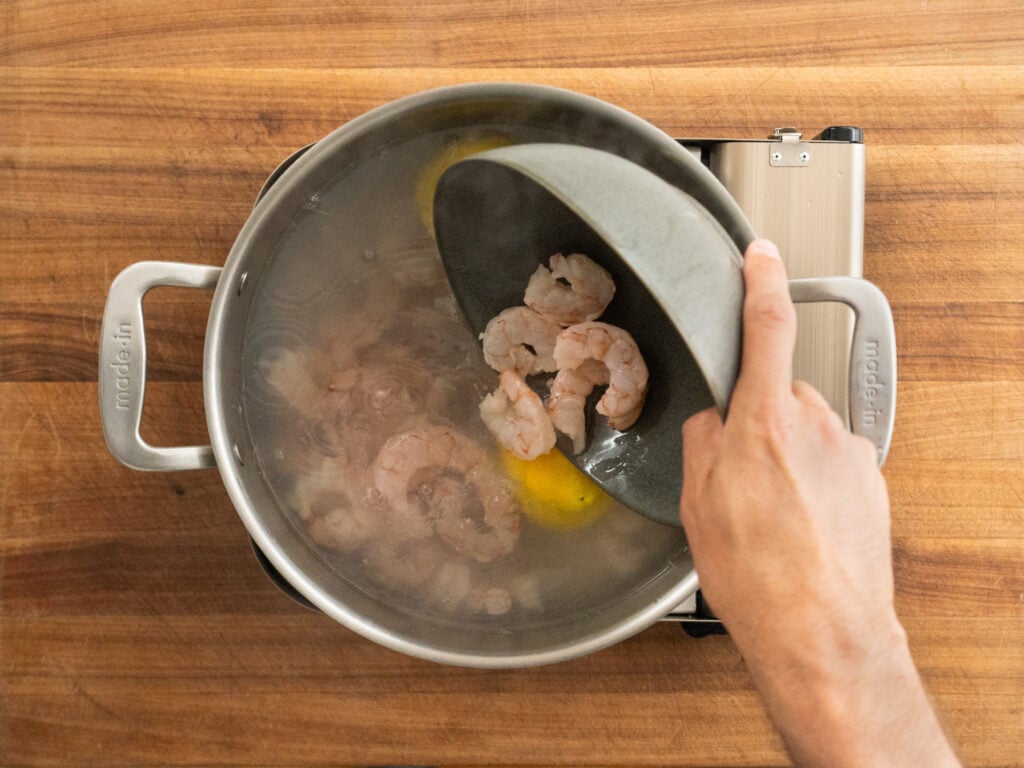
1. Make the Poaching Liquid. Combine 3000g of water, 120g of coarse salt, 90g of sugar, and 1 halved lemon (squeeze the juice in first) in a large pot and bring it to a boil. I use an 8qt stock pot for this recipe. The water should taste aggressively salty and a little sweet. That’s what seasons the shrimp during the short cooktime.
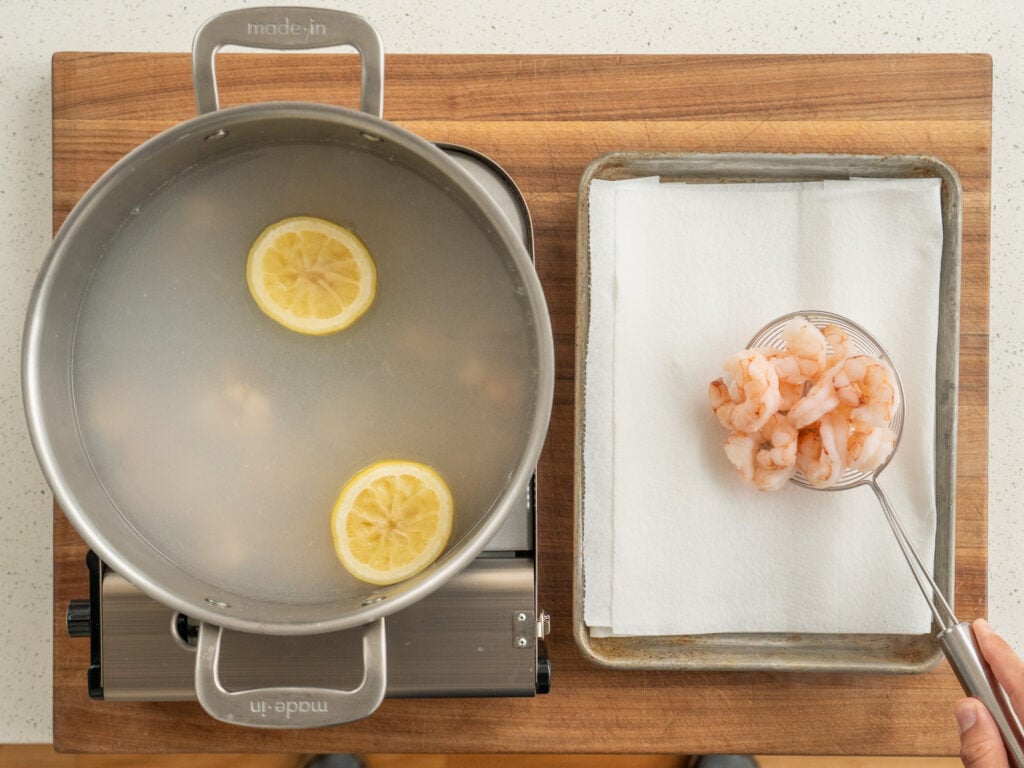
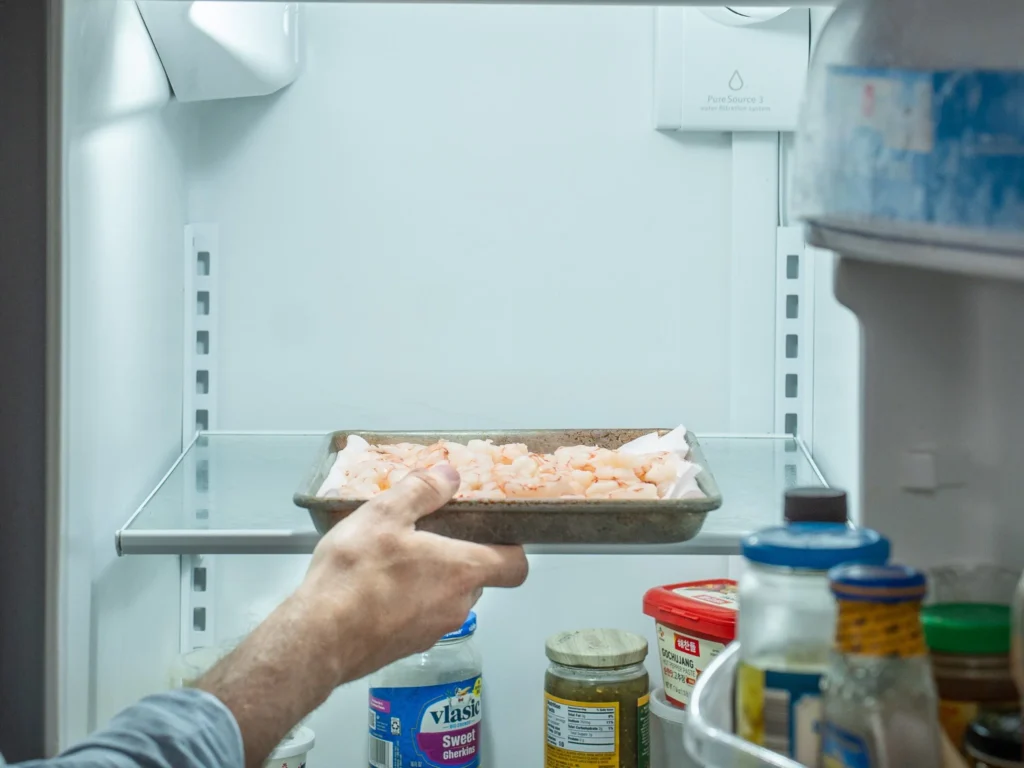
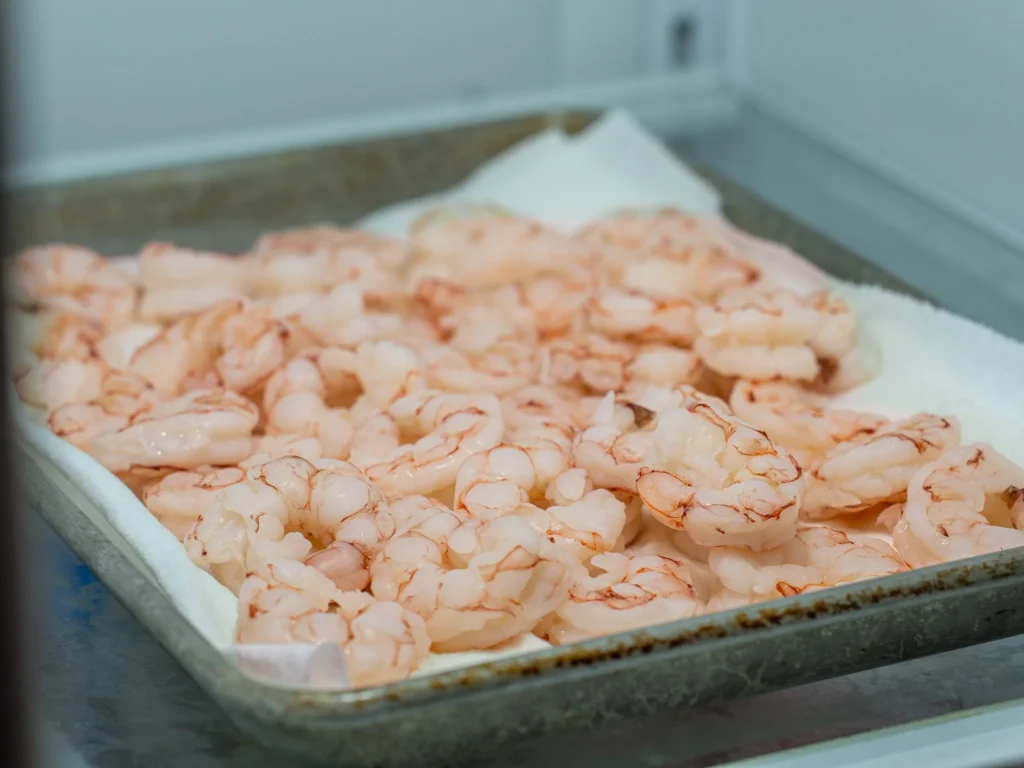
2. Off-Heat Poach the Shrimp . Once the liquid is at a rolling boil, add 600g of peeled and deveined shrimp, immediately turn off the heat, and set a 3-minute timer. Let them coast in the hot water, which should be in the 190-195°F (90°C) range. When the timer goes off, fish shrimp out with a spider strainer and lay them on a paper-towel-lined sheet tray. Slide the tray into the fridge for about 20 minutes to cool and steam off.
How do I know they’re done? Visually, they should be fully opaque all the way through with the tail curled into a loose “C,” not a tight, closed “O” . A super tight curl means they were cooked too fast and are probably overcooked. They should feel firm, but not snappy. Three minutes is the right ballpark for 21/25 size shrimp, but if you’re nervous, pull one out at 2:30 and cut into the thickest part. If the middle is no longer translucent, but opaque, they are done.
Why move them to a sheet tray in the fridge instead of cooling on the counter? Carryover cooking. If you leave them stacked in a bowl, the residual heat keeps cooking the centers and you’ll lose the perfect tender texture we just worked for.
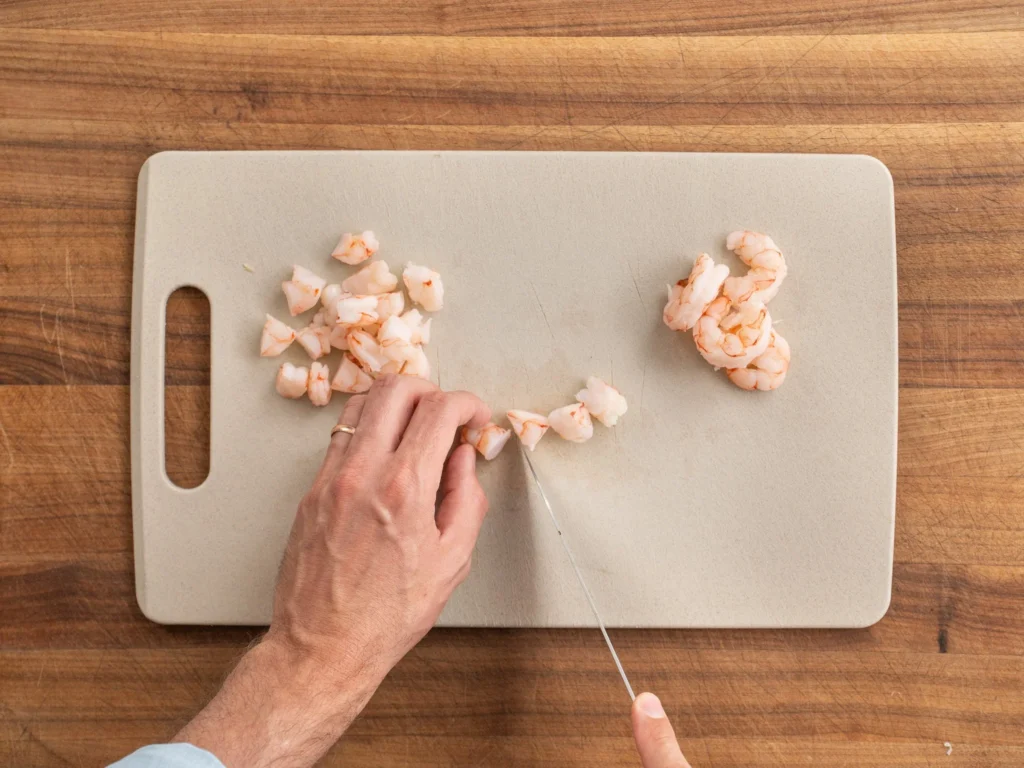
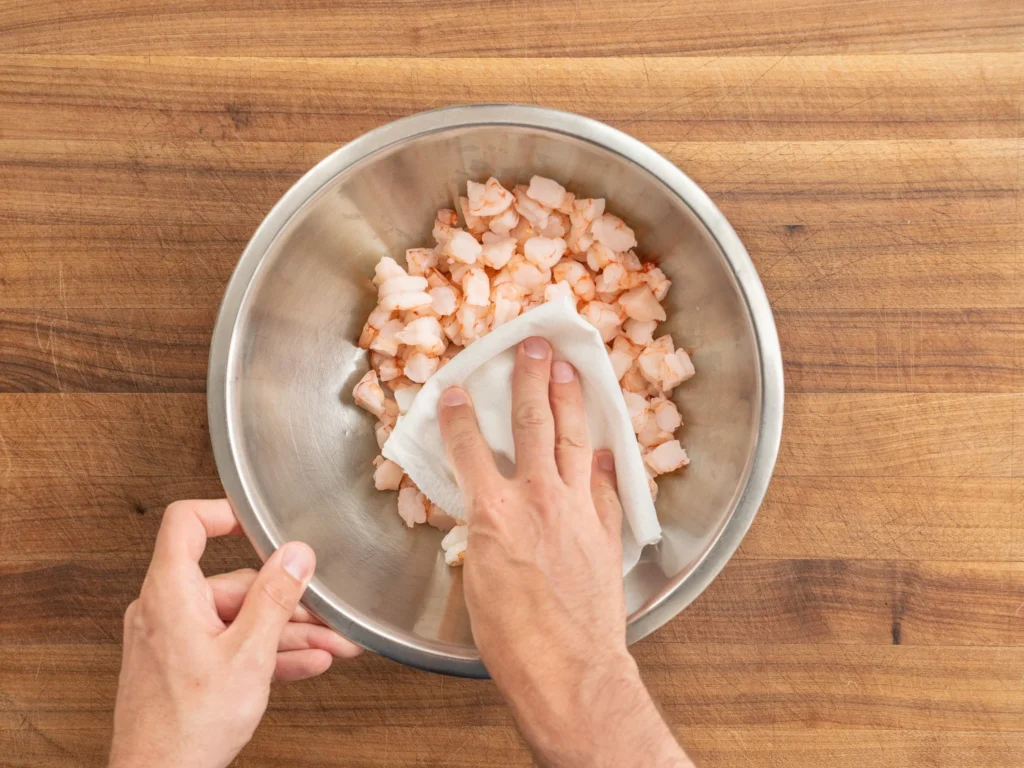
4. Dry and Cut the Shrimp . Pull the cooled shrimp then cut them into bite-sized pieces about the size of a peanut M&M, or slightly smaller. Once cut, dab them thoroughly with paper towel to soak up any moisture.
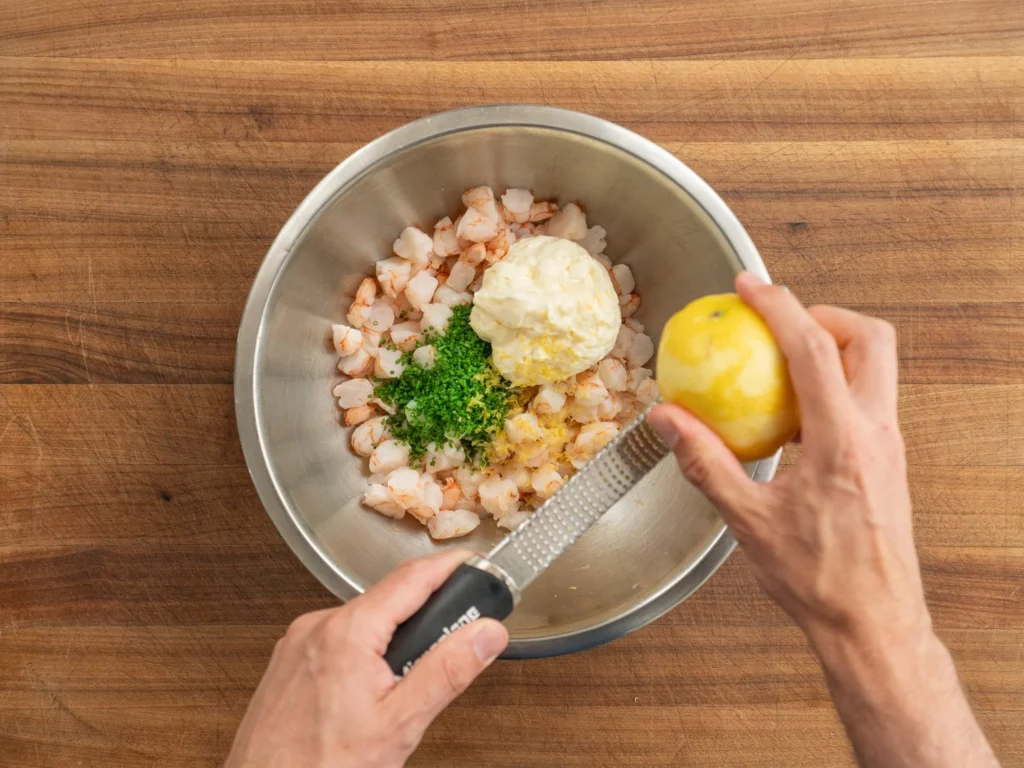
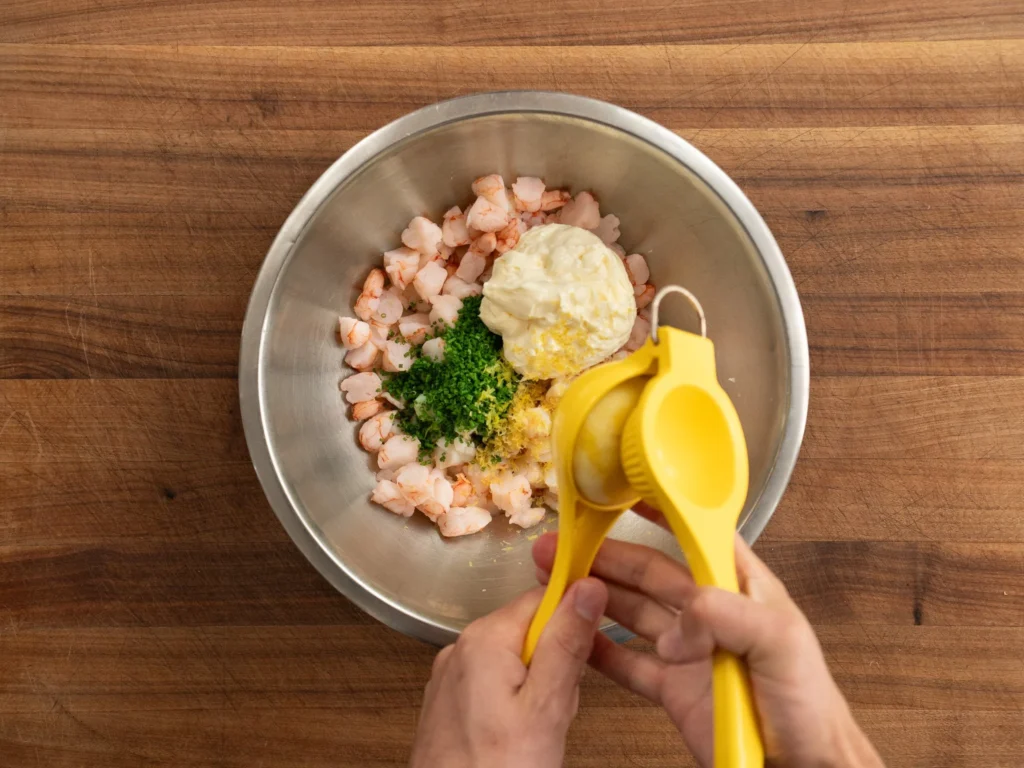
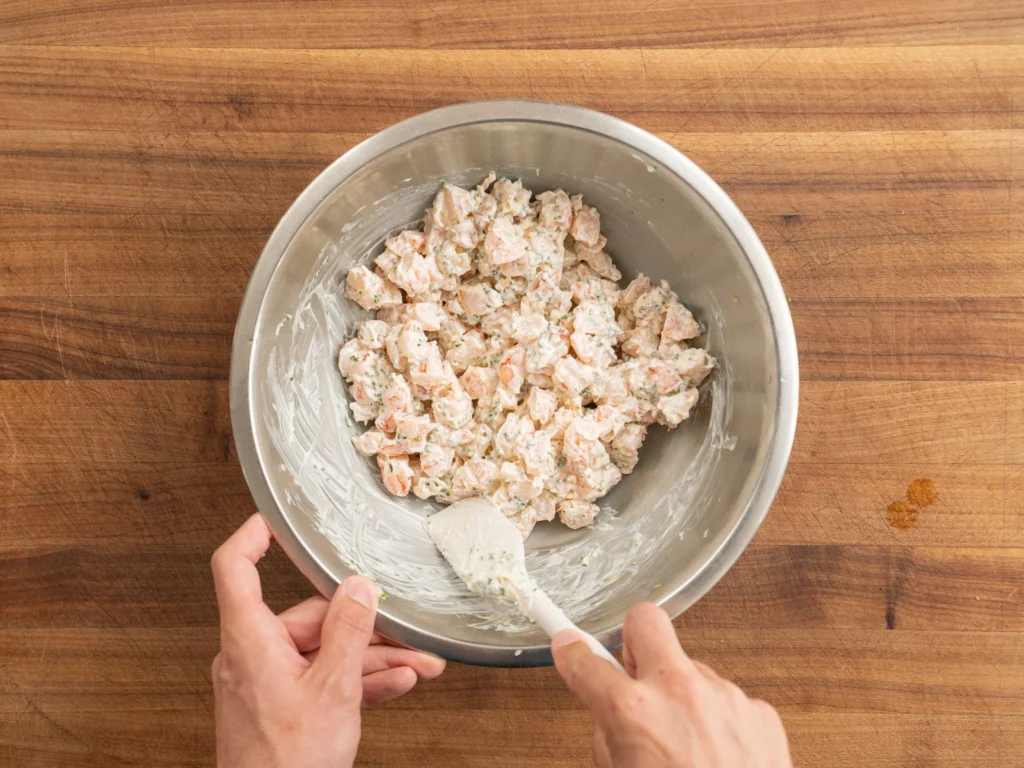
5.Dress the Shrimp. Add in mayo, chives, lemon juice, and lemon zest and gently stir to combine. Give the shrimp a taste right away. It’s a little unpredictable how much salt the shrimp will pick up from the poach, so this is your chance to bump up the salt or lemon.
How small should I cut them? Big enough that you still get distinct chunks of shrimp in every bite, small enough that the roll holds together. I tried chopping half of them finer like a chicken salad, and while it made a really good shrimp salad, it didn’t eat like a shrimp roll. A great lobster roll is all about those large plump little bites of buttery, sweet shellfish.
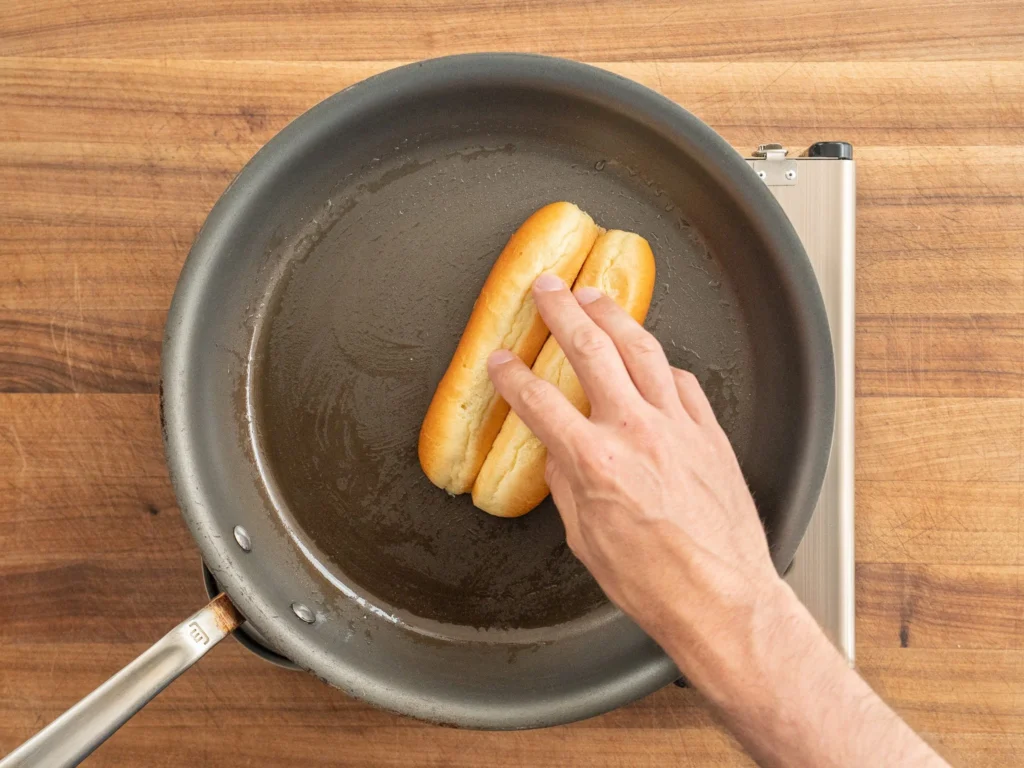
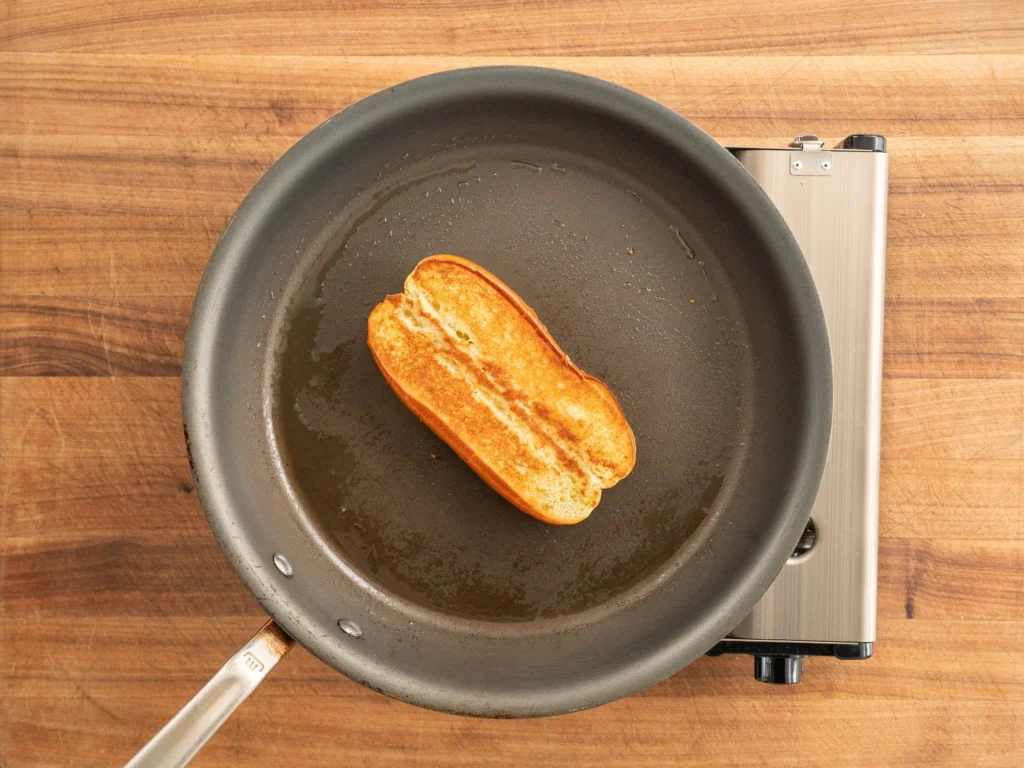
5. Toast the Buns . Heat about 1 tablespoon of oil in a nonstick saute pan over medium heat. Toast the buns on the inside until they’re nicely golden brown and a little crispy.
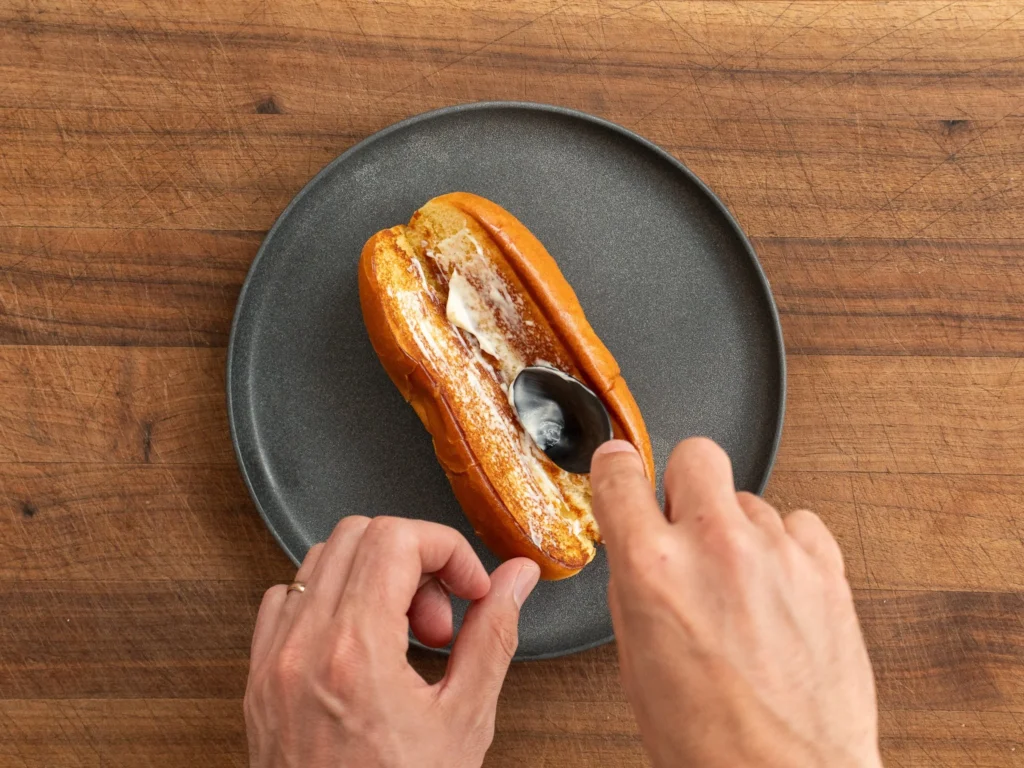
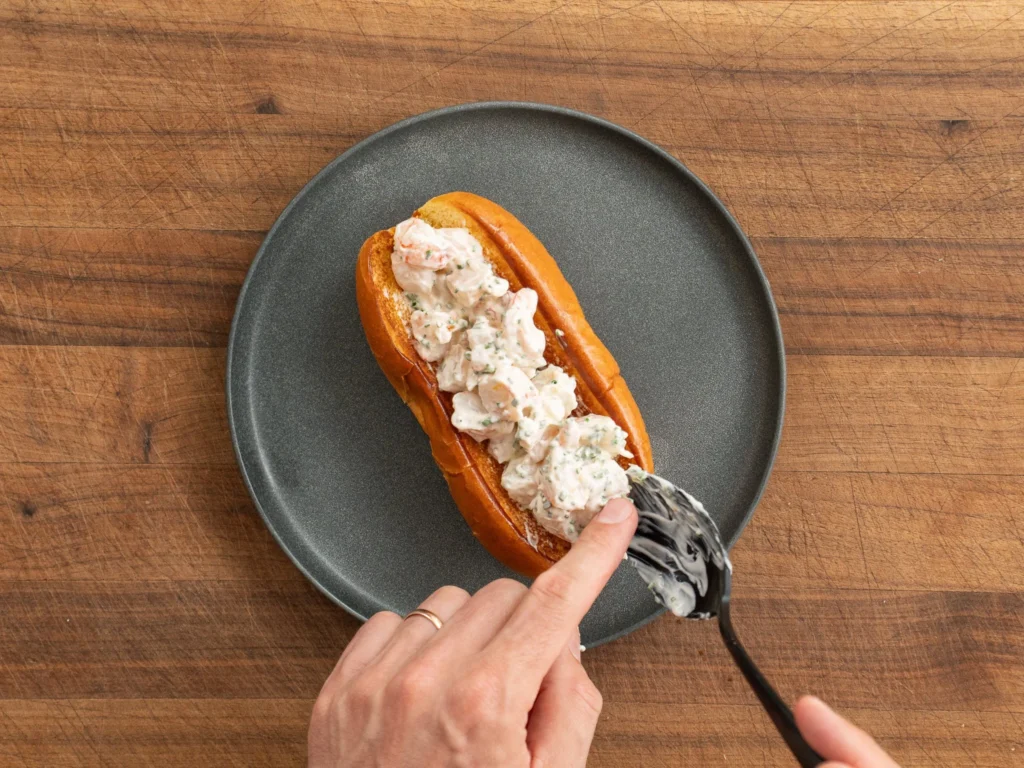
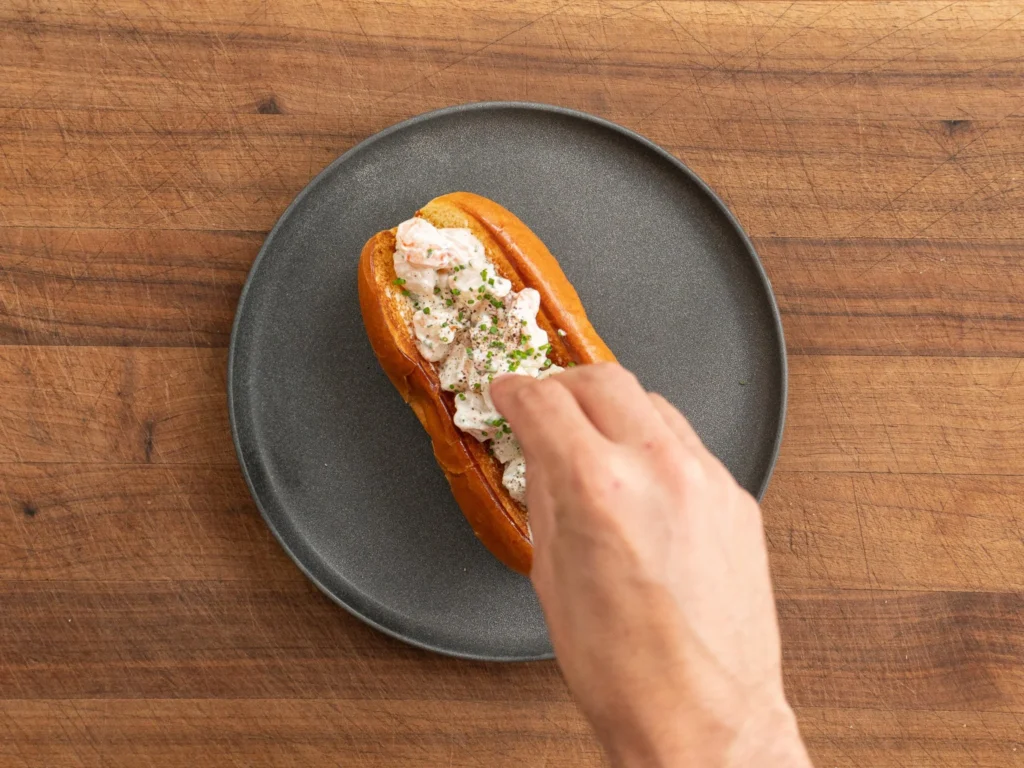
6. Assemble the Rolls. Spread a little mayo on each toasted bun, then pile in the shrimp mixture. Top with more chives a crack or two of black pepper and serve right away while the buns are still warm and soft.
Anything else worth topping with besides chives? Old Bay, black pepper, more chives, or an extra hit of lemon all work, but try to keep it simple. The shrimp is the star.
Storage and Make-Ahead
Plain poached shrimp will keep in the fridge for a day or two as long as they are well dried and covered. I wouldn’t make any other part of this dish ahead of time. It’s designed to be made fresh to order. When the mayo-lemon-shrimp mixture sits, it goes south quickly. The lemon will start to cook the shrimp more causing it to lose its fresh flavor. The salt draws out more moisture and the now-wet lemon-mayo starts to taste a little like shrimpy lemonade as it sits. Not a good combo.
Shrimp Roll
Ingredients
For the Poach
- 3000 g water
- 120 g coarse salt, I use Morton coarse kosher
- 90 g granulated sugar
- 1 lemon, halved and juiced
- 600 g raw 21/25 Argentine red shrimp, peeled and deveined
For the Dressing
- 120 g mayonnaise, I like Duke's brand
- 20 g fresh chives, finely cut
- 3 g salt
- 1 lemon, zested
- 15 g lemon juice
Assembly
- 4 brioche buns, split-top
- 1 tbsp oil, for toasting buns
- extra fresh chives, for topping
- fresh cracked black pepper
Instructions
- Combine water, salt, sugar, and 1 halved lemon (squeeze the juice in first) in a large pot and bring it to a boil. The water should taste aggressively salty and a little sweet.
- Add shrimp, immediately turn off the heat, and let them cook in the hot water (190-195°F/90°C range) for 3 minutes.
- After 3 minutes, remove shrimp with a spider strainer and lay them on a paper-towel-lined sheet tray. Slide the tray into the fridge for about 20 minutes to cool.
- Pull the cooled shrimp then cut them into bite-sized pieces about the size of a peanut M& M, or slightly smaller. Once cut, dab them thoroughly with paper towel to soak up any moisture.
- In a bowl with the shrimp pieces, add in mayo, chives, lemon juice, and lemon zest and gently stir to combine. Give the shrimp a taste and season with additional salt and/or lemon juice if needed.
- Heat about 1 tablespoon / 15g of oil in a nonstick saute pan over medium heat. Toast the buns on the inside until they're nicely golden brown and a little crispy.
- To assemble the shrimp rolls, spread a little mayo on each toasted bun, then pile in the shrimp mixture. Top with more chives a crack or two of black pepper and serve right away while the buns are still warm and soft.
Notes
 Like this? Leave a comment below!
Serve This With:
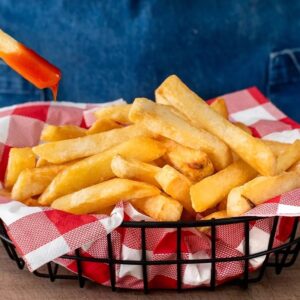
You can’t go wrong with high quality crunchy kettle chips, crispy French fries (my recipe here), or corn on the cob.
My Go-To Gear
Below are the tools I actually use when making this recipe. Some of these are affiliate links, which means I may earn a small commission if you purchase them at no extra cost to you.
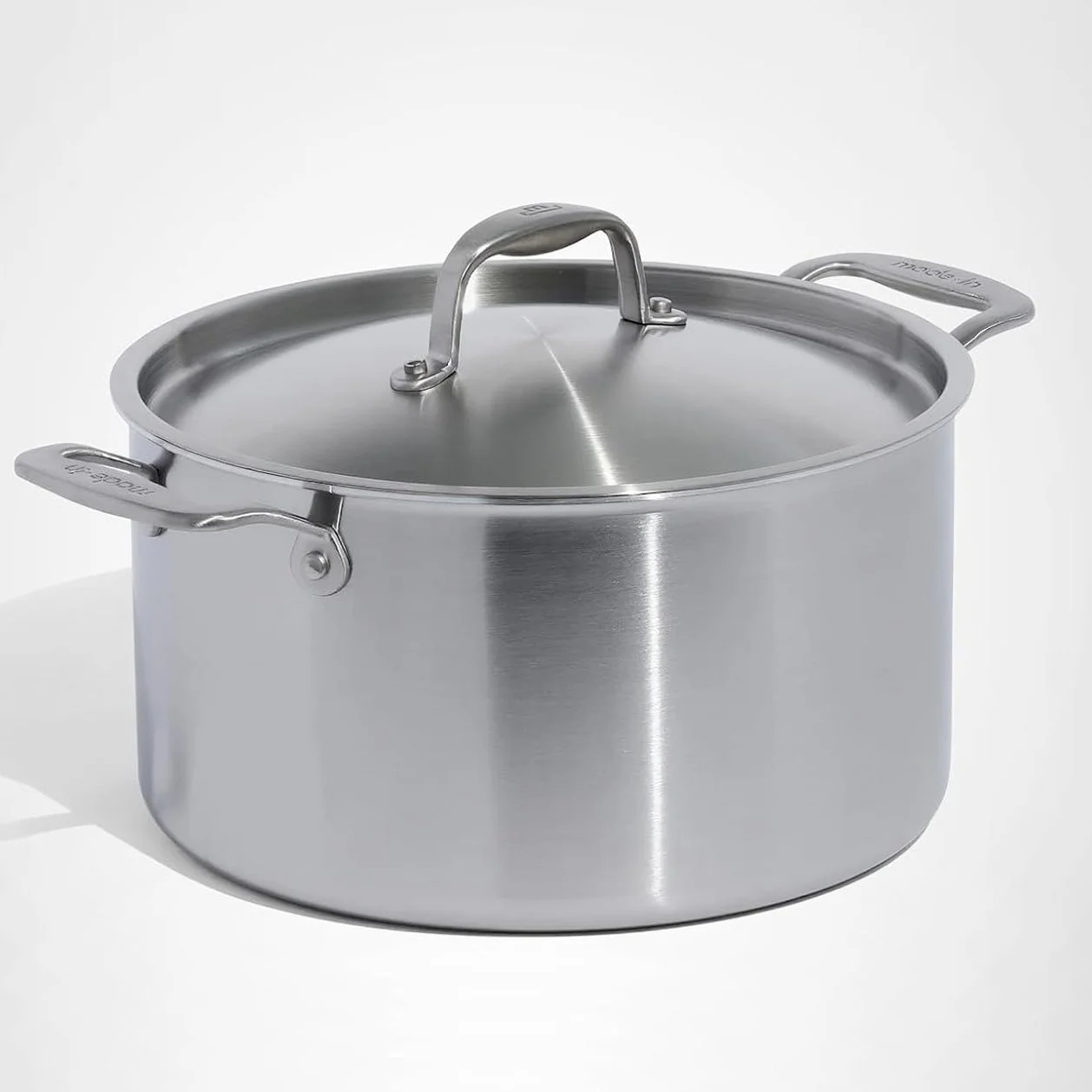
Any big pot works here, but I like a roomy 8qt with a heavy bottom. Plenty of room to fish out your shrimps.
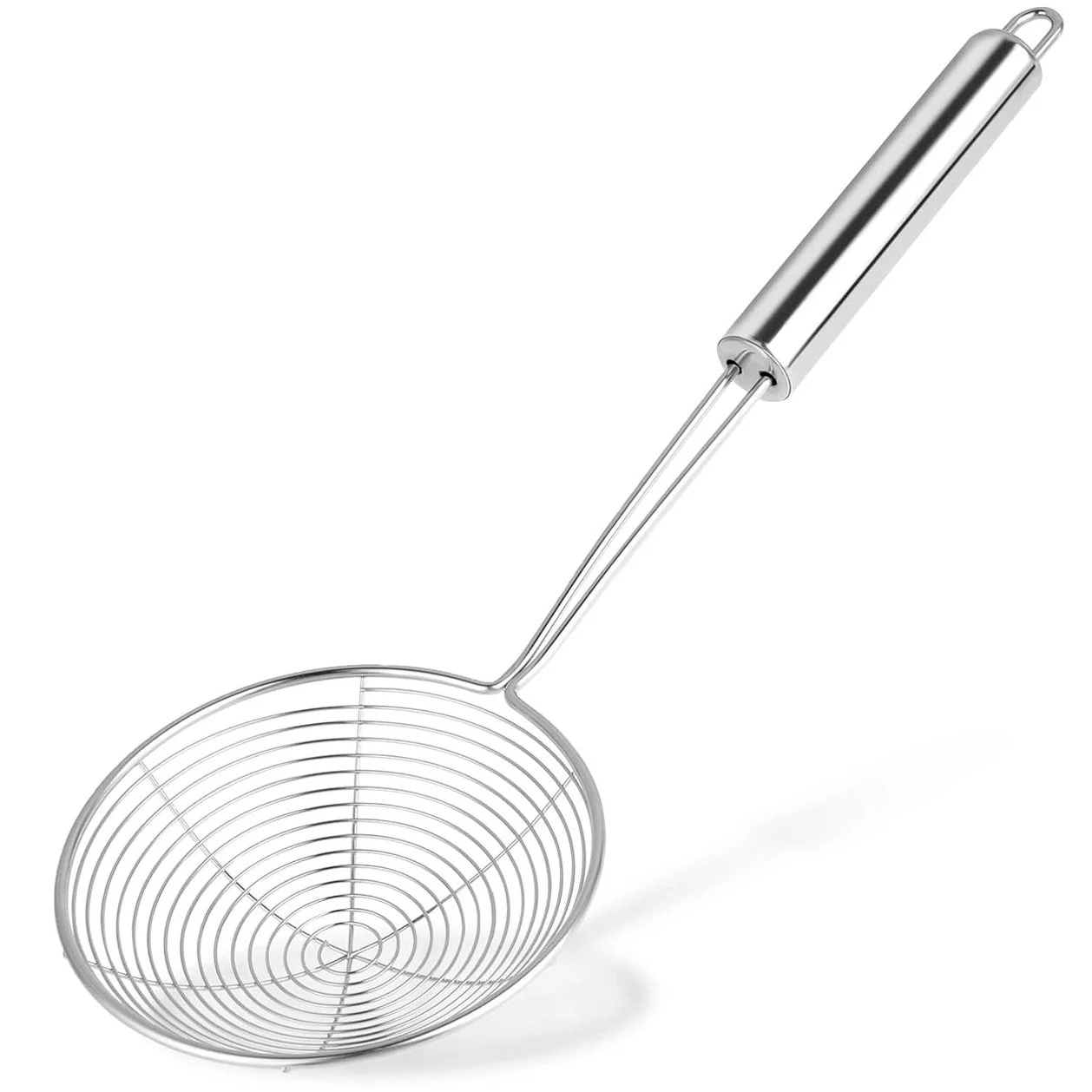
The fastest way to fish the shrimp out of the hot brine all at once without overcooking them (which can happen if you’re trying to fumble with tongs).
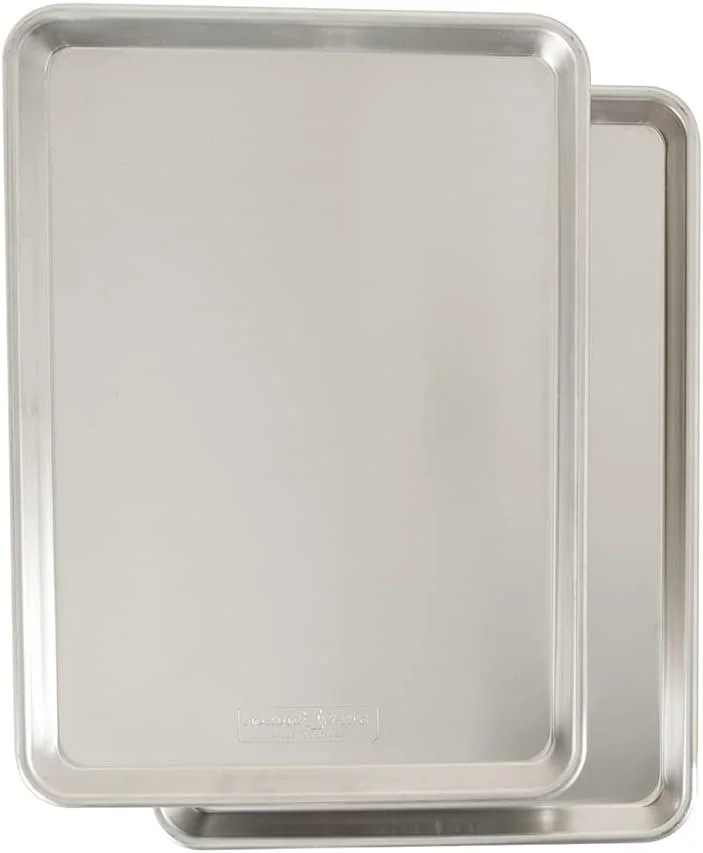
A big tray to lay the shrimp on for fast cooling. I use these half-sheet trays for just about every cooking project.
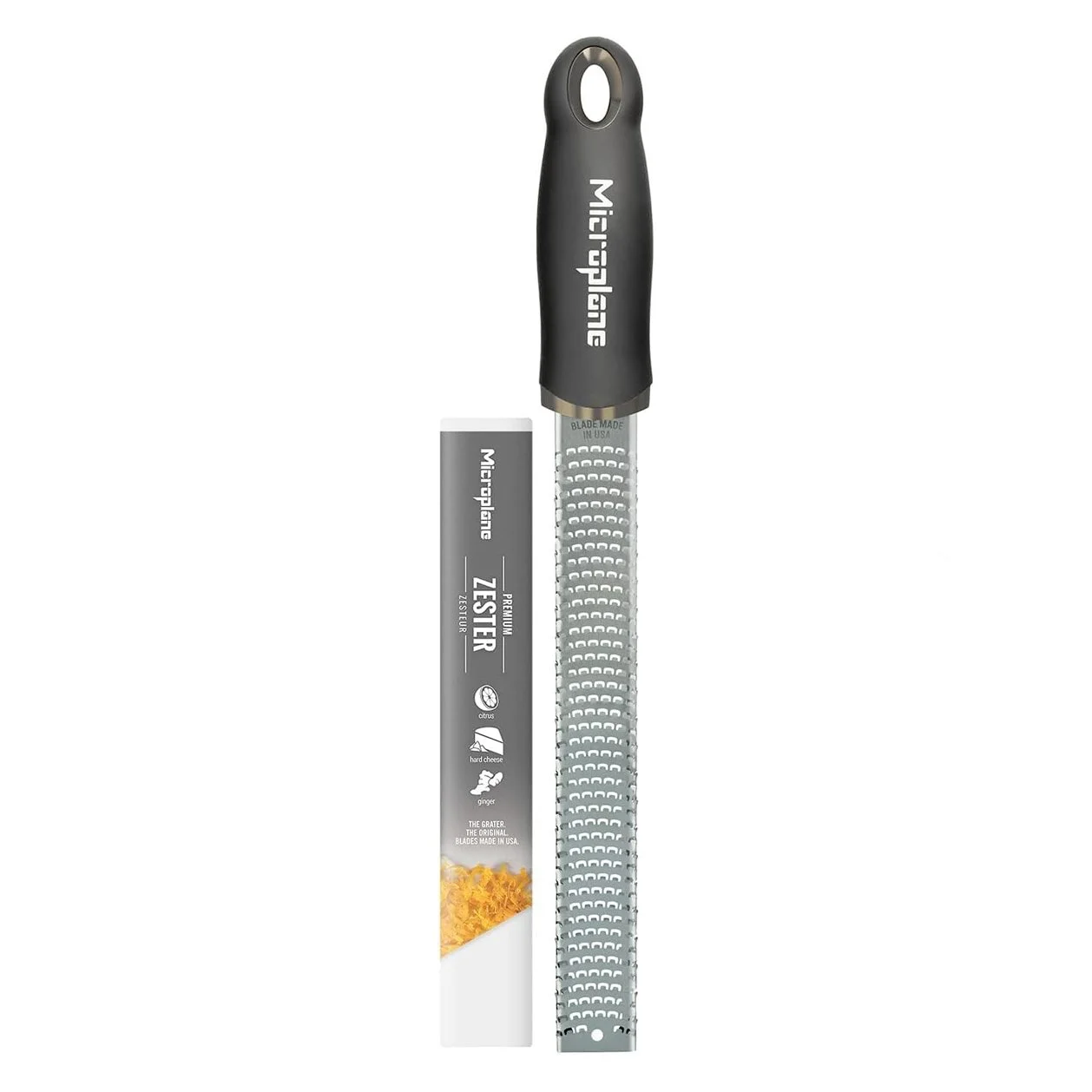
The best product that I’ve found for zesting lemons. We used microplane brand in the restaurants I worked in and I use it at home.
The next best option is wild-caught Gulf shrimp, but for this dish I would avoid the small bagged farmed white shrimp from the freezer aisle. They are overly snappy, and not close to lobster.
Look for a brioche split top bun. If you can’t find them, regular top-split hot dog buns work totally fine. You just want some kind of slightly sweet bun. Honestly the brioche burger buns would work great. they are the same dough as the hot dog buns. The only difference is form factor. The shrimp might fall off the bun unless you squish them a bit first.






i like this a lot!! it really does taste almost exactly like a real lobster roll. i prefer to rip the shrimp apart instead of cutting them, i think it makes a better mouthfeel.
Terrific recipe! I grew up in Maine, but was never a fan of lobster until well into adulthood (ironic since my uncle was a lobsterman). Shrimp was always my jam, so this hits all the right flavor notes. Sweet and plump with a little tang from the Duke’s and the lemon, plus the buttery roll, just perfect in my mind. Thanks for another great recipe.
Why all in metric, do you live in Europe? Dontyou like American food and people?
conversions are included at the bottom of all recipes. you can easily toggle from grams to volume (tsp/tbsp/cups)
I got Ai to convert it for me 😂 who needs you! Better step up your game or you’re not going to be needed anymore. 🤣