

This post contains affiliate links. Please see our disclosure policy.
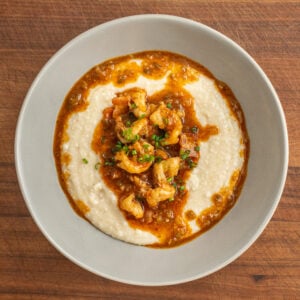
Plump shrimp in a rich, savory sauce over ultra-creamy cheddar grits.
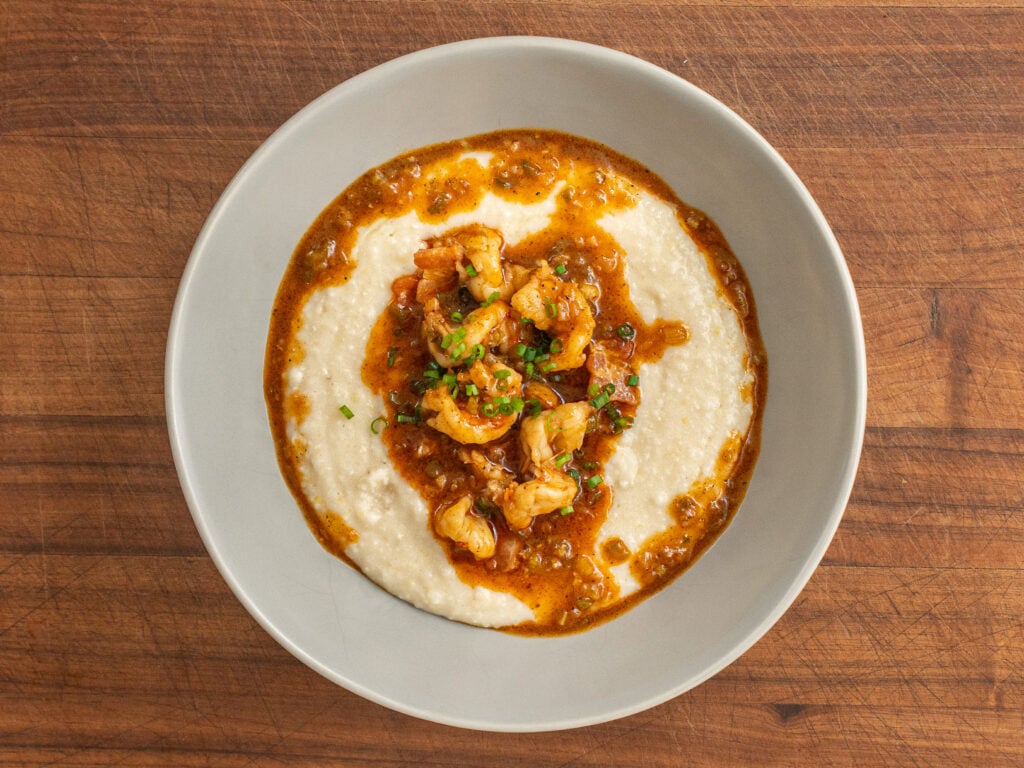
Why This Shrimp and Grits Recipe Delivers
The biggest problem with shrimp and grits is undercooked grits. I think that’s mostly because a lot of home cooks haven’t had truly great grits before, so they don’t realize how tender and creamy they can be.
In this recipe, we cook the grits for a full 90 minutes over low heat to fully hydrate and soften the coarse cracked corn. The result is creamy, tender grits without the gritty texture so many people complain about.
The sauce is somewhere between Low country Carolina coastal cooking and Creole étouffée. It’s smoky, savory, a little spicy, and rich enough to stand up to the creamy grits without overwhelming them.
Brian’s Pro Tips
Low and Slow Grits
It takes a surprisingly long time for the bran (the tough outer part of the corn grain) to fully soften. But it absolutely can. With a high liquid to grits ratio and about 90 minutes over low heat, the bran eventually becomes tender enough to disappear into the background. Most recipes stop well short of this point.
Keep at it. The finished grits should have tender, plump individual grains that squish between your teeth like couscous. When you get them there, the texture is incredibly satisfying and creamy. Well worth the extra cooking time.
Scrape The Grit Pot
Stir the grits every 10 minutes. Around the 1-hour mark, they’ll start to grip the bottom of the pot a more. At this point switch to scraping the bottom well with a wooden spoon each time you stir. This keeps the grits from sticking, browning, or scorching. A heavy-bottomed pot helps distribute the heat more evenly and reduces sticking, but after the first hour you still need to stay on top of it and pay attention.
Key Ingredient Notes & Substitutions
These are important ingredients I want to call out in this recipe. A full list of ingredients and amounts can be found in the recipe card below.
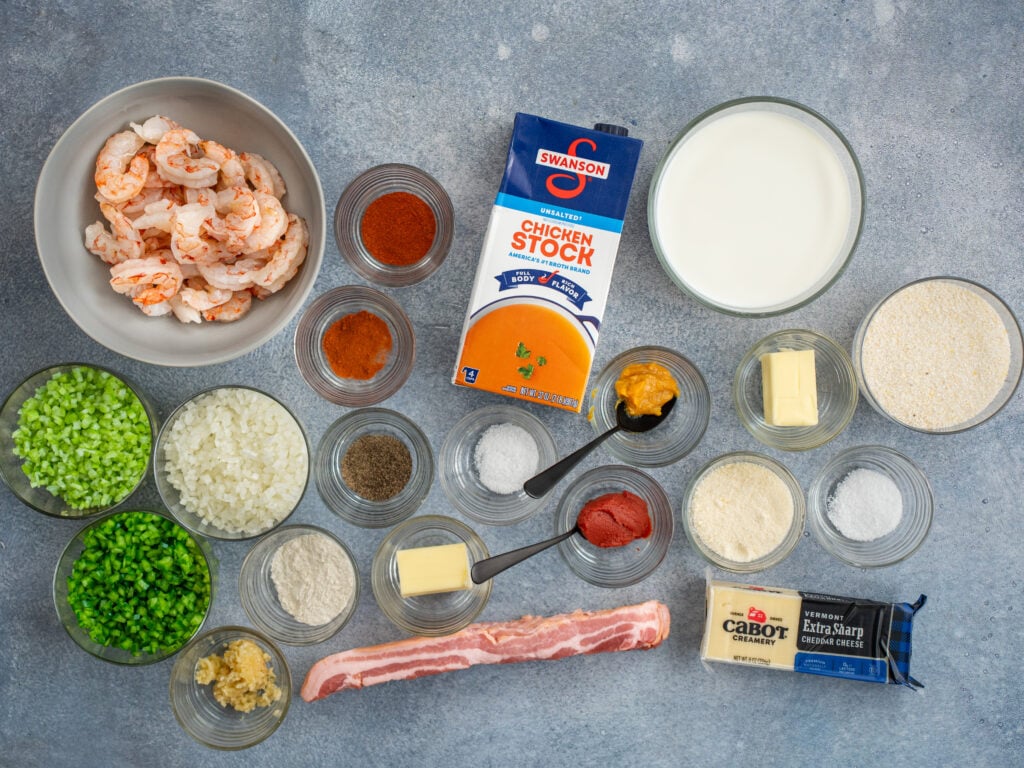
Old Fashioned Grits
These have noticeably better texture and flavor than instant 5-minute grits. I recommend Quaker mainly because they’re widely available and the grind is consistent, which means your cook time should match mine pretty closely.
↳Substitute With:
Local or heirloom grits can be excellent, but the milling and particle size can vary a lot from one producer to another. That means they may cook much faster or much slower than what I’m showing here. Use them if you want, just know you may need to adjust the cook time based on texture rather than the clock.
Argentine Red Shrimp
I like these because they’re sweet, plump, tender, and pretty hard to overcook. Most grocery stores carry something similar in the freezer section these days. I can only find them in a 21/25 size so I slice them in half before cooking. If yours are a lot smaller, keep them whole.
↳Substitute With: Gulf shrimp or white shrimp
Chicken Bouillon
You wouldn’t expect chicken bouillon to improve a seafood sauce, but it adds a deeper savory note that makes the sauce taste meatier and more substantial without making it taste like chicken. I tried water, clam juice and shrimp shell stock in testing. Chicken stock/bouillon yielded the most delicious result. Go for the Better Than Bouillon brand if you can find it.
How To Make Shrimp and Grits
These are the detailed step by step instructions you’ll need to make this recipe. A more condensed version is in the recipe card below.
1. Start the grits.
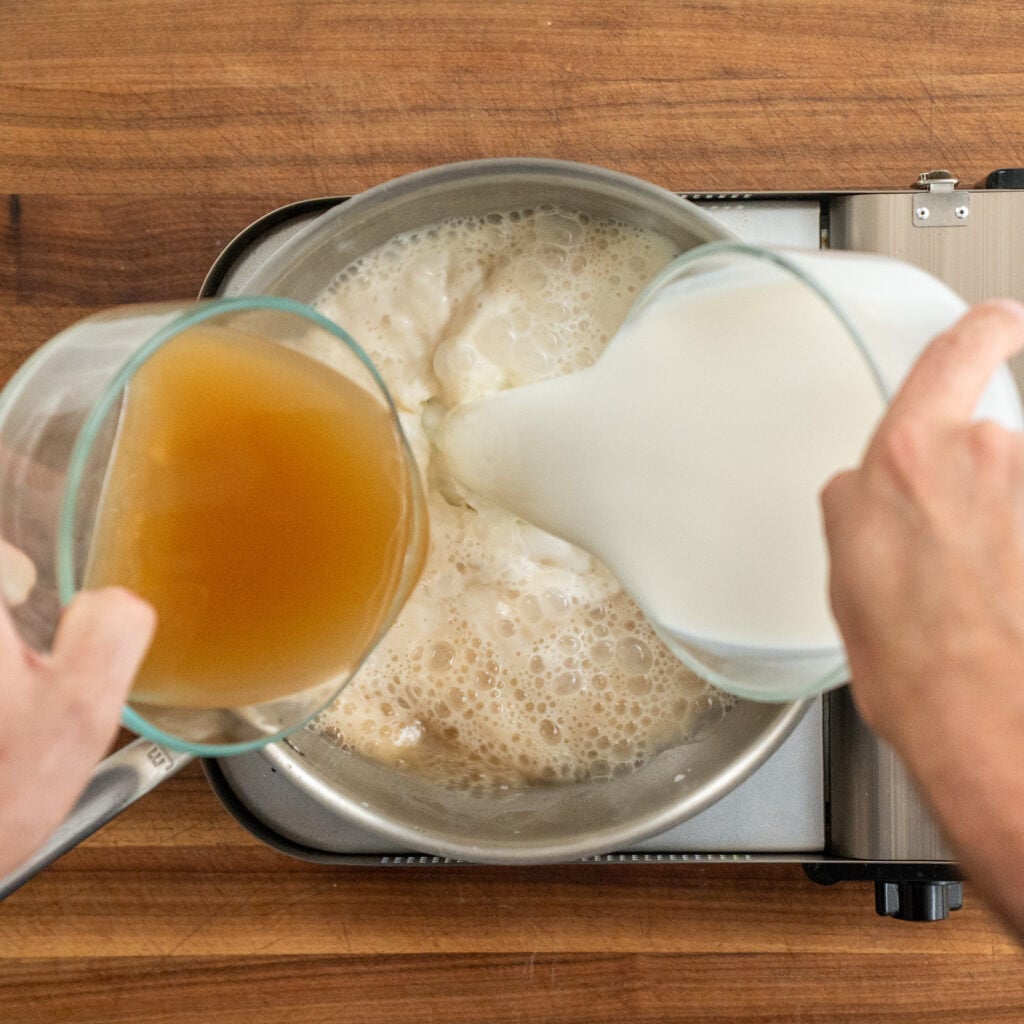
- Bring 600g whole milk, 600g chicken stock, and 10g salt to a boil in a wide, heavy-bottomed pot. Don’t walk away. Milk can boil over quickly.
- Whisk in 200g old-fashioned white grits until evenly combined. Simmer for about 5 minutes, stirring frequently, until the grits begin to hydrate and thicken.
- Once they’re thick and starting to plop, reduce the heat to low, cover, and cook for about 90 minutes, stirring every 5-10 minutes. After about 60 minutes, start scraping the bottom of the pot well each time you stir to prevent a brown film from forming or the grits from scorching.
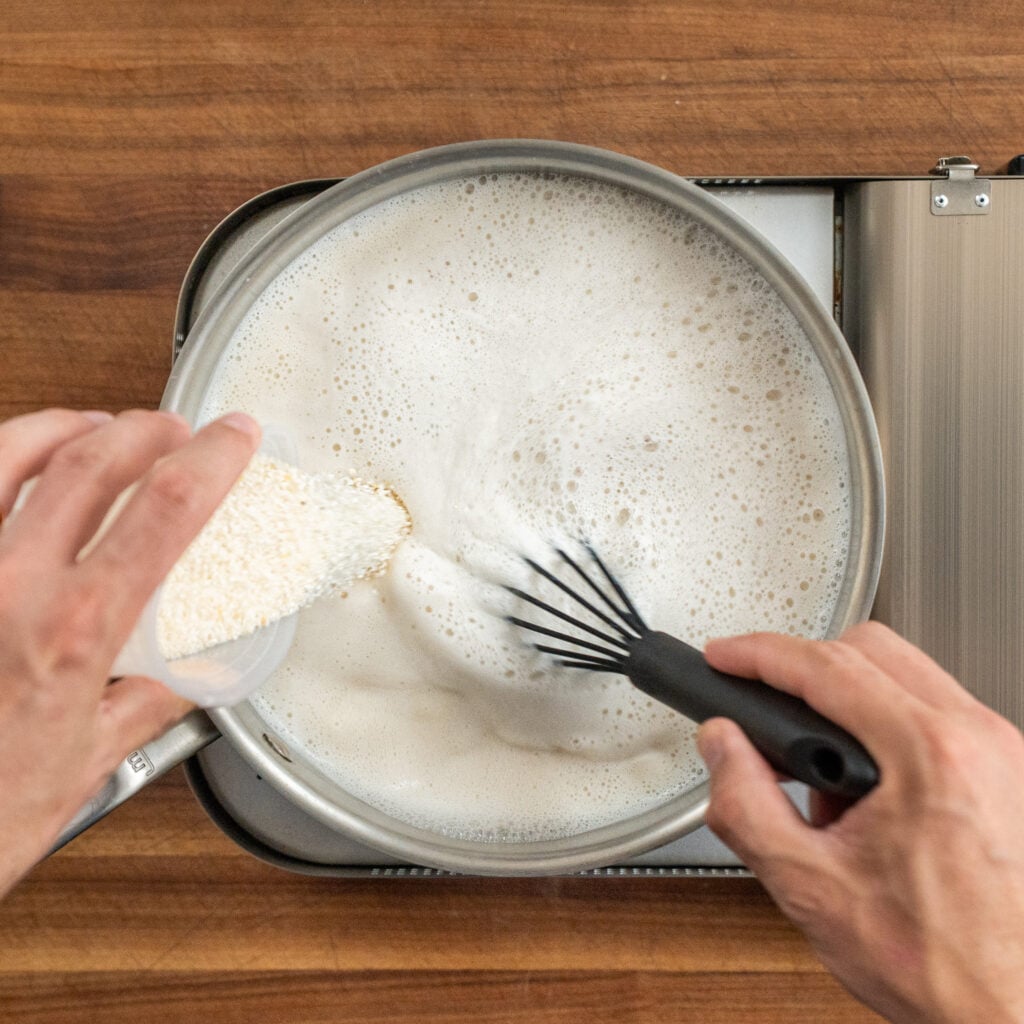
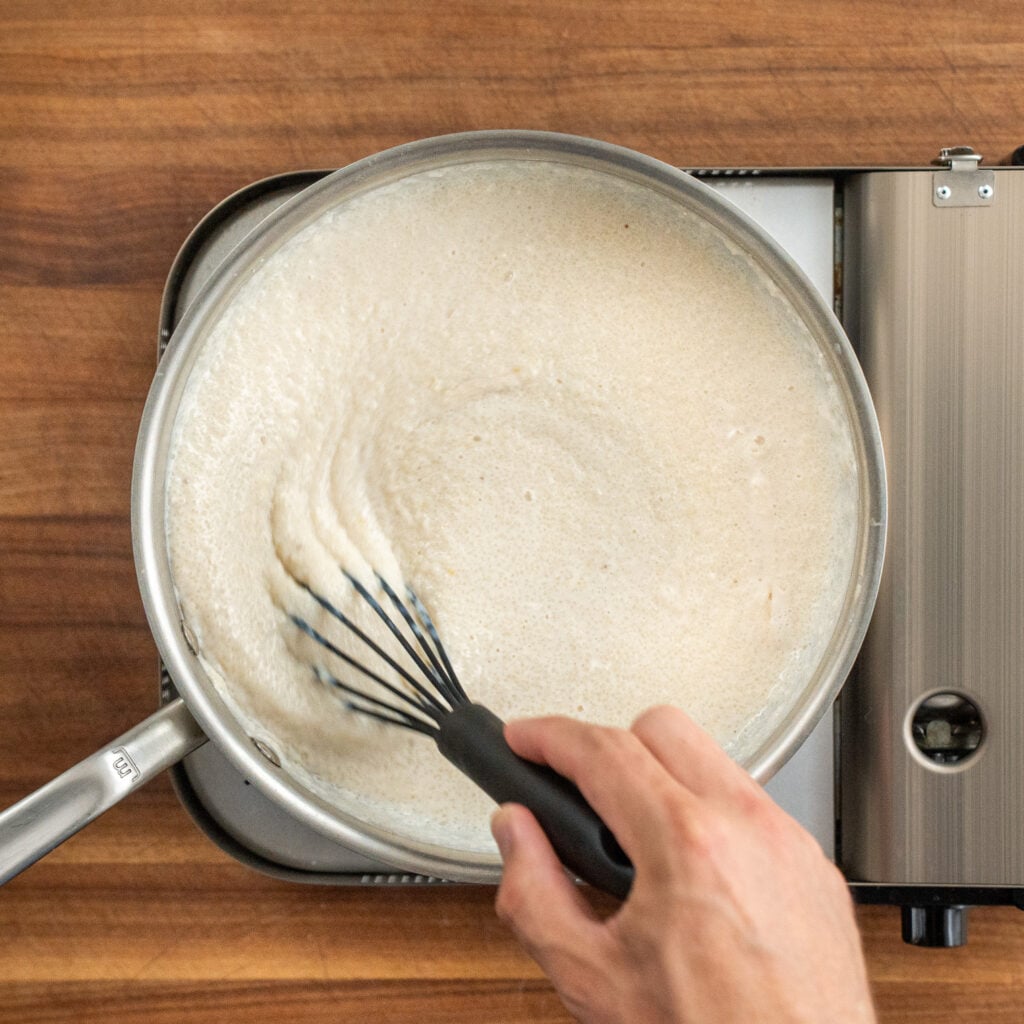
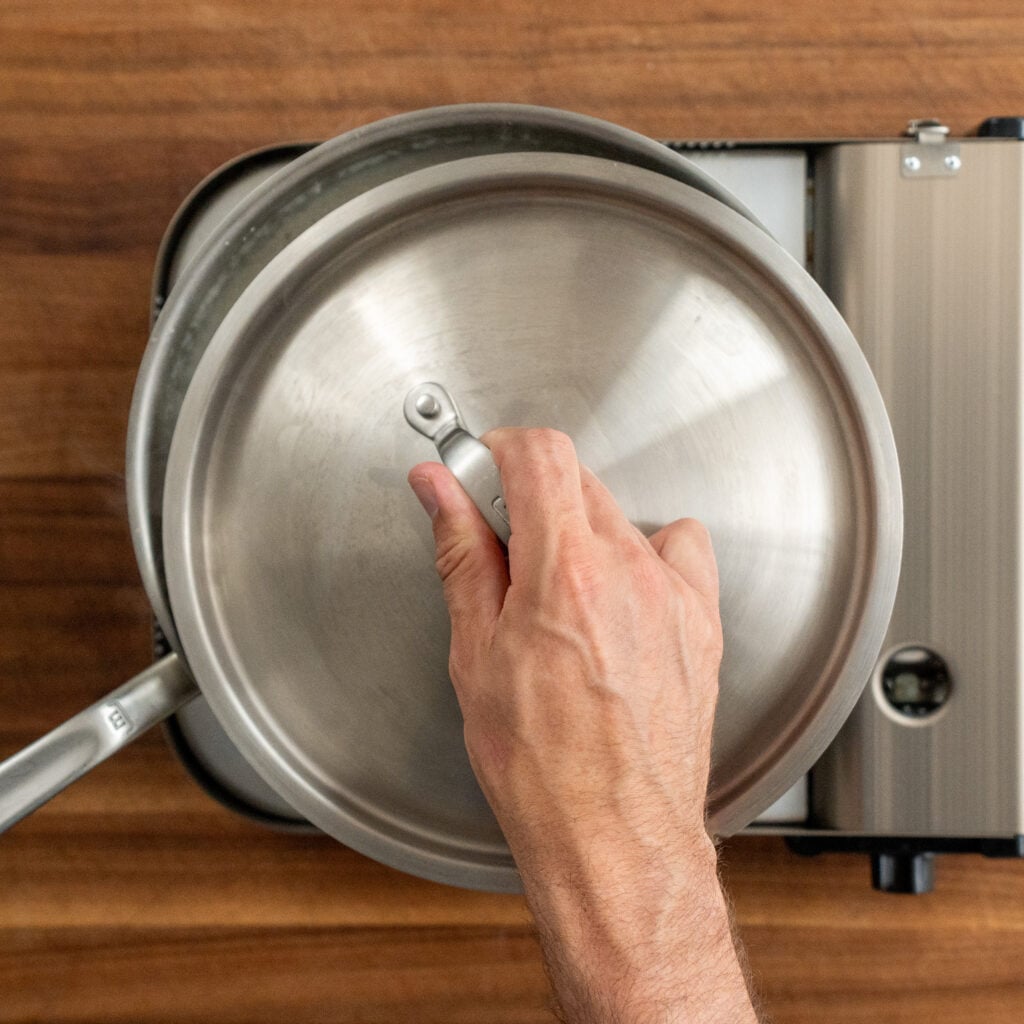
If the grits get thick before they’re tender: Stir in about 100g water and keep cooking over low heat. You want just enough liquid to keep the grits loose, saucy, and easy to stir while they finish cooking.
2. Cut the shrimp.
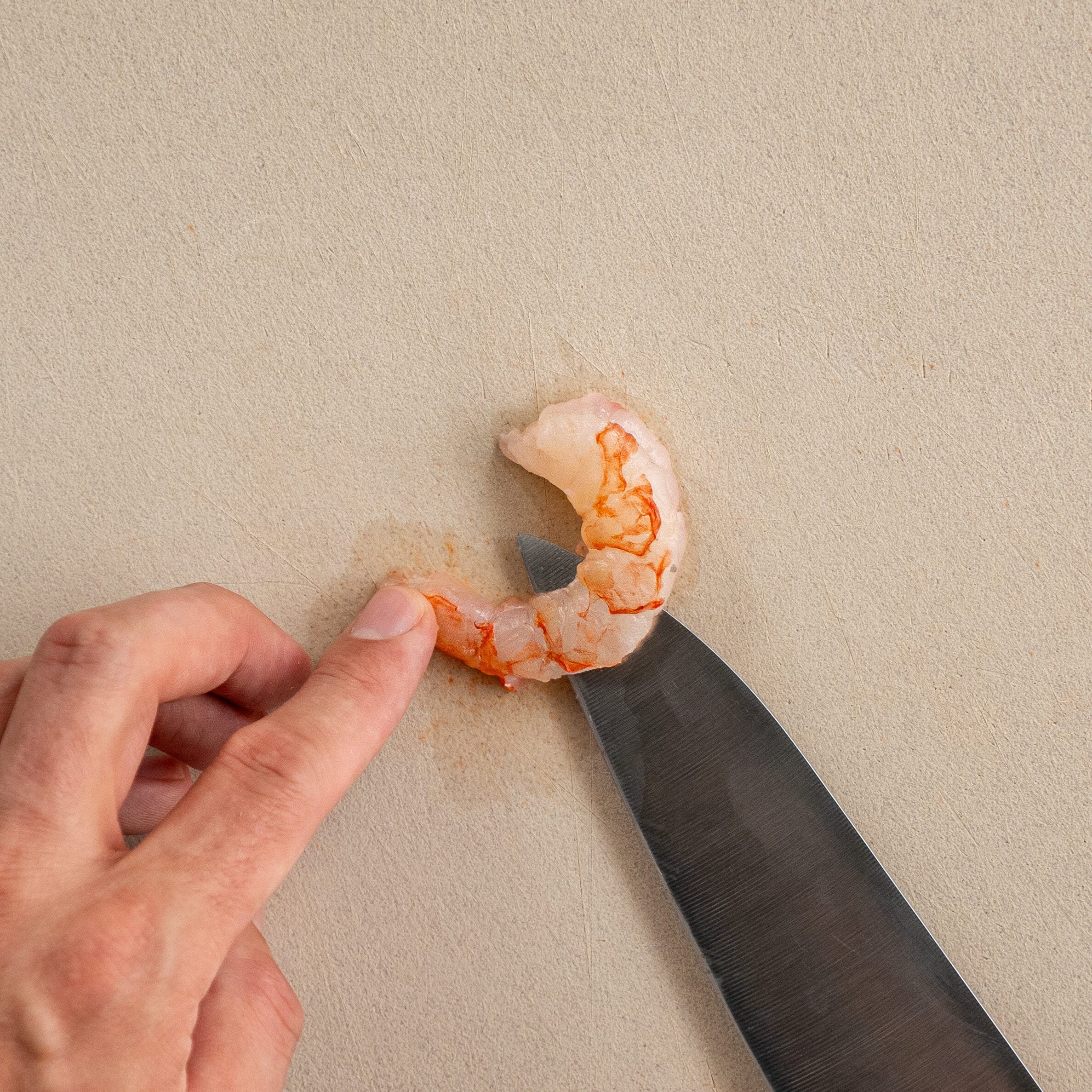
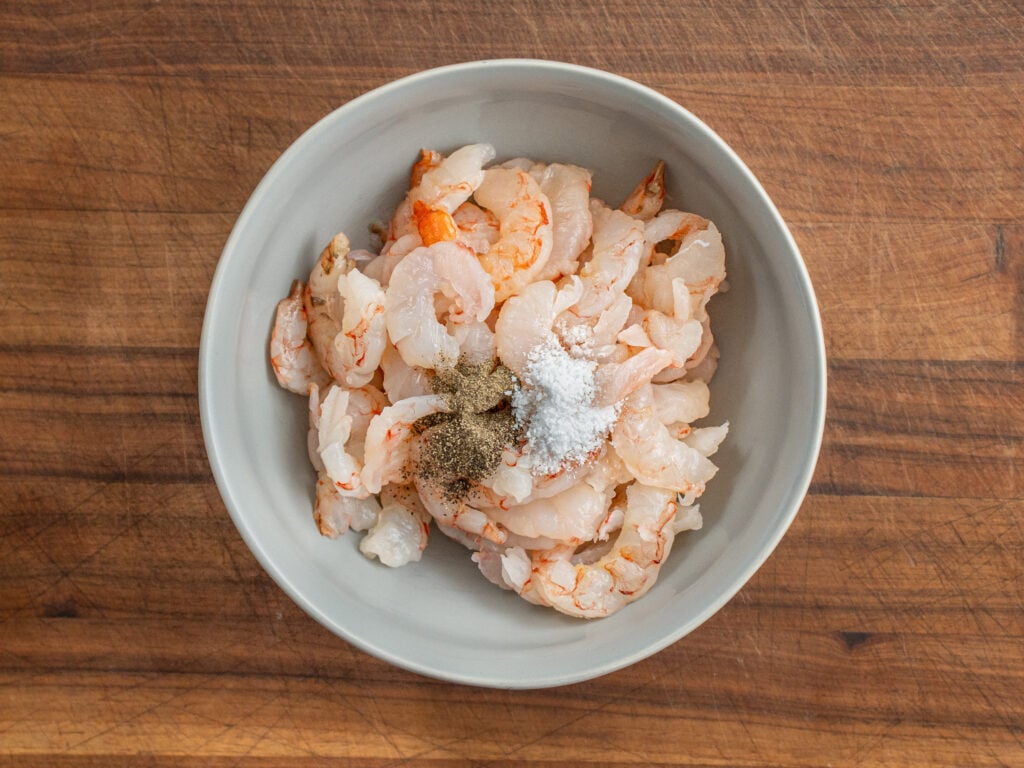
Cut the 450g (1lb) thawed, drained 21/25 shrimp in half lengthwise through the lobes to make two long, curled halves. Toss the shrimp with 5g salt and 2g black pepper, then refrigerate for about an hour or until the sauce is ready for them.
3. Do the knife work.
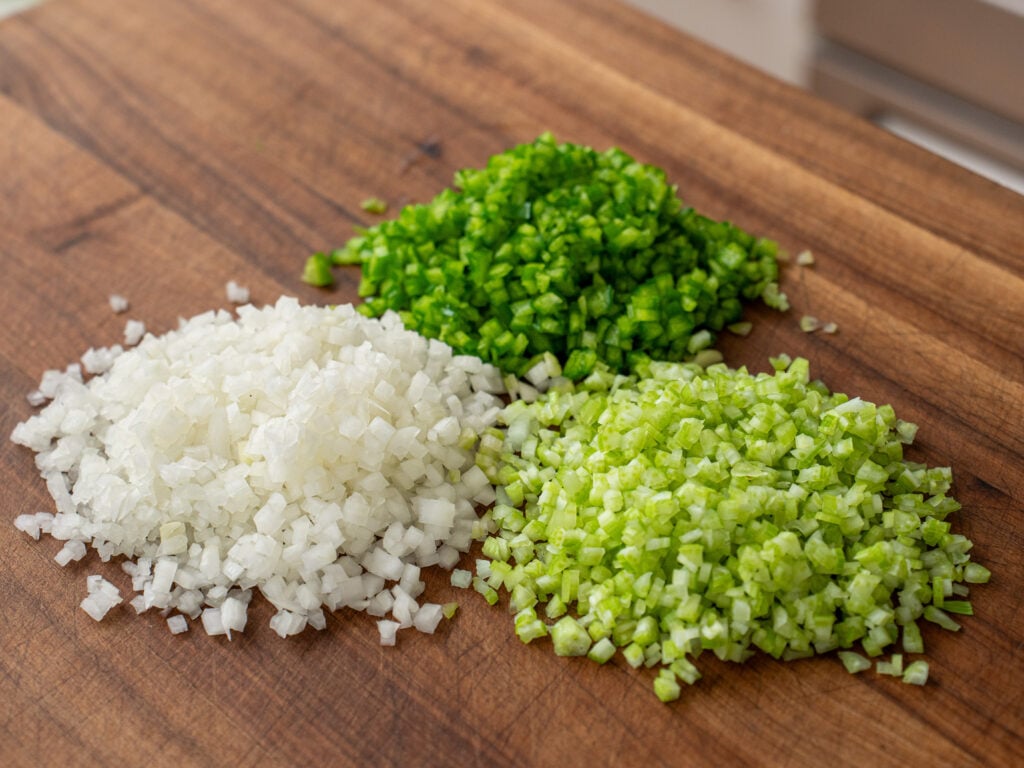
Cut 100g celery, 200g onion, and 150g green bell pepper into a small dice, about ¼ inch. Press or mince 20g garlic. Grate 100g cheddar and 30g Parmesan. Cut 150g bacon into roughly ½-inch squares.
4. Render the bacon.
About halfway through the grits cook time (when they have about 40-45 minutes left), add 2 tablespoons oil and 2-3 tablespoons water to a wide, heavy-bottomed pot over medium heat. Add the diced bacon and cook for about 10 minutes, stirring frequently, until the fat has rendered and the bacon is brownish-red but still flexible.
If dark bacon fond starts building up before the bacon is cooked, add another 2-3 T water to deglaze the pot and slow down the browning. Once the bacon is rendered, transfer it to a bowl, leaving the bacon fat in the pot.
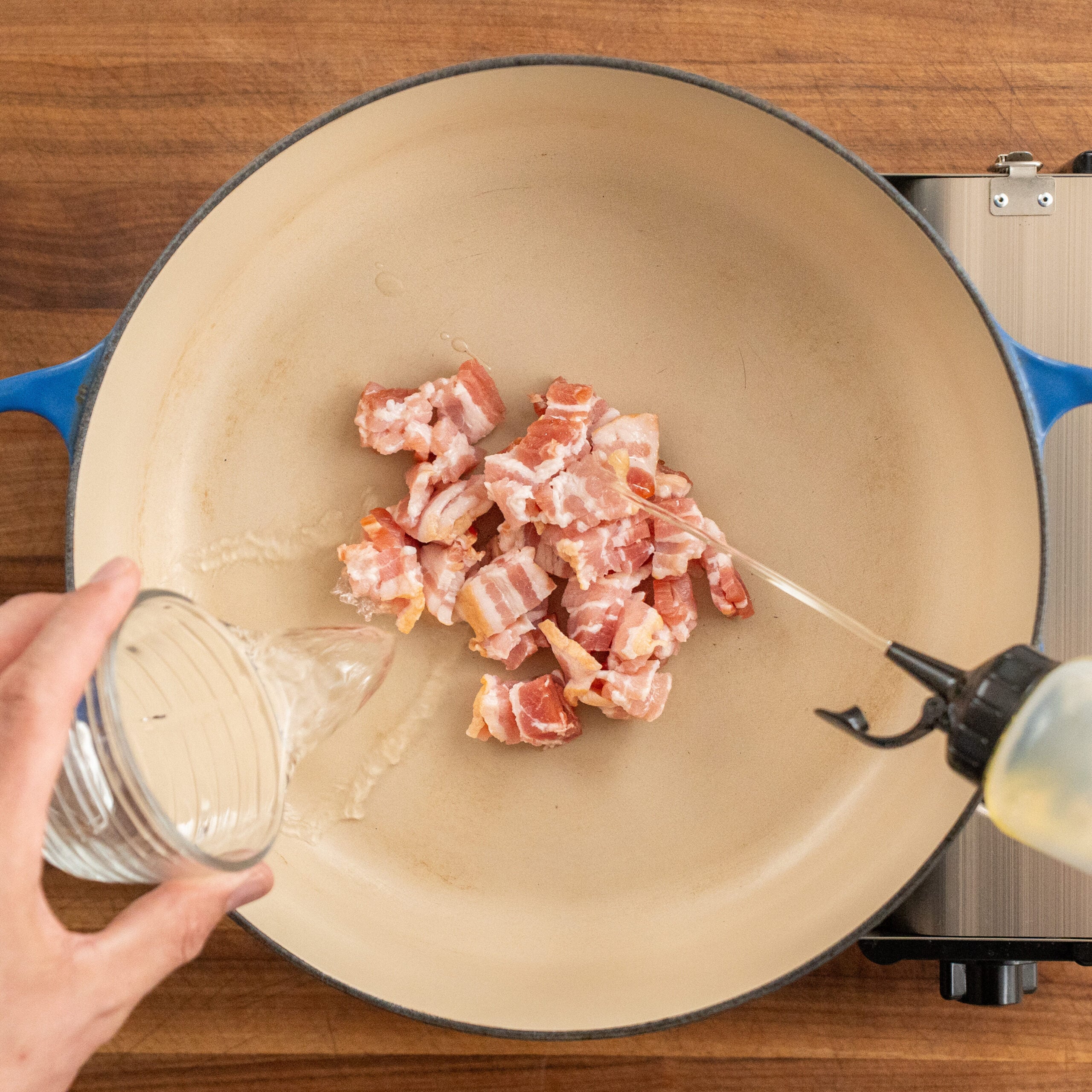
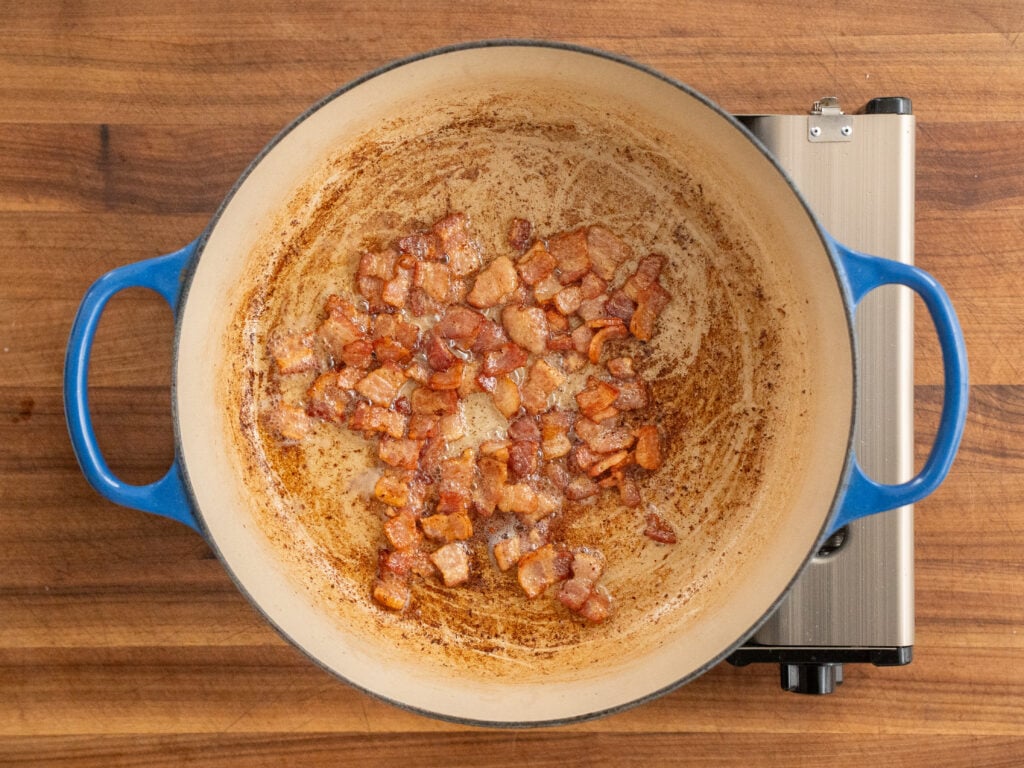
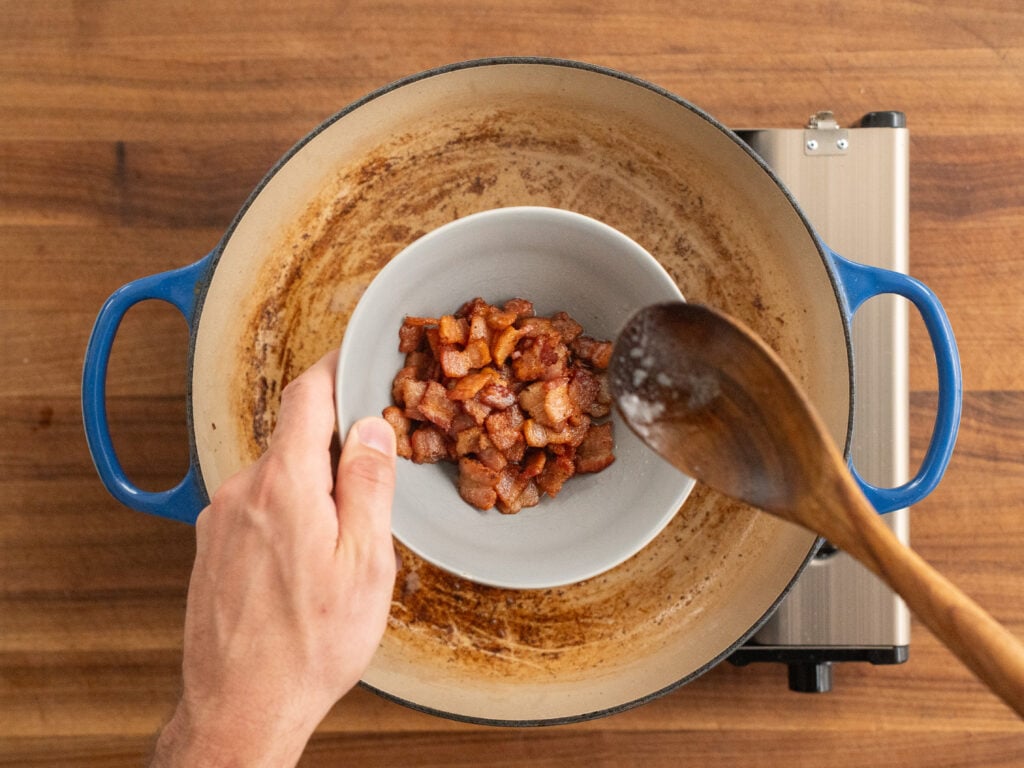
Why add water to bacon? It helps the bacon cook more evenly and gives the fat time to render before the meat gets too brown.
5. Brown the aromatics.
Add 100g celery, 200g onion, 150g green bell pepper, and 2g salt to the bacon fat. Cook over medium-high heat for 10-12 minutes, stirring about every 2 minutes, until the vegetables are tender and beginning to caramelize around the edges.
Remember to keep stirring the grits while you make the sauce.
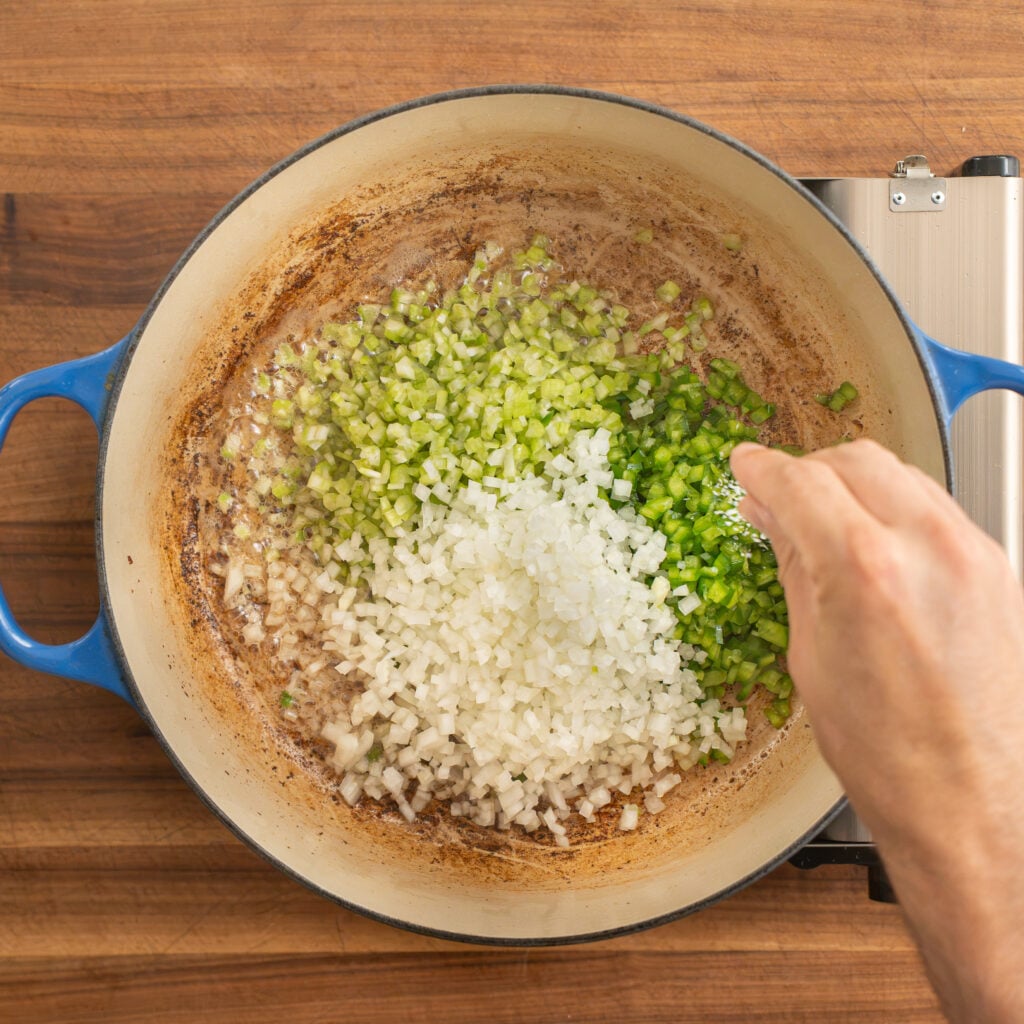
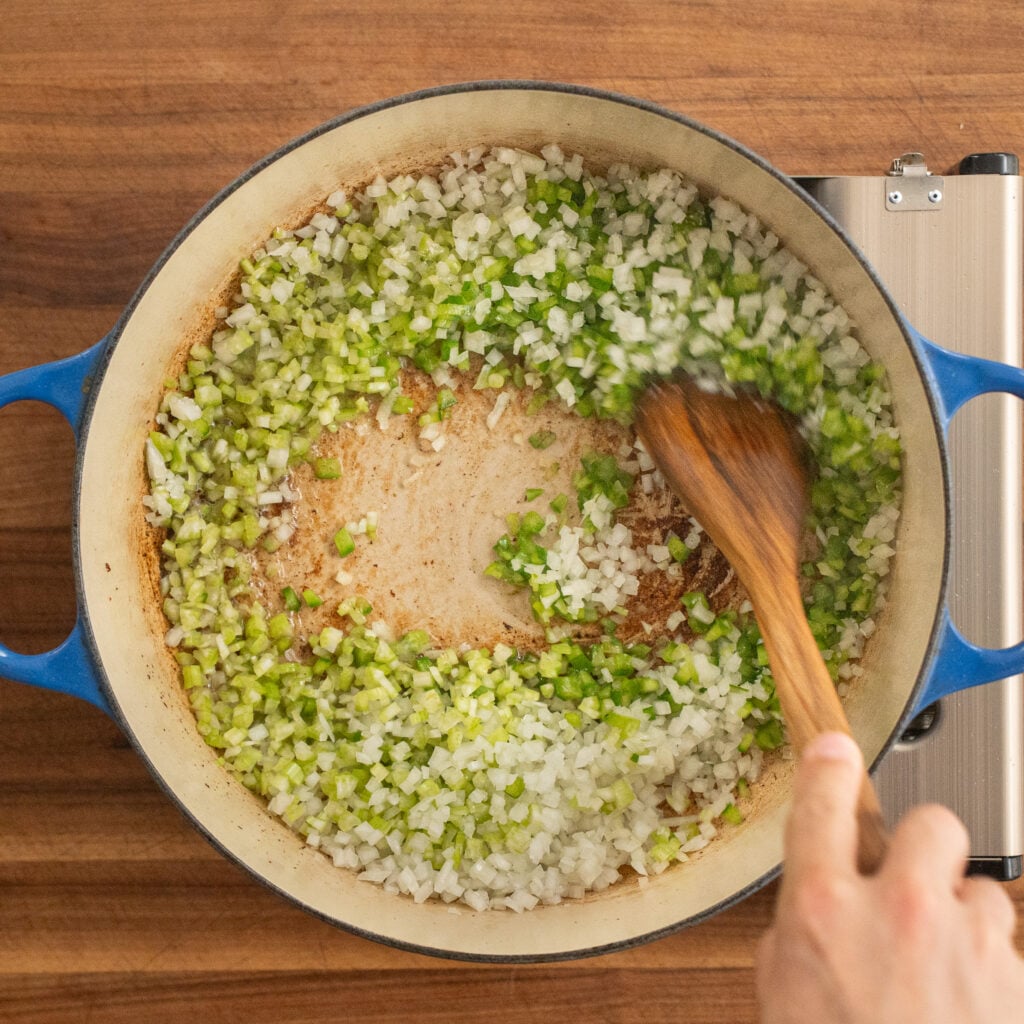
Veggie Cooking Tips:
- Getting some darkness here is essential for making this sauce hit. A bit of caramelization brings sweetness and some needed weight to the sauce.
- Taste a piece of the celery before moving on. It should be soft without a raw, fibrous crunch.
6. Cook the garlic and tomato paste.
Add 20g garlic and cook over medium heat for about 2 minutes. If needed, add about 30g / 3T water to loosen the browned bits from the bottom of the pot.
Once the garlic is fragrant and softened, add 30g tomato paste and 40g butter. Stir and fry for about 2 minutes, until the tomato paste changes from bright red to rusty red.
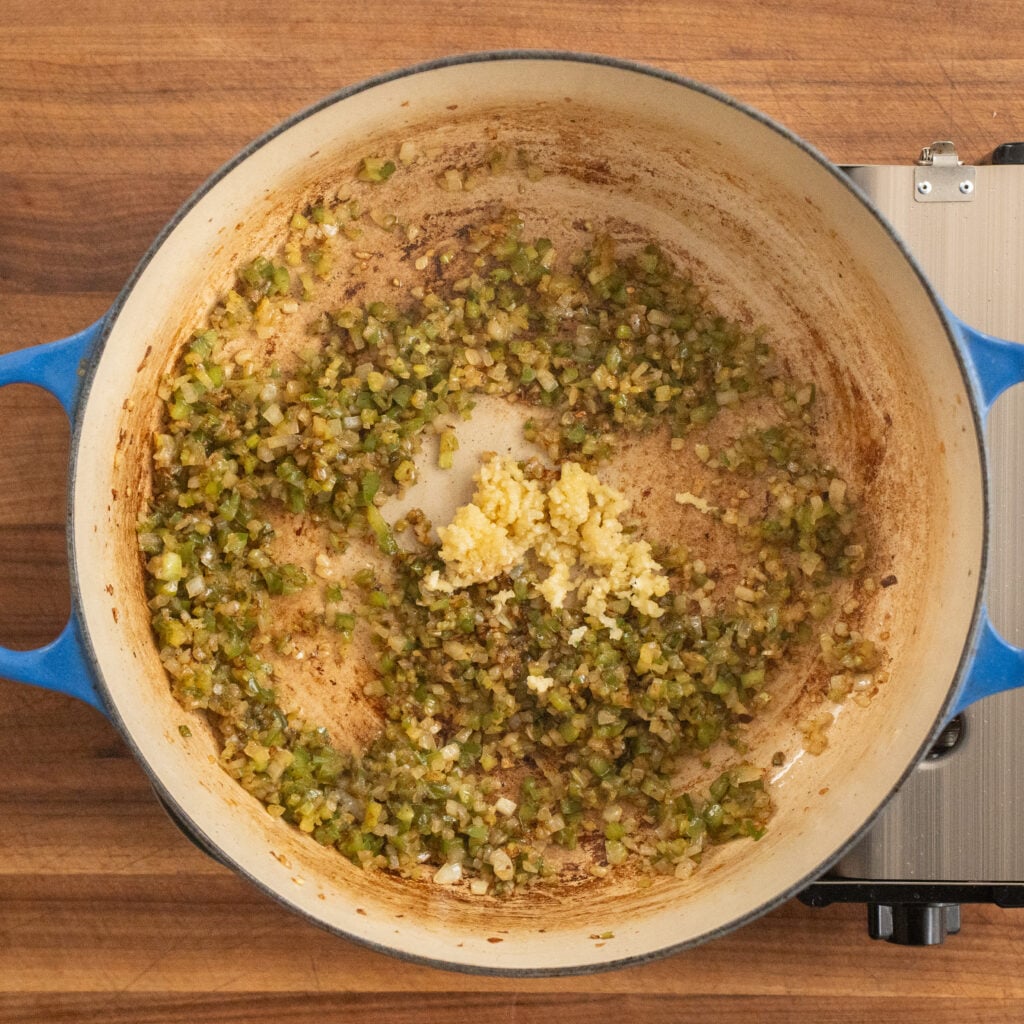
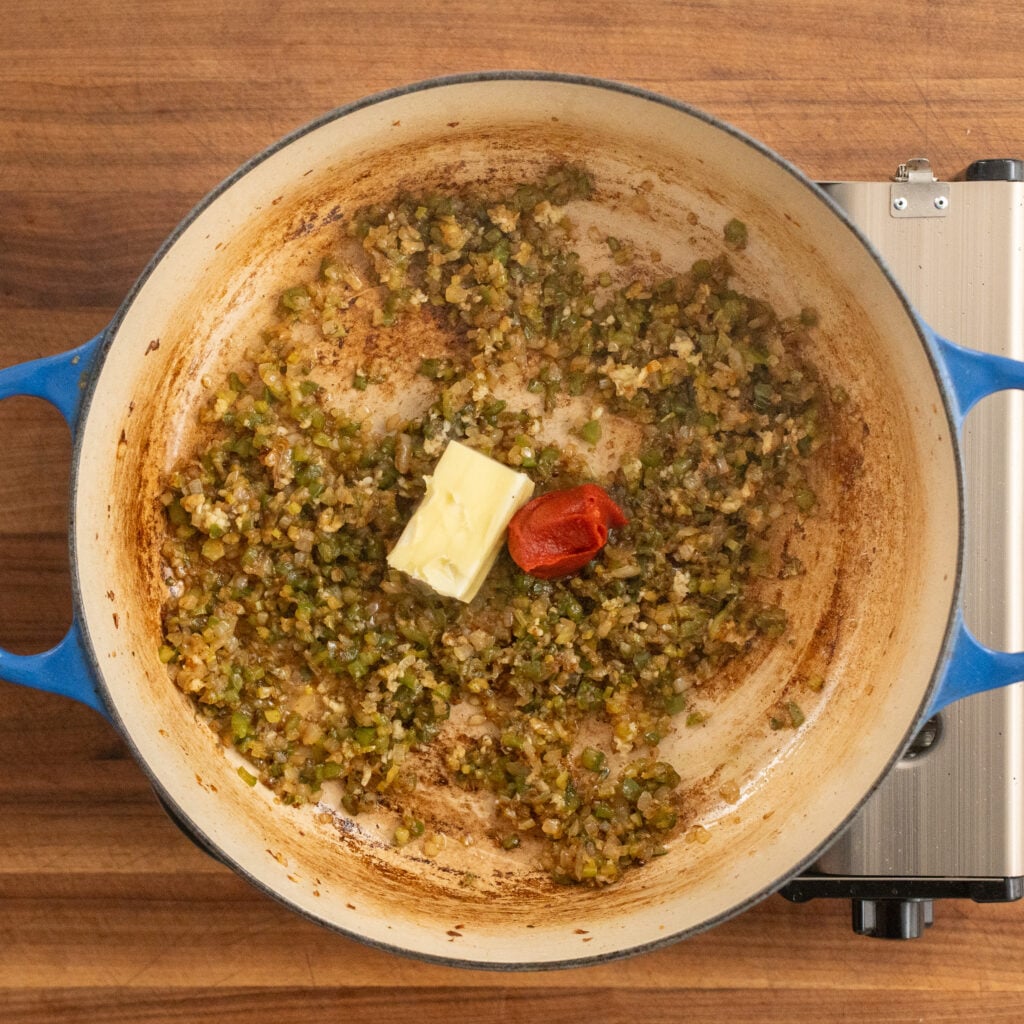
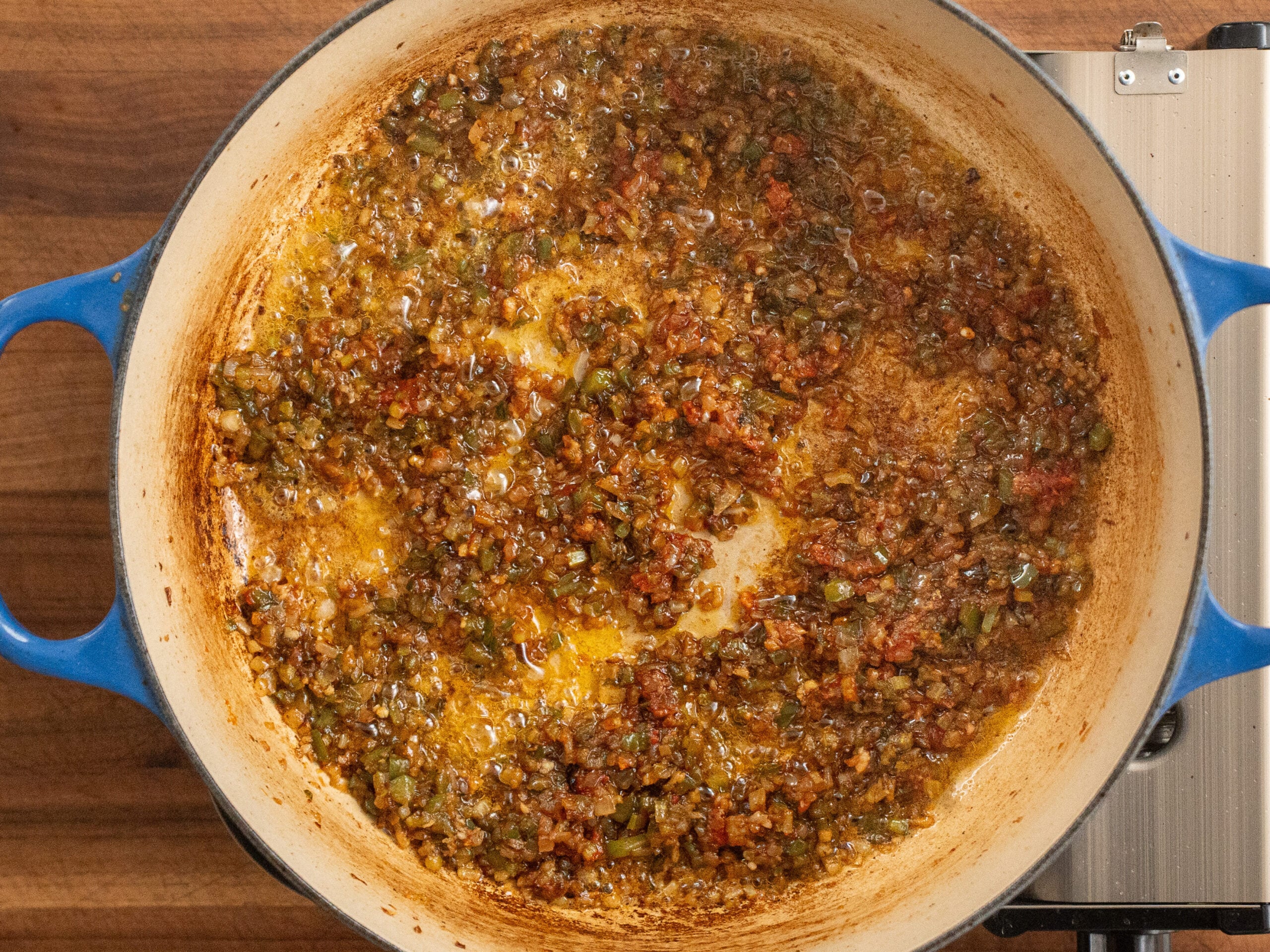
7. Finish the sauce.
- Add 20g flour, 5g paprika, and 2g cayenne and stir until no dry pockets remain. This should take about 1 minute or so. Be careful here not to burn the spices.
- Next, add 20g Better Than Bouillon chicken base. Gradually pour in 550g chicken stock while whisking continuously so the flour blends smoothly into the liquid.
- Simmer for about 5 minutes, until the sauce is slightly thickened and the vegetables are fully tender.
- Once veggies are tender, return the cooked bacon to the sauce and stir.
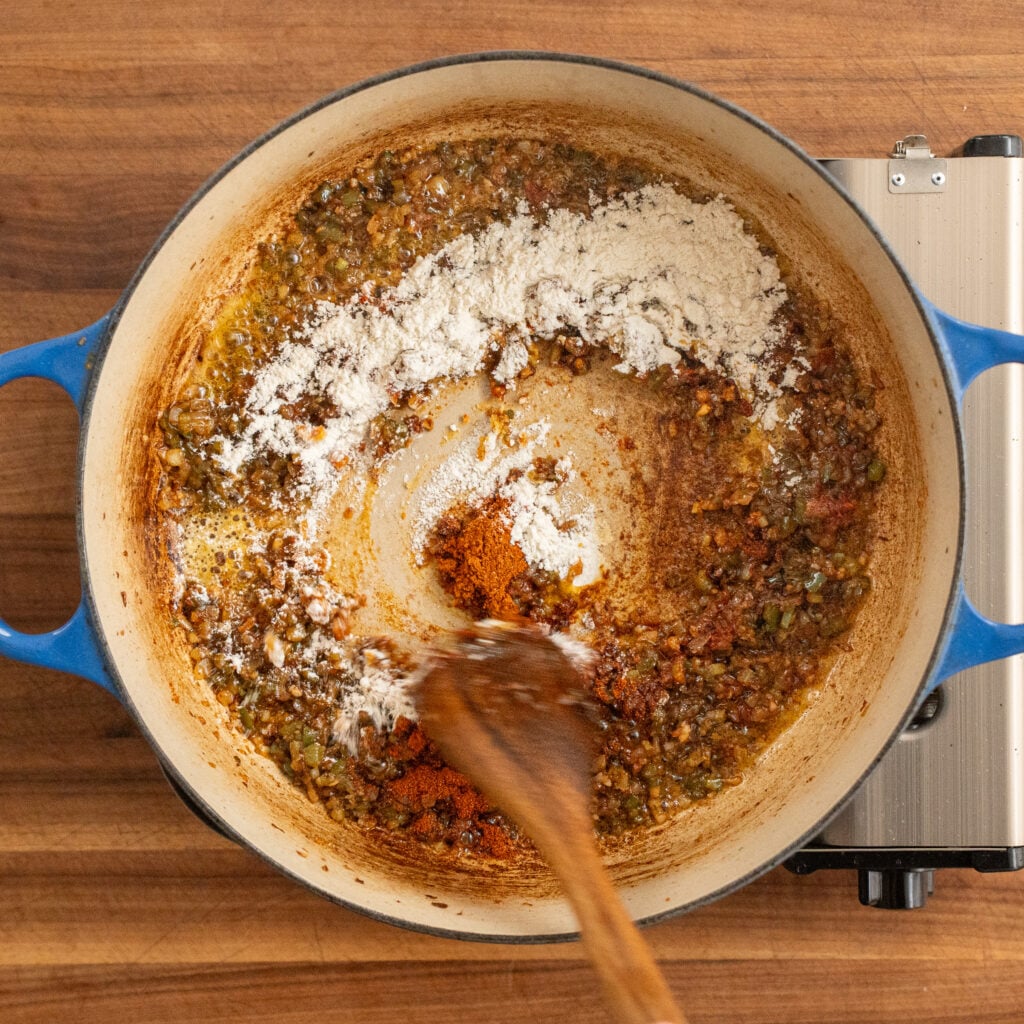
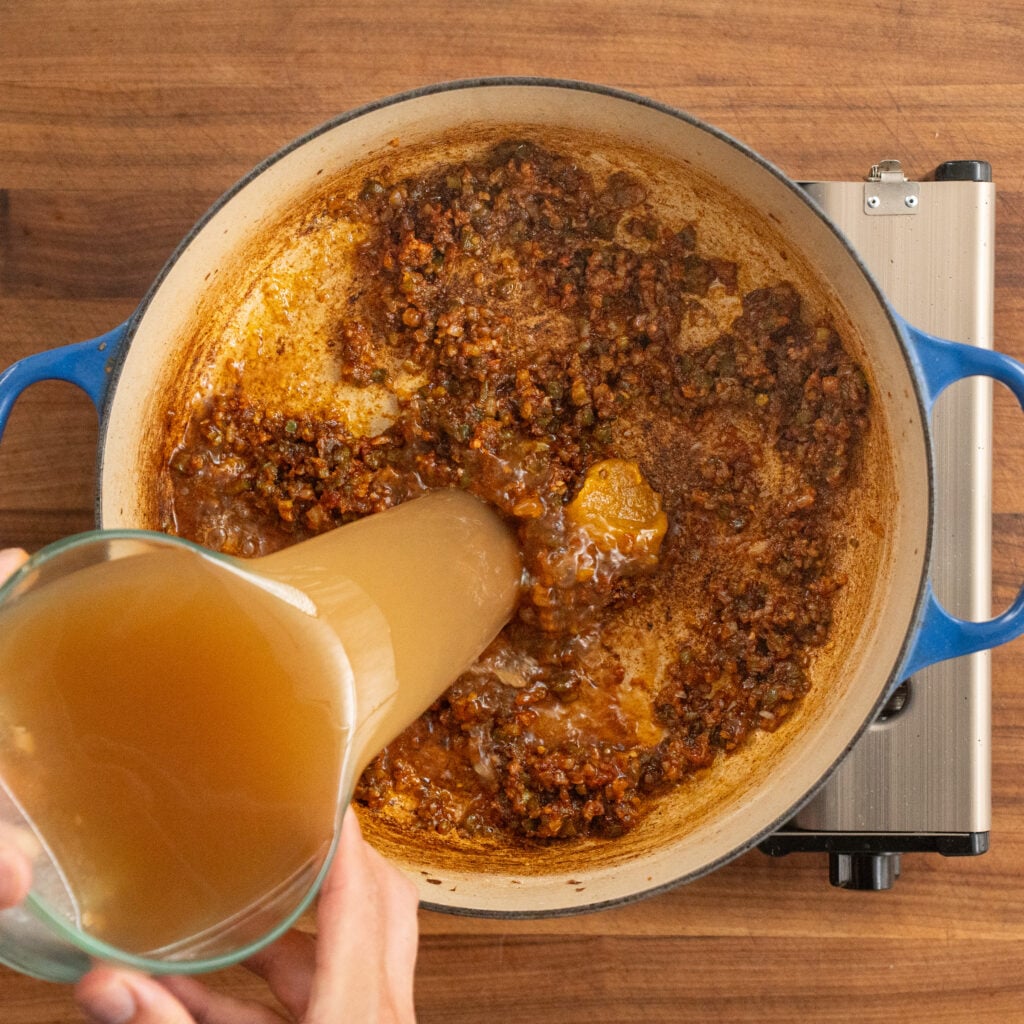
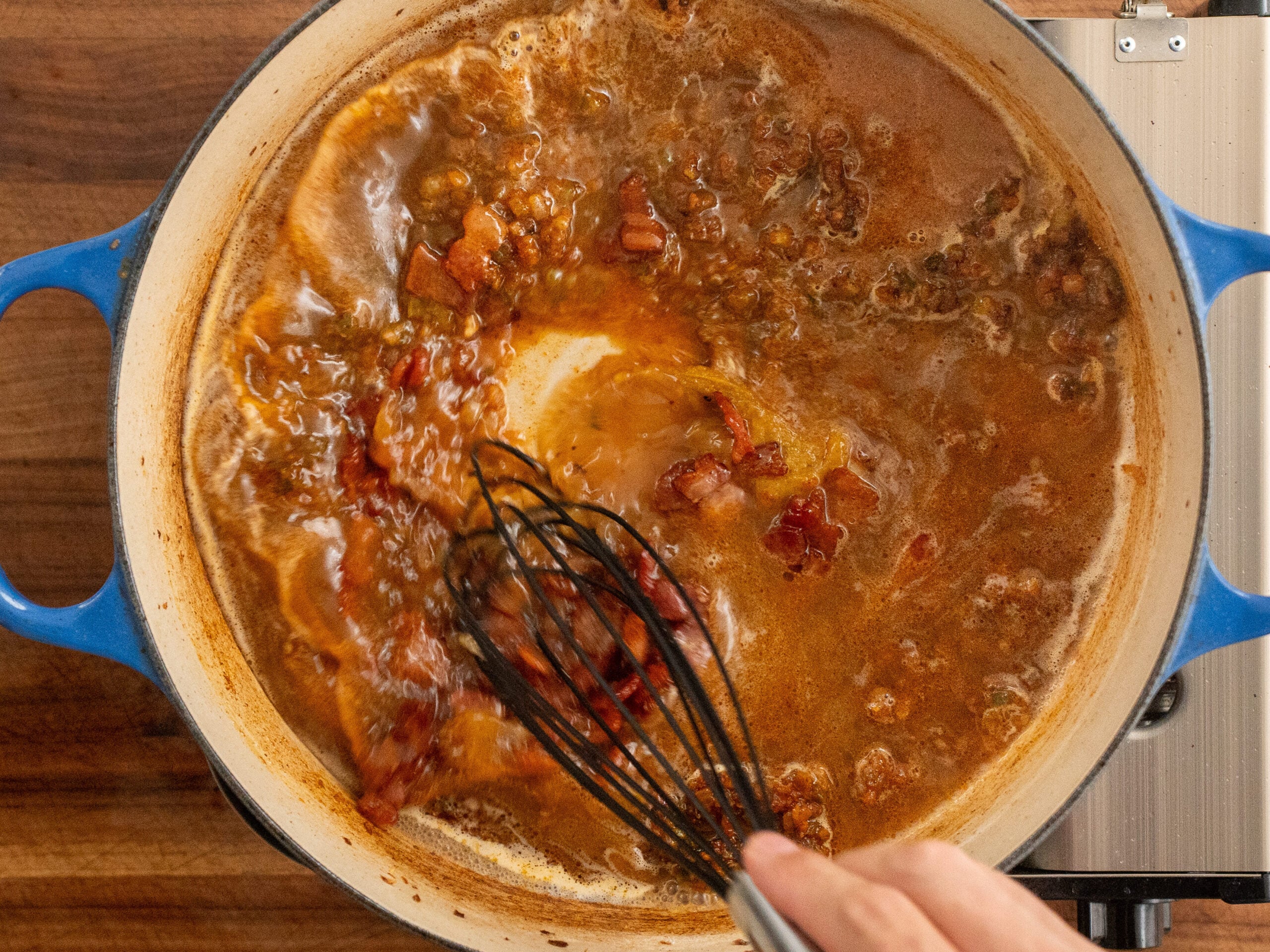
How thick should the sauce be? It should be thinner than gravy but thicker than broth. You want enough body to cling to the shrimp without making the dish feel heavy.
8. Finish the grits.
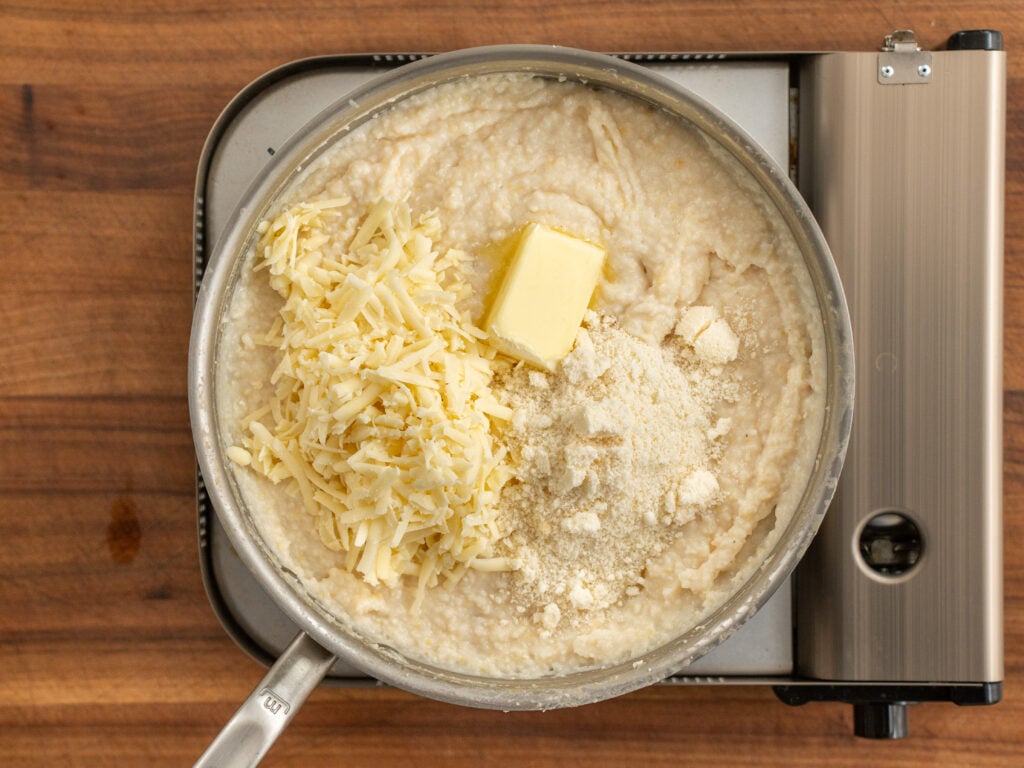
After about 90 minutes, or once the grits are fully tender, stir in 40g butter, 100g cheddar, and 30g Parmesan over low heat. Taste for seasoning and adjust with salt if needed.
The final texture should be similar to a loose potato purée or thick, stirrable oatmeal. You want the grits thick enough for the shrimp and sauce to sit on top instead of sinking in, but still a little loose and creamy.
9. Cook the shrimp gently.
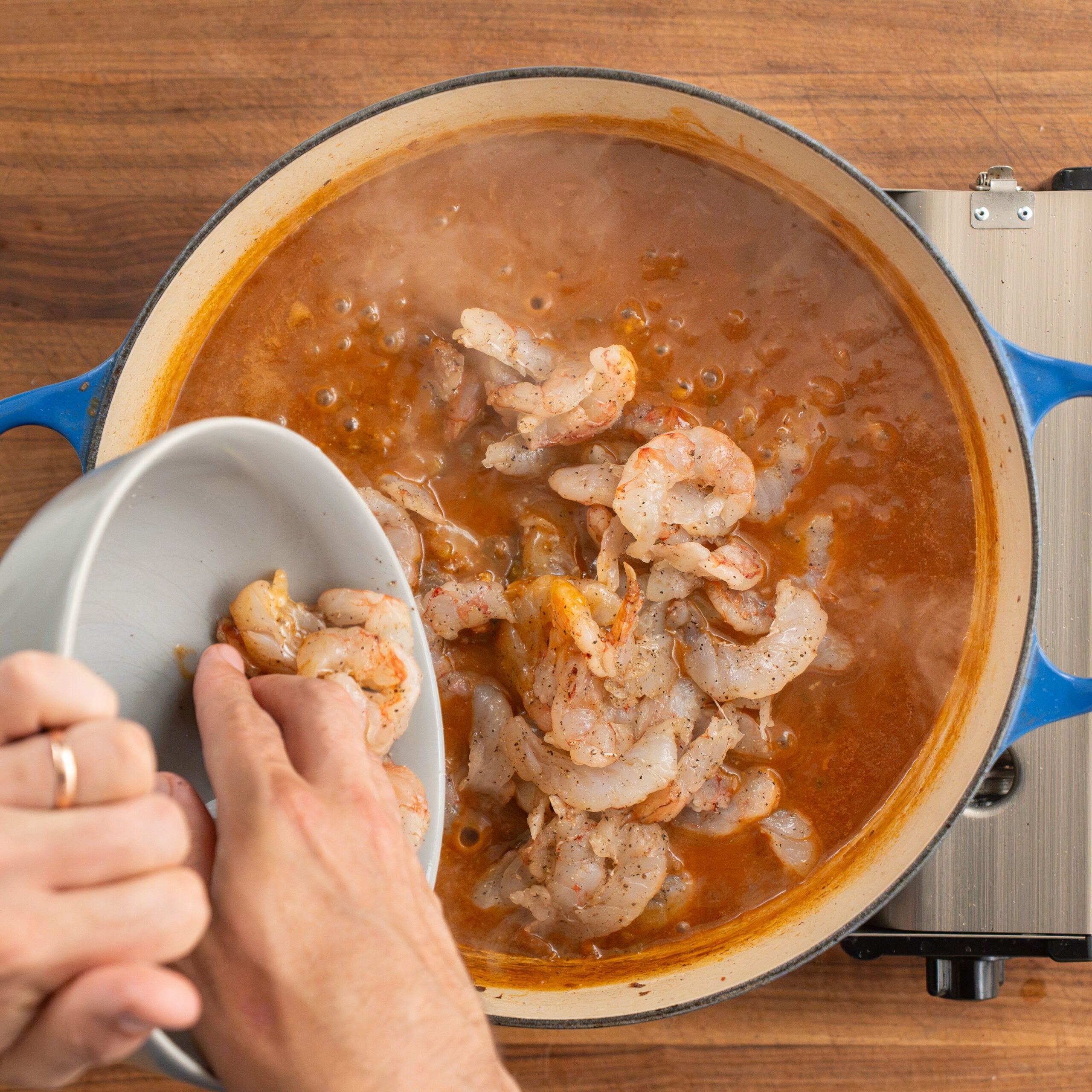
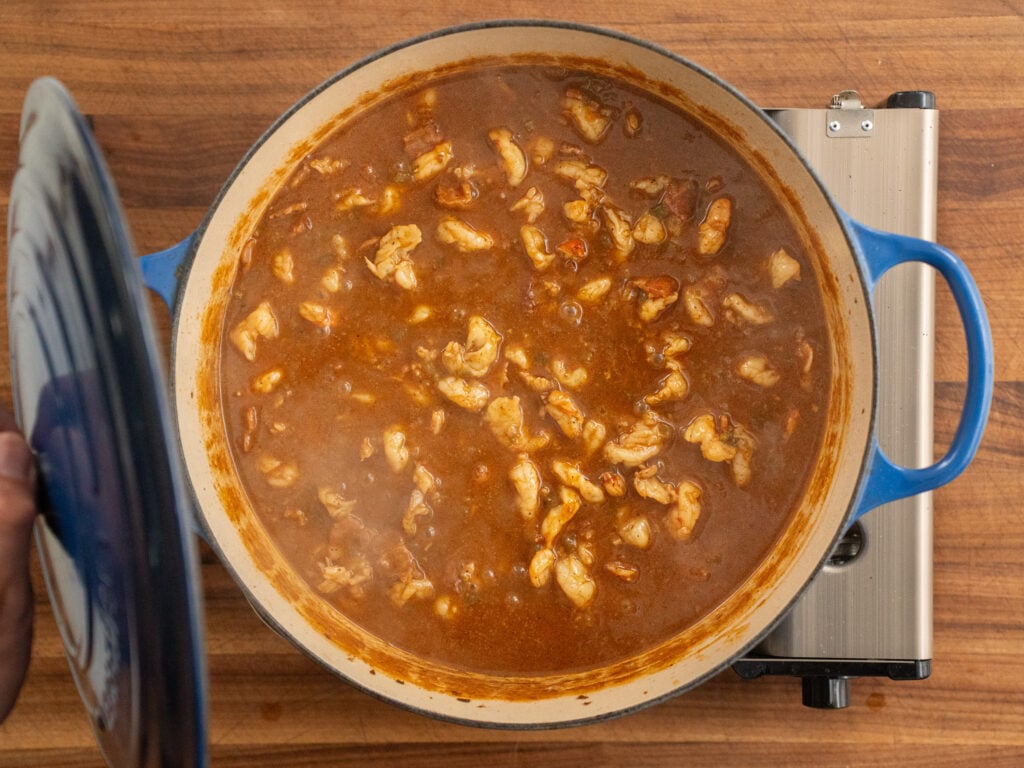
Add the seasoned shrimp to the thickened sauce and stir to submerge them. Cook over medium-low heat for about 3 minutes, or until the shrimp have gone from translucent to fully opaque.
To check for doneness, cut into one shrimp. It should be opaque all the way through. Taste the sauce and grits and adjust seasoning gradually if needed.
10. Serve.
Spoon the hot grits into shallow bowls and make a small well in the center. Spoon the shrimp, vegetables, and sauce over the grits, then divide the reserved bacon from the original 150g evenly among the bowls.
Finish with about 5g finely chopped chives or thinly sliced green onion and about 10g lemon juice total, roughly 2–3g per bowl. You only want a few drops of lemon to brighten things up, not enough to make the dish taste lemony.
What to Make Next:
- Cajun Gumbo – Classic flavors & technique without being too fussy
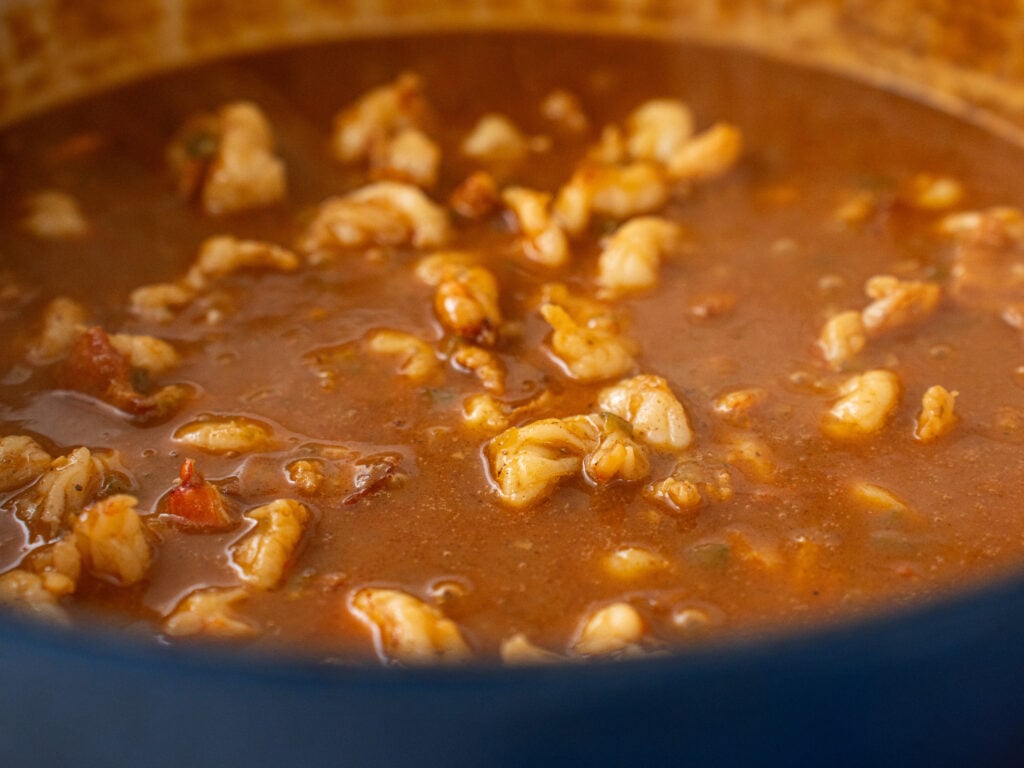
- Easier Lobster Bisque – An easier way that you’ll actually make at home
- Shrimp Étouffée – Plump shrimp in a rich Creole-style gravy.
- Flaky Biscuits – Tall, buttery, and VERY flaky
Shrimp and Grits
Ingredients
Grits
- 200 g old-fashioned white grits
- 600 g whole milk
- 600 g chicken stock
- 10 g salt
- 100 g water, as needed during cooking
- 40 g butter, unsalted
- 100 g cheddar, grated
- 30 g parmesan, finely grated
Shrimp
- 450 g raw 21/25 red Argentinian shrimp, thawed and drained
- 5 g salt
- 2 g ground black pepper
Sauce
- 150-175 g thick-cut bacon
- 2-3 Tbsp oil
- 2-3 Tbsp water, plus another 3T as needed while rendering
- 100 g celery, finely diced
- 200 g onion, finely diced
- 150 g green bell pepper, finely diced
- 2 g salt, plus more to taste
- 20 g garlic, minced
- 30 g water, as needed for deglazing
- 30 g tomato paste
- 40 g butter, unsalted
- 20 g all-purpose flour
- 5 g paprika
- 2 g cayenne pepper
- 20 g Better Than Bouillon chicken base
- 550 g chicken stock
Garnish
- lemon juice
- chives, finely minced
Instructions
- Bring milk, chicken stock, and 10g salt to a boil while stirring frequently. Lower heat to med-low and whisk in 200g grits and bring back to a simmer while whisking, til thickened a bit.
- Cover and cook over low heat for about 90 minutes, stirring every 5–10 minutes and scraping the bottom well after 1 hour. Add about 100g water if grits get too thick before they become tender.
- Cut shrimp in half lengthwise and season with 5g salt and 2g black pepper. Refrigerate.
- Prep the rest of your sauce and grits ingredients: Finely dice celery, onion, and green bell pepper. Mince garlic, grate cheddar and Parmesan. Dice bacon into approximately 3/4" squares.
- With about 40–45 minutes left on the grits, heat a dutch oven over medium and cook bacon in about 1-2 T oil and 2-3 T water for about 10 minutes until rendered and browned but still flexible. Add another 3 T water if the pot gets too dark. Transfer bacon to a bowl leaving the fat behind.
- Add celery, onion, bell pepper, and a pinch of salt. Cook over medium-high heat for 10–12 minutes until tender and browned.
- Add garlic and cook 2 minutes. Deglaze with a splash of water if needed. Add tomato paste and 40g butter and cook 1-2 minutes, until rusty red.
- Reduce heat to medium, stir in flour, paprika, cayenne until flour is incorporated. Add chicken stock and Better Than Bouillon and whisk to incorporate. Simmer about 5 minutes until slightly thickened.
- Stir the rendered bacon back into the sauce.
- Add the seasoned shrimp to the sauce and cook over medium-low heat for about 3 minutes, until opaque. Taste and adjust salt if needed.
- Once the grits are tender, stir in 40–50g butter, cheddar, and Parmesan. Add an extra splash of chicken stock to loosen up if they look too thick. I like a consistency similar to potato puree.
- Spoon the grits into bowls and top with the shrimp and sauce. Garnish with minced chives and a squeeze of lemon juice.
Notes
 Like this? Leave a comment below!
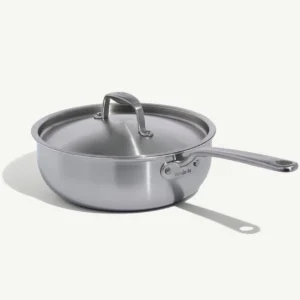
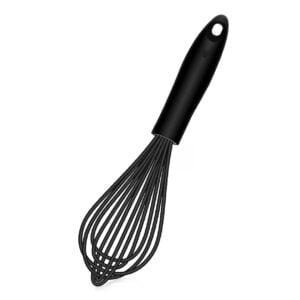
My Go-To Gear
Below are the tools I actually use when making this recipe. Some of these are affiliate links, which means I may earn a small commission if you purchase through them at no extra cost to you.
Frequently Asked Questions
Yes, but expect a finer more uniform texture, less corn flavor and a bit less creaminess. I find quick grits often benefit from closer to 20 minutes than the 5 minutes listed on the package. They are still fine. I’m not from the south so to me they aren’t sacrilege. I say try them and see for yourself.
Yes, but add the precooked shrimp at the very end. Heat just long enough to warm through. Don’t cook them for the full three minutes.
You can substitute some powdered bouillon, but be careful on the salt. Every bouillon has a different amount. If you leave out bouillon all together, that’s fine. You’ll just need to add a strong pinch of salt added at the end.






Could the milk be replaced by a non-dairy option like Oat Milk?
Yes, unsweetened/unflavored oat milk should work well as a sub.
Made it this evening. Best shrimp and grits I’ve ever had.
So glad to hear that! Thanks for taking the time to leave a review!
I’m in a pickle. I have neither chicken base nor chicken bouillon (I thought I did but got to the actual sauce prep and discovered otherwise). any ideas for how to remedy that? Thanks.
Made this a week ago and still thinking how delicious it was. I never had grits, so I was a little apprehensive; however, this was sooo good! The sauce is versatile. I will use this in other dishes! My family and friends had seconds!! Thanks Brian for such a great recipe!