
Fresh Peach Cobbler with Buttermilk Biscuit Topping

Updated Oct 19, 2026, Published Aug 23, 2026
This post contains affiliate links. Please see our disclosure policy.
Jammy, concentrated peaches baked under craggy buttermilk biscuits with a crunchy sugar crust. It’s my answer to the watery fruit and soggy topping that gives most cobblers a bad name.
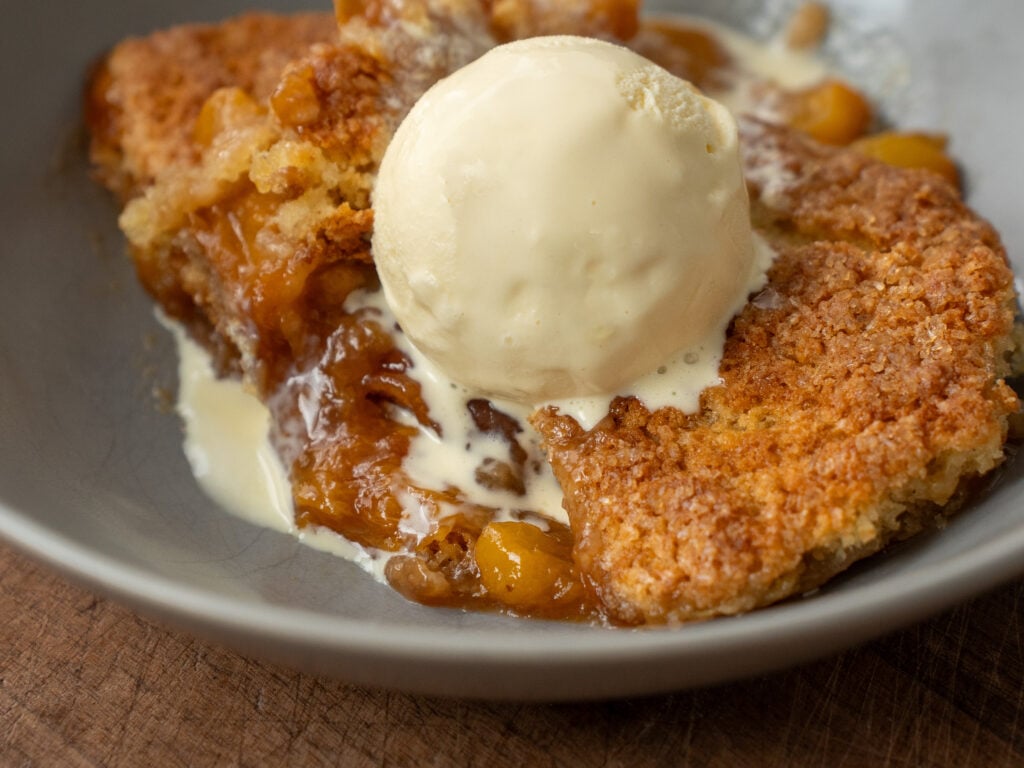
Table of Contents
Why This Peach Cobbler Recipe Delivers
Most peach cobblers consist of sloppy, barely cooked fruit and pale, floury biscuits. To bring some finesse to this dish and help it reach its potential, I briefly cook and then thicken the peaches as if they were pie filling. They way they bond with the biscuit topping and create a more unified and refined eating experience.
For the biscuits, I swap milk with buttermilk to bring some tang. I double the butter for added flavor and richness, and give the cobbler a hotter bake than most others to get a deep golden brown color and crispy top. A layer of demerara sugar creates a crackly crust on top. Add a scoop of cold vanilla ice cream and you get warm, jammy fruit, a crisp buttery biscuit, and melting vanilla cream in the same bite. This is an S-tier summer dessert.
Brian’s Pro Tips
Cook the Peaches – Raw peaches and drop biscuits do not cook in the same amount of time. If you start with raw peaches, they will have enough time to release all of their juice but not enough for that juice to cook down into something saucy. What you’re left with is wet fruit slop that sogs up the nice biscuits. So I briefly cook and thicken the peaches first, giving them a head start so the fruit and biscuits finish cooking at the same time.
Frozen Butter – Frozen butter chops down into lentil sized differentiated pieces that won’t melt or smear into the biscuit dough. This separation will lead to little pockets of melting butter within the drop biscuit. This is what gives you a dynamic craggy texture and inner flakiness. Room temp butter would smear into the flour and create a homogenous dough without those distinct pockets. That would create biscuits that are denser, more uniform, and less flaky.
Cool the Filling Before Topping – Screaming-hot peaches start melting the biscuit butter on contact. Give the filling about 10 minutes to cool before the dough goes on. It does not need to be cold, just warm enough that the butter stays solid until the cobbler goes into the oven.
Keep the Biscuit Mounds Tall and Separate -Tall, separated clods of drop biscuit dough create more exposed edges that can crisp during baking. I like to use a 2oz scoop for this. The gaps in between also give steam from the fruit somewhere to escape, which helps the biscuits bake more evenly.
Key Ingredient Notes & Substitutions
These are the important ingredients I want to call out in this recipe. A full ingredient list and amounts can be found in the recipe card below.
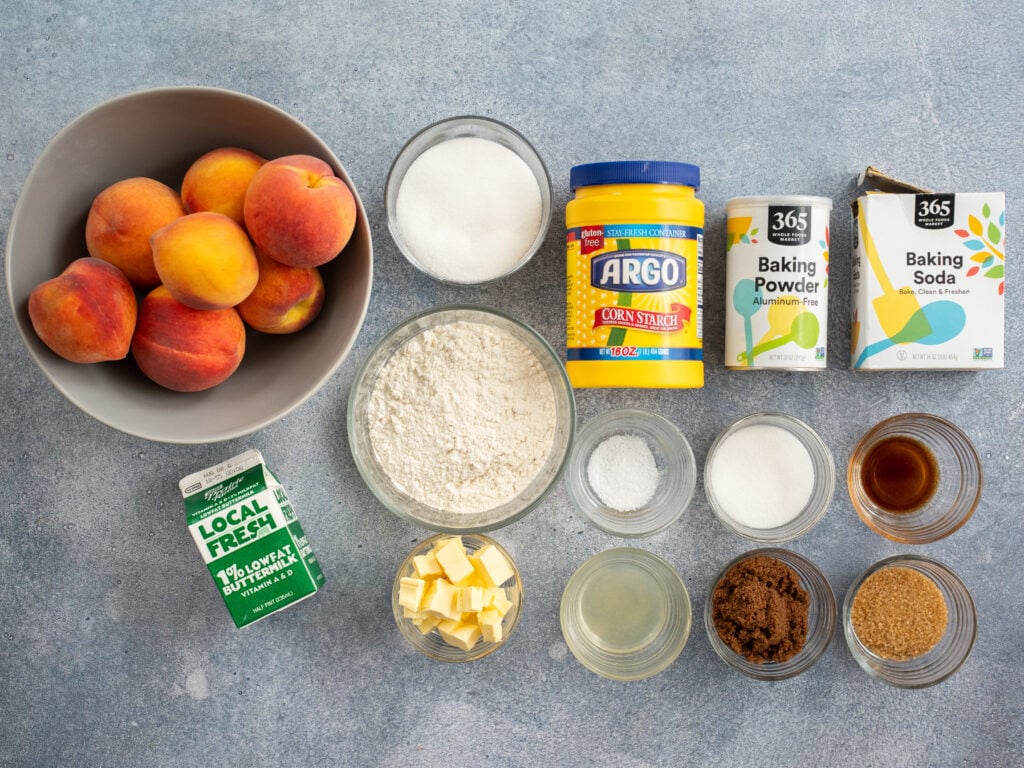
Ripe Peaches – This dessert should probably only be made in summer when peaches are in season. Out of season peaches are quite firm and fibrous and lack dense peach flavor. If you have nice in-season peaches that are a tad underripe and are a little too firm to each fresh, you can still play along. Just use a bit more sugar (about 10% more) add in 50-100g water during cooking and stew the peaches for 3-5 more minutes.
Buttermilk – Buttermilk brings acidity, moisture, and a mild twang that balances out the sweetness of this dessert and makes it taste much more interesting than milk alone. If you do not have buttermilk, sub in 110 g milk and 15-25 g sour cream.
Demerara Sugar – This brings a “professional bakery” crispness to the biscuits. Regular sugar is not a sub here since it will melt in the oven. I use “sugar in the raw” which is available at most grocery stores.
How To Make Peach Cobbler with Buttermilk Biscuits
These are the detailed step by step instructions you’ll need to make this recipe. You’ll find a condensed version along with volumetric conversions in the recipe card below.
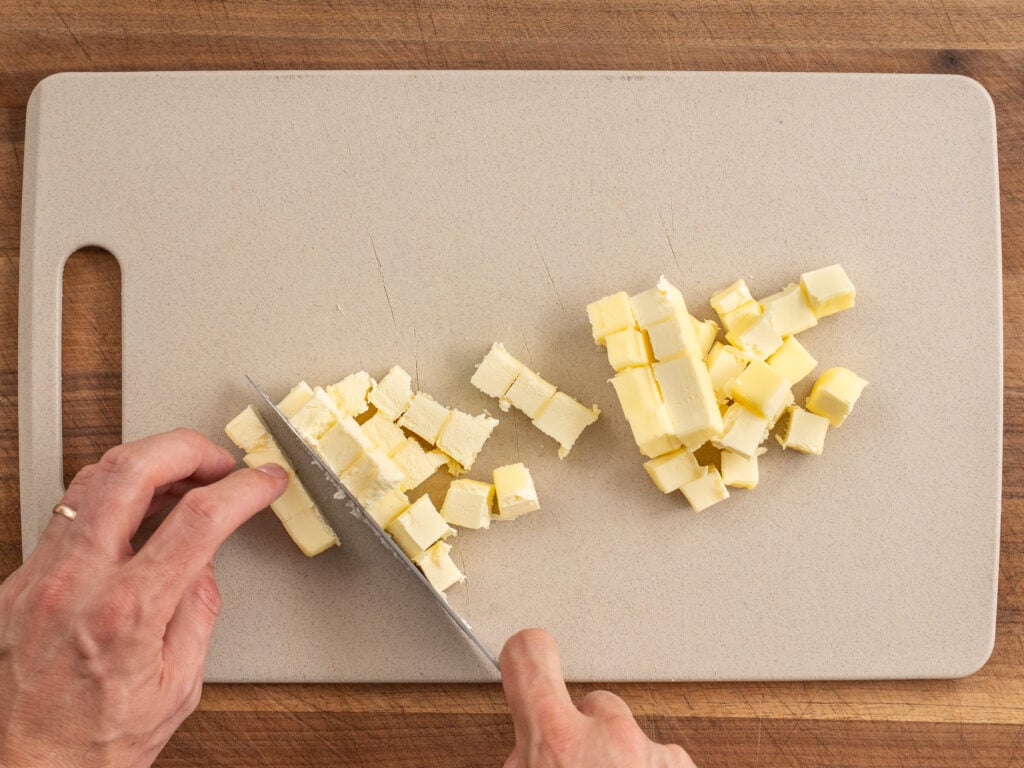
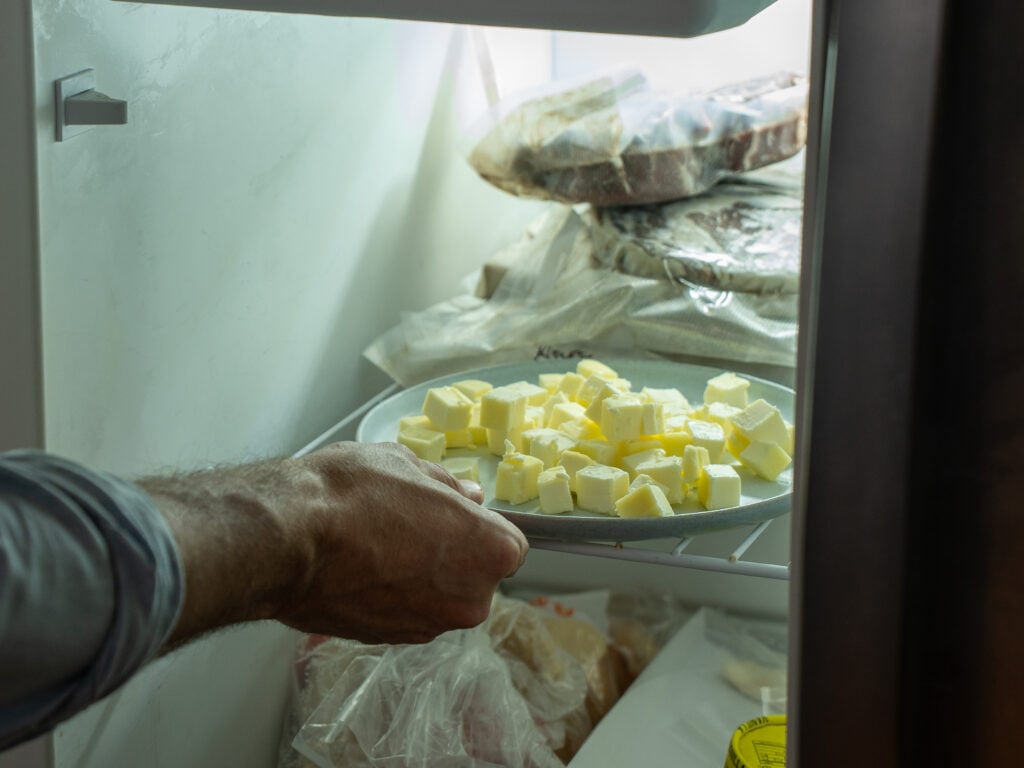
1. Preheat the oven and freeze the butter. Heat the oven to 425°F (218°C) with convection turned off. Then dice 155g unsalted butter into rough 1/2-inch cubes and put the cubes in the freezer while you make the filling.
2. Cut and macerate the peaches. Cut 950g peaches into roughly 2-inch chunks. Toss them with 60g granulated sugar, 60g brown sugar, and 4g salt, then let them stand for 5 minutes. The peaches should turn glossy as the sugar and salt pull out their juice.
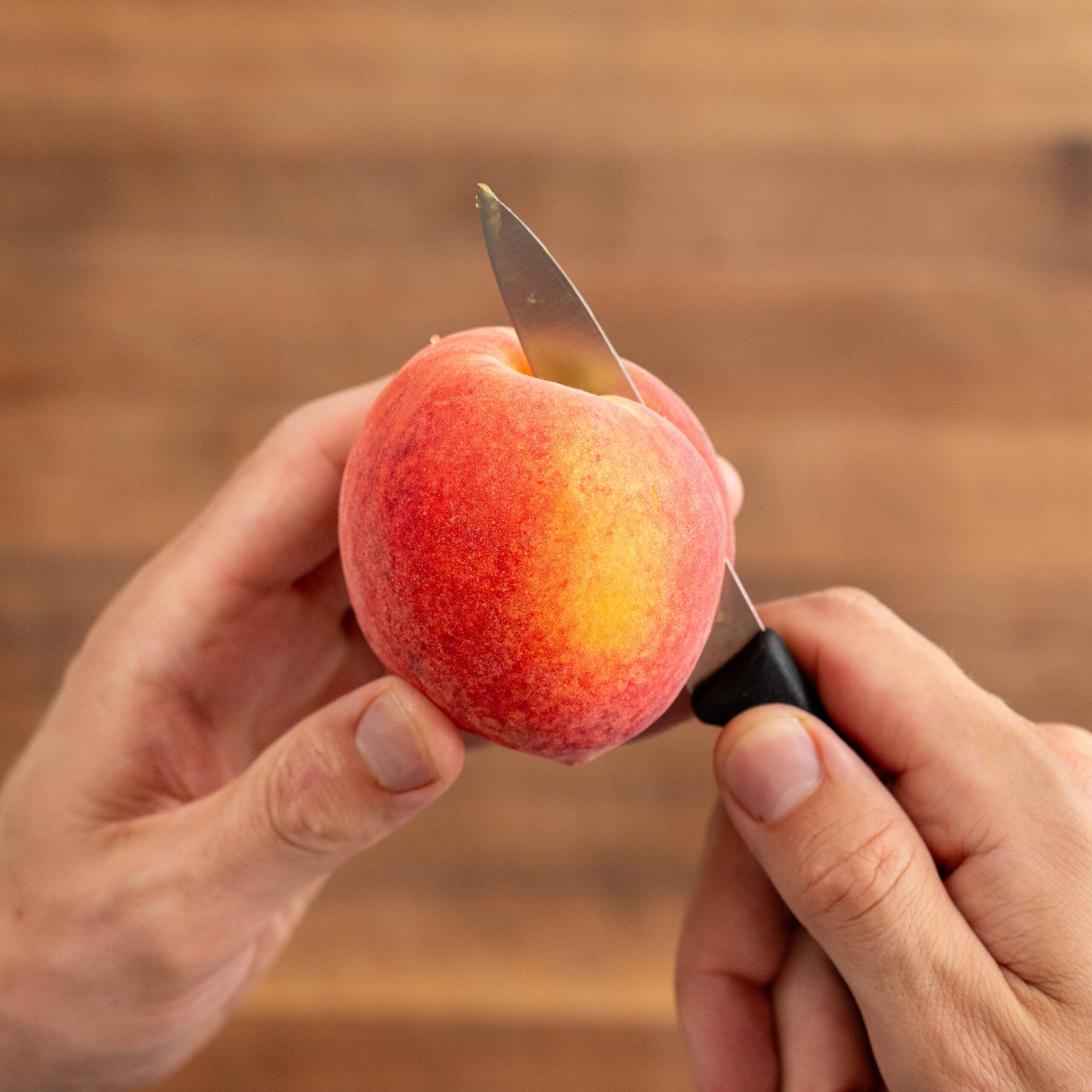
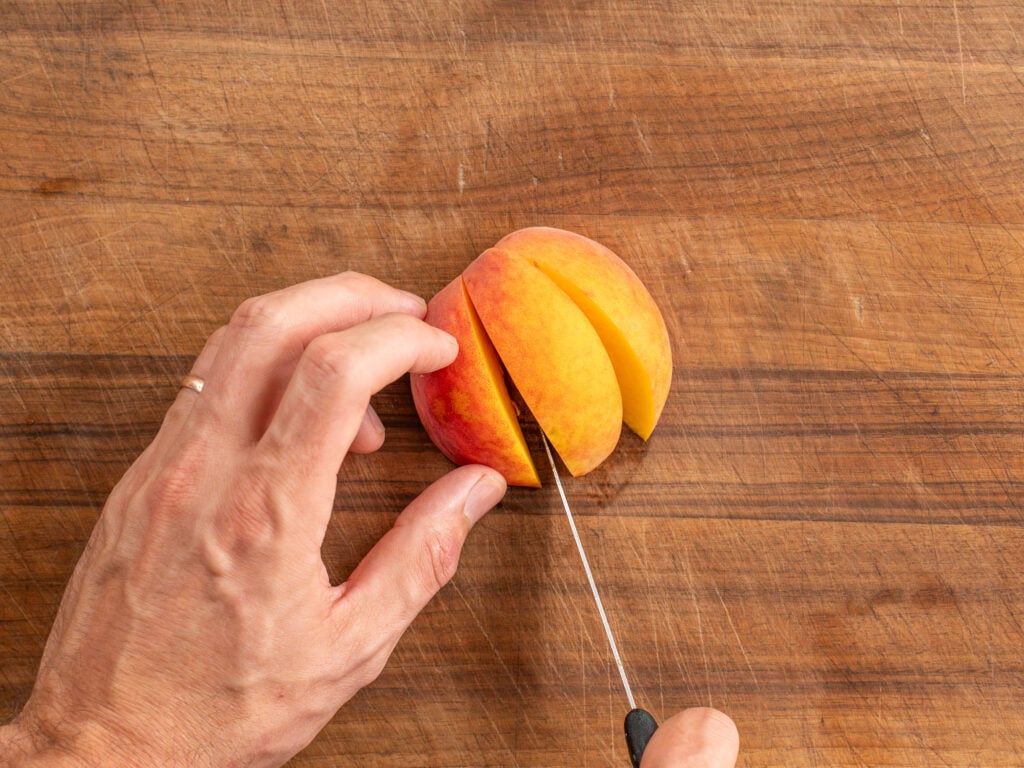
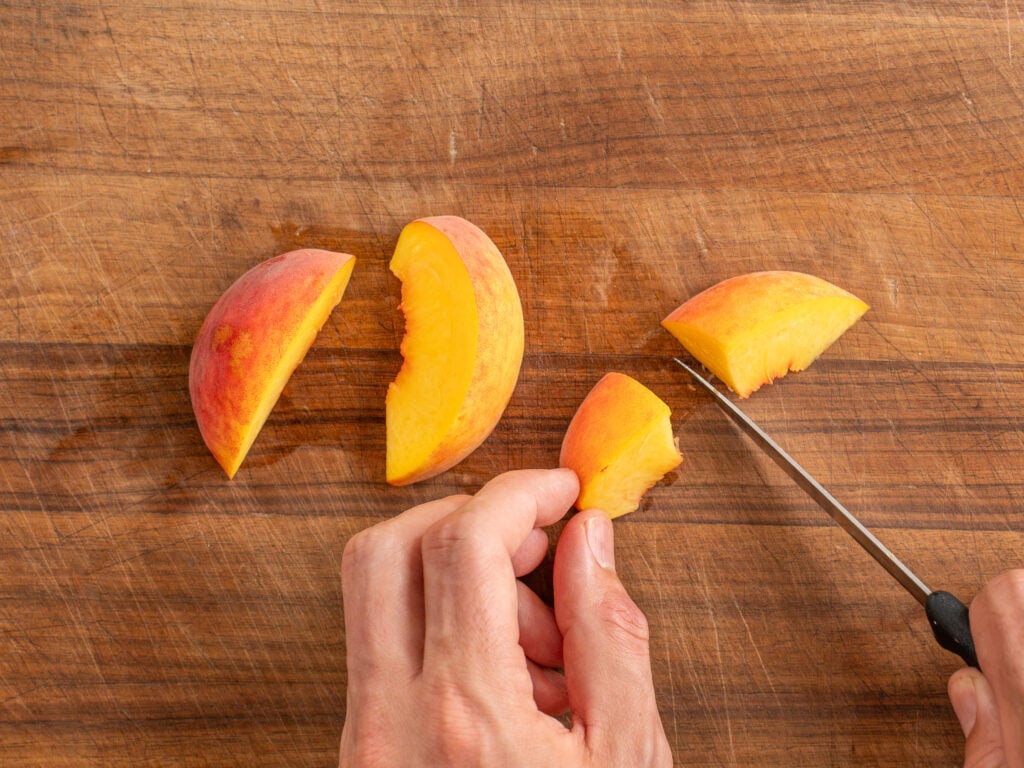
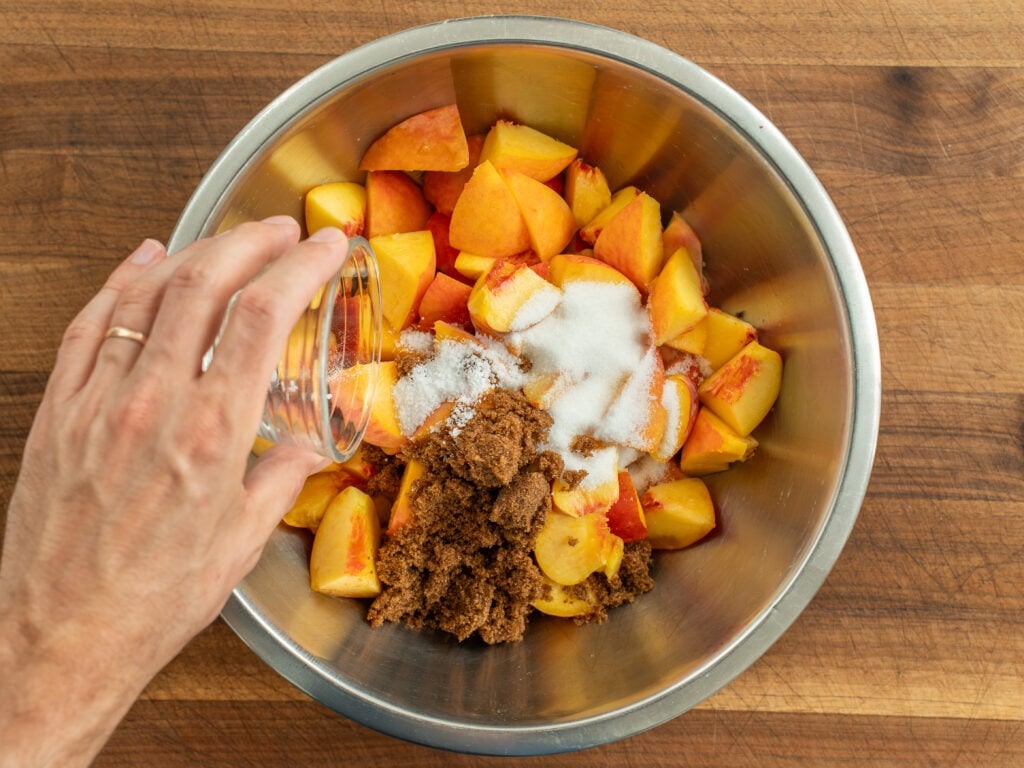
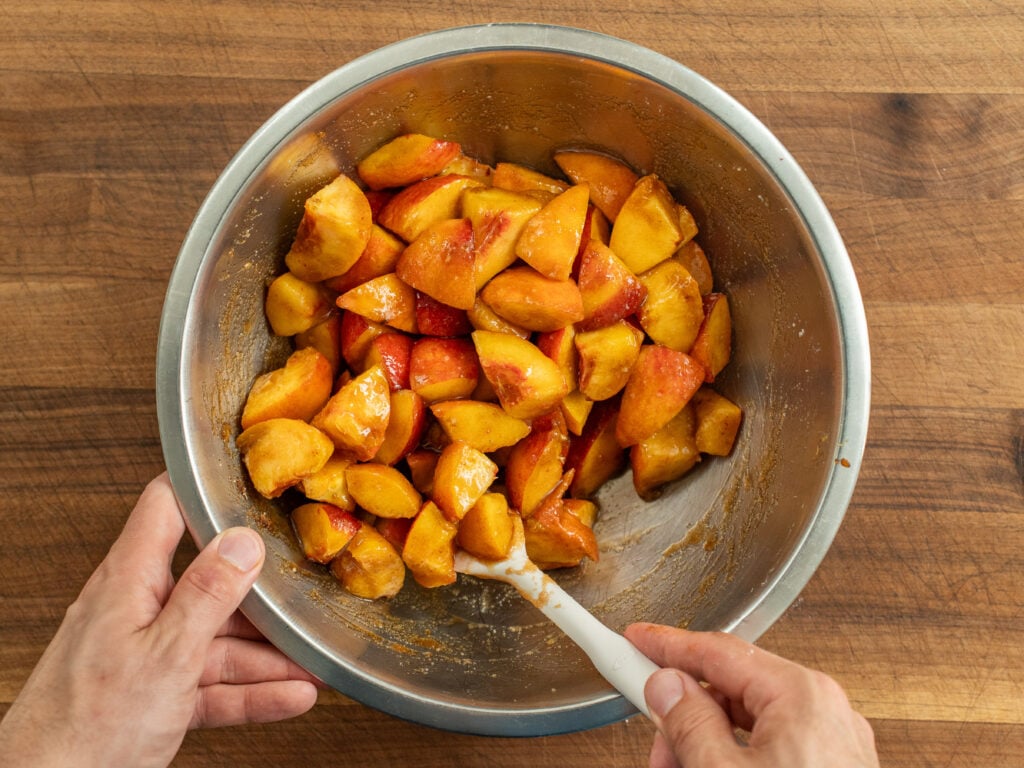
Do I need to peel the peaches? No. The skins soften during cooking and give the filling more color and body. Peel them only if your peaches are underripe and the skin feels tough when you bite into the whole fruit.
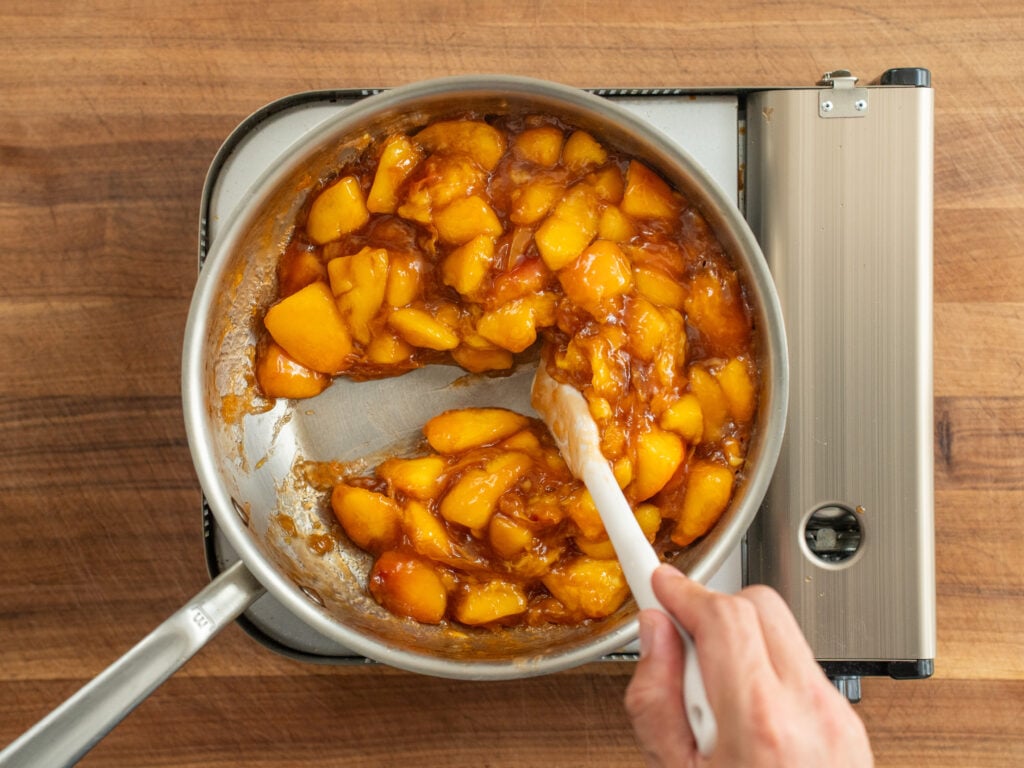
3. Cook down the peach filling. Transfer the peaches and all of their liquid to a saucier or medium saucepan. Cook over medium-high heat, stirring occasionally, until the peaches begin to soften and the released liquid reduces by about half, 5–10 minutes. You should be able to mash a piece against the pan with a spoon with force, but the chunks should still hold together.
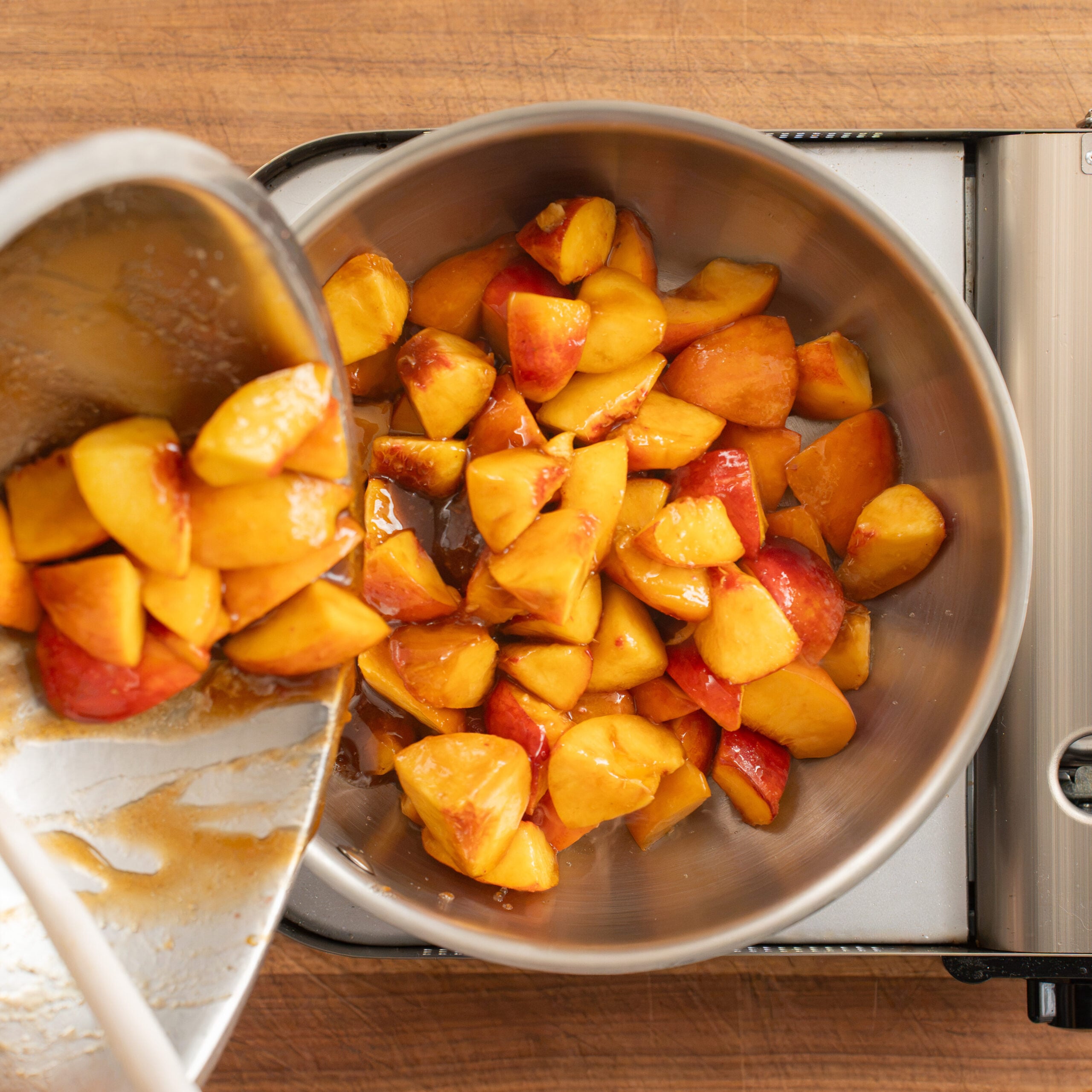
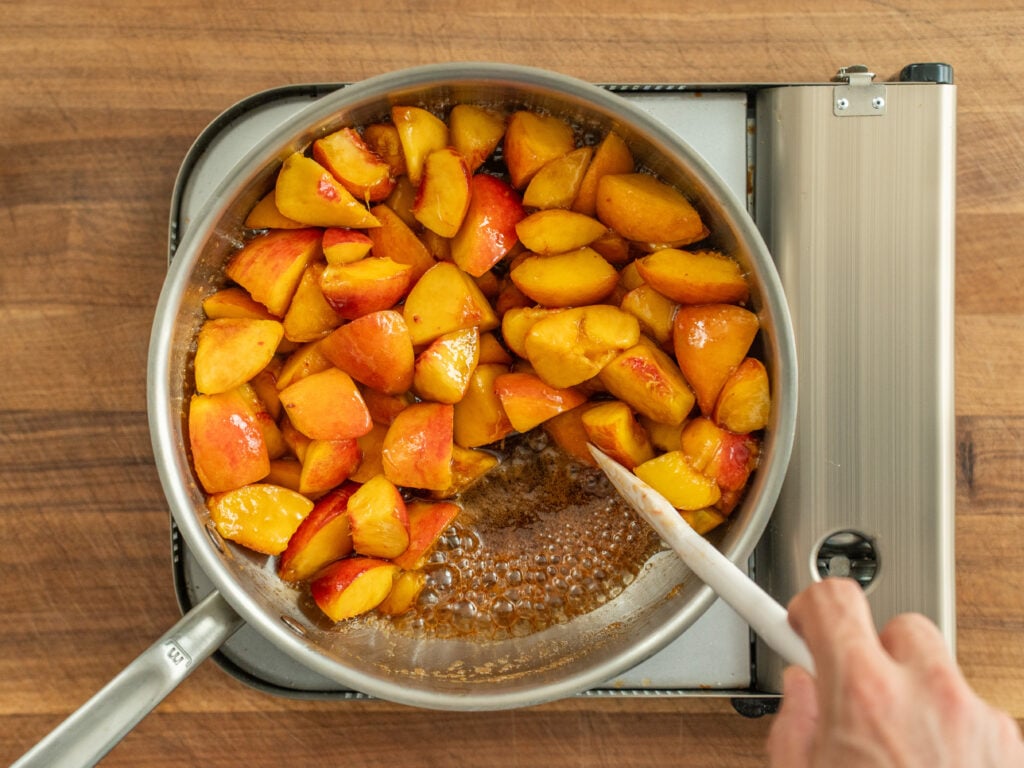
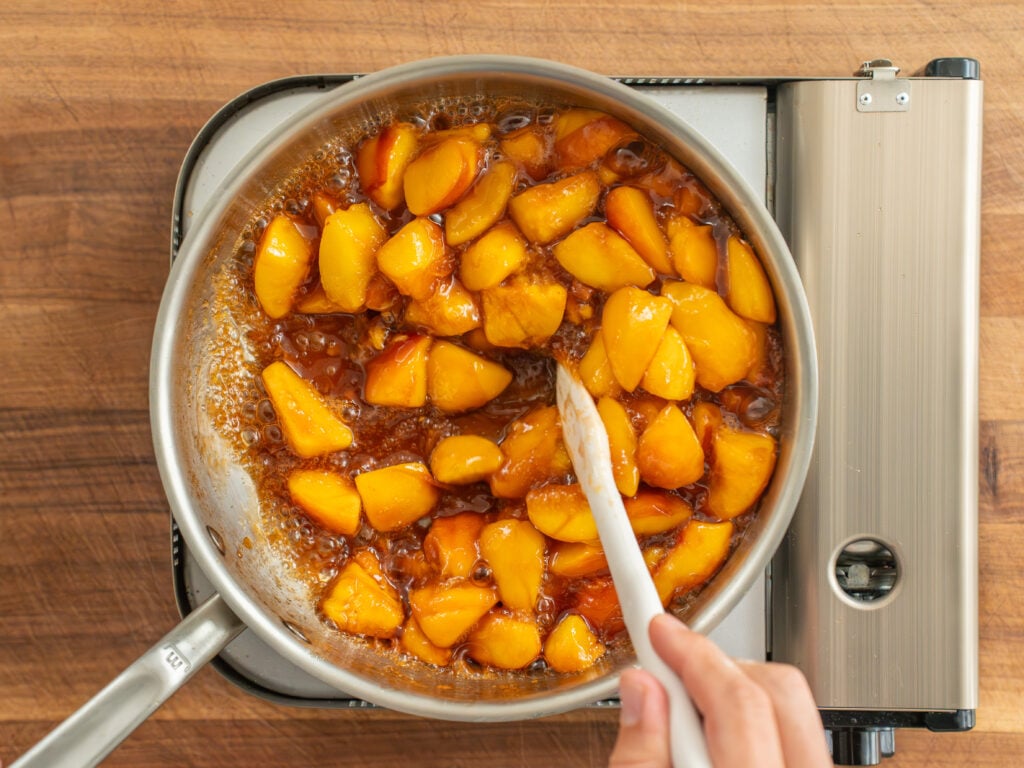
What if my peaches are firm or underripe? Start with 50–100 g of water and add a little extra sugar (about 10% more) to compensate for their lower natural sweetness. Cook for an additional 3–5 minutes, or until the peaches begin to soften.
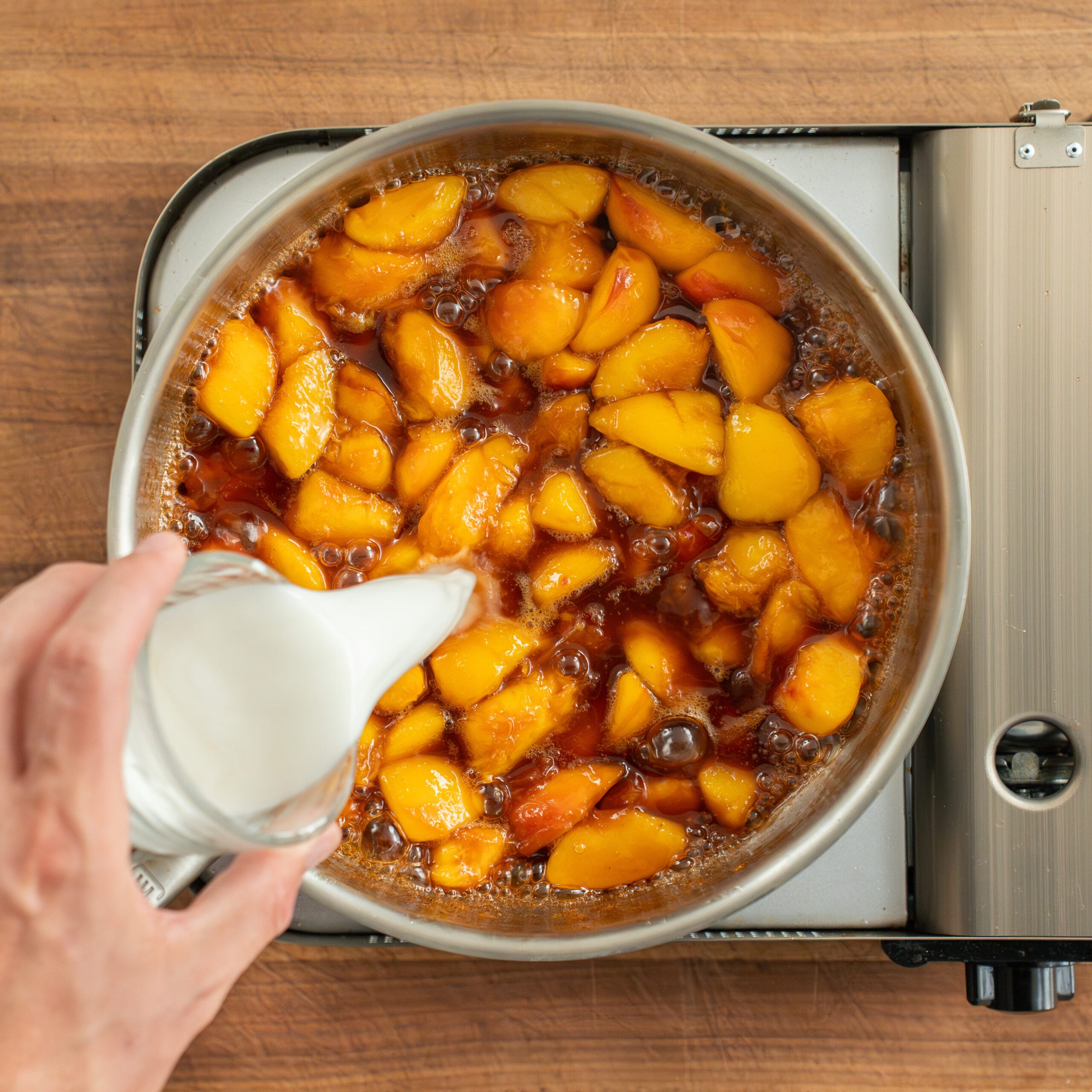
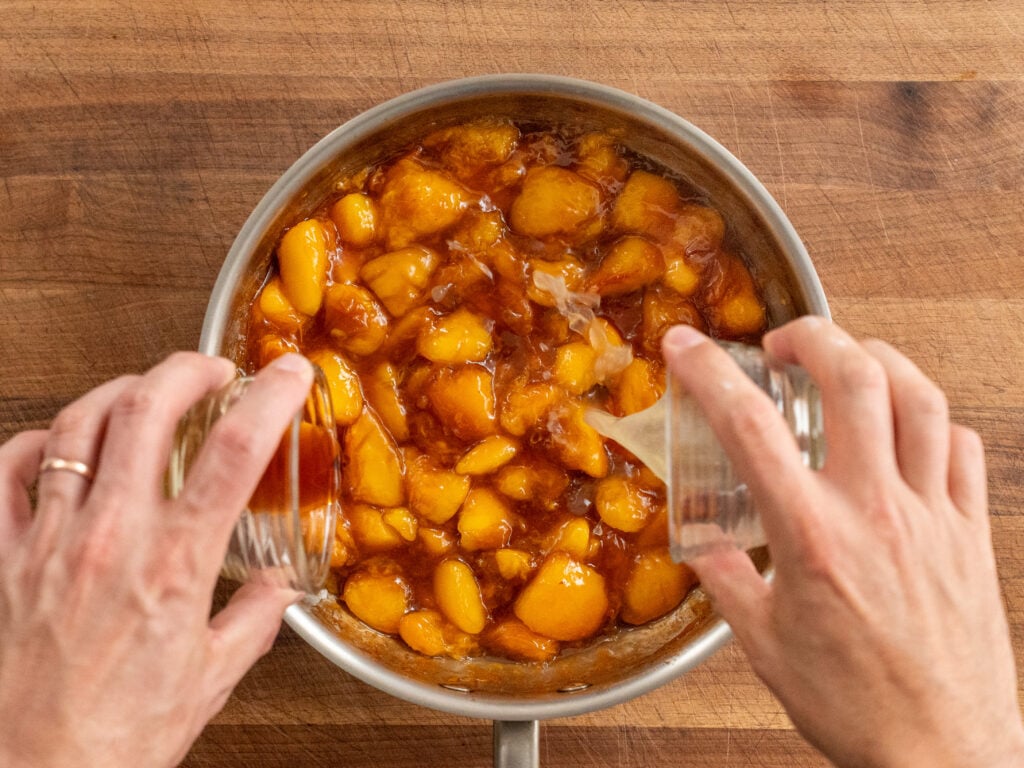
4. Thicken and finish the filling. Stir 25g cornstarch with 25-30g cold water until completely smooth. Then, stream the slurry into the simmering peaches while stirring constantly, bring the filling to a full boil, and cook for 1 minute until thickened and well combined. Then, pull the pan off the heat and stir in 25g lemon juice and 5g vanilla.
The texture should look like relatively thick pie pilling and a spatula dragged across the bottom should leave a trail that holds for 1-2 seconds before the fruit flows back in.
5. Cool the filling and load the skillet. Pour the fruit filling into a 12” cast iron pan that has been liberally sprayed with pan spray and set aside to cool for however long it takes to make the biscuit topping. A 9×13 baking dish will also work here. Expect slightly less fun results, but overall its a fine vessel for this recipe.
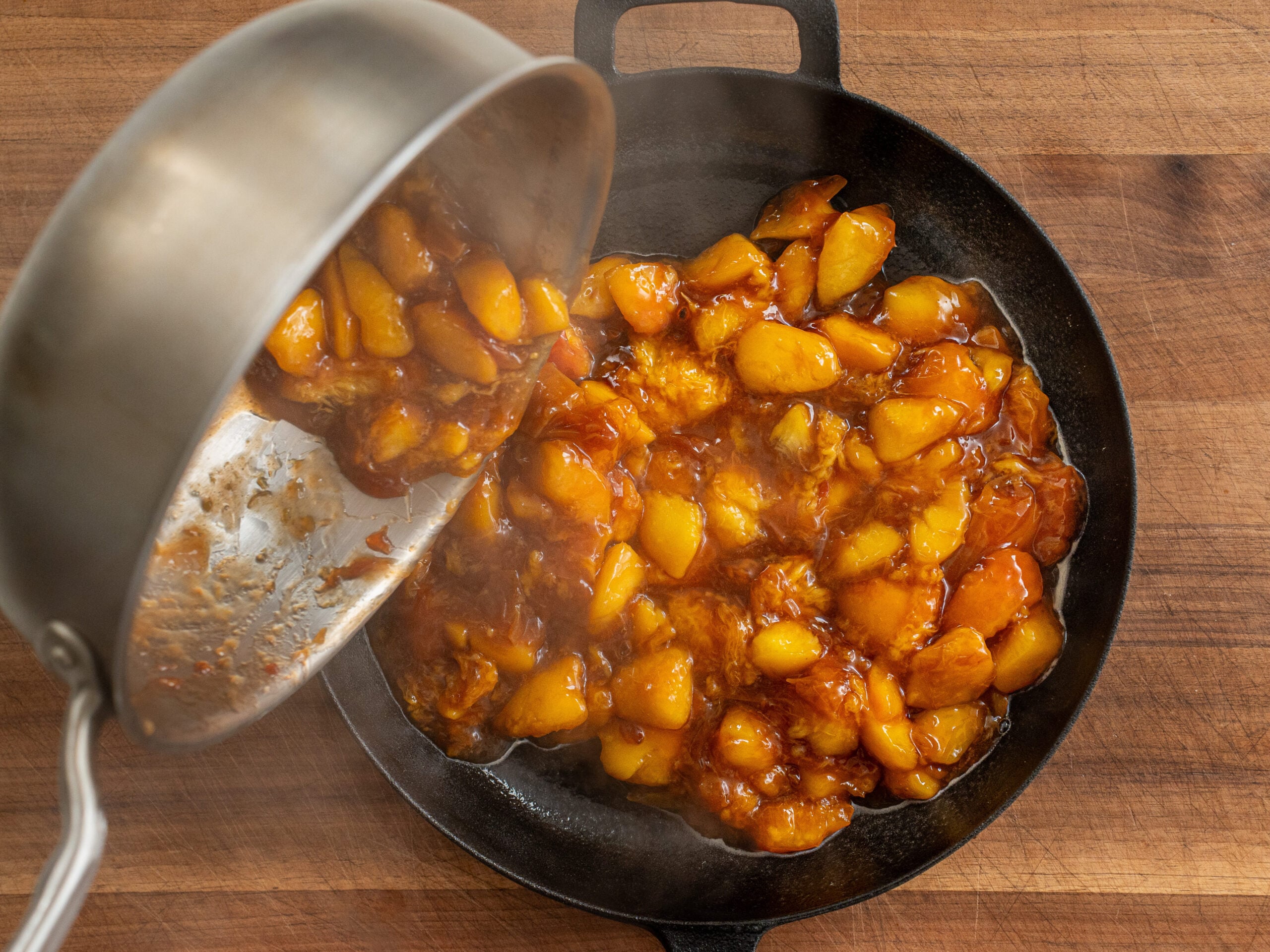
Why cool the filling? Hot filling melts the biscuit butter before baking, which costs you flakiness. Warm is fine, but screaming hot is not.
6. Cut the frozen butter into the dry ingredients. Add 145g sugar, 180g flour, 3g baking soda, 7g baking powder, and 7g salt to a food processor. Pulse to combine, add the frozen butter, and pulse in short bursts until the mixture looks like fine gravel with small irregular and lentil sized butter pieces still visible. Stop before it turns into a paste.
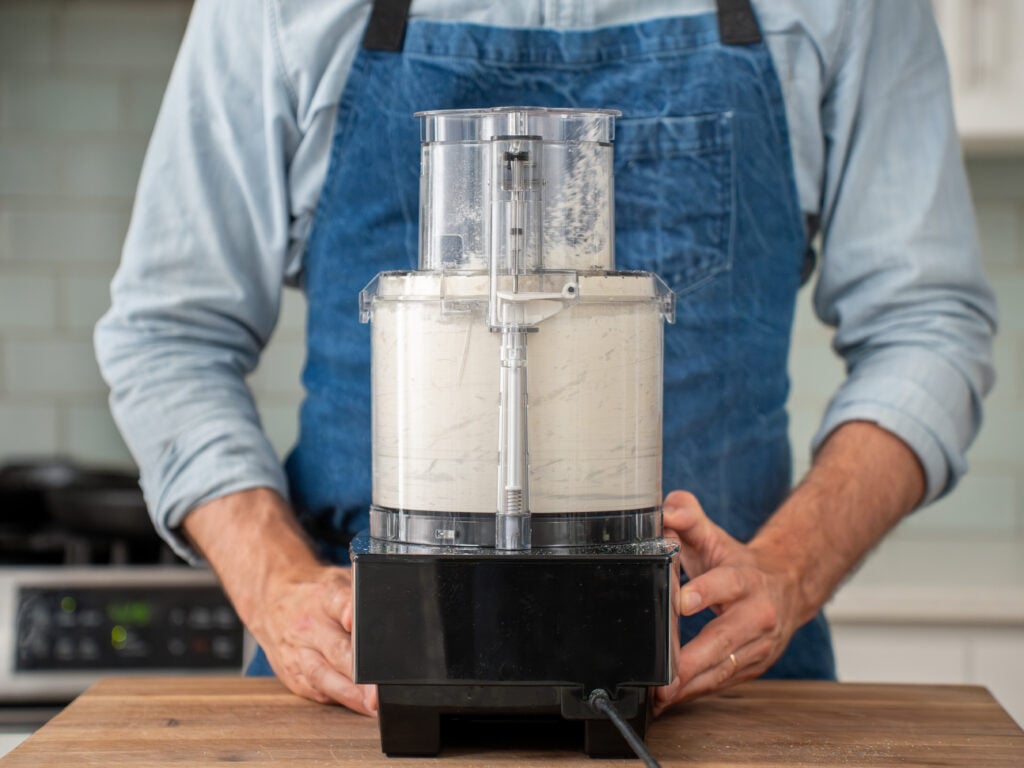
7. Add the buttermilk by hand. Move the butter-flour mixture to a mixing bowl, add 120g buttermilk, and toss gently with a fork or just until no loose flour remains. The dough should hold together in rough, shaggy clumps. It should not be smooth and homogenous. Mix less than you think.
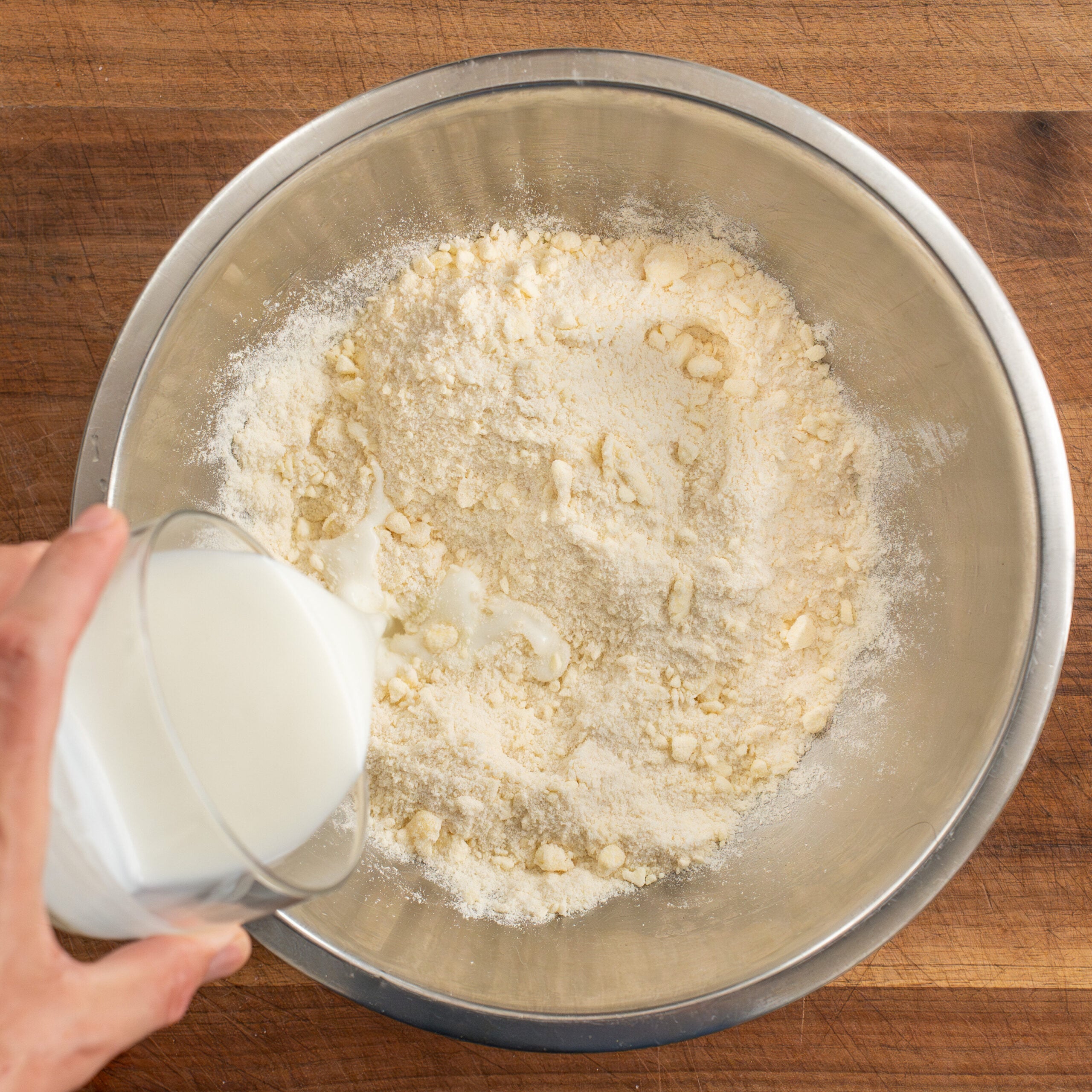
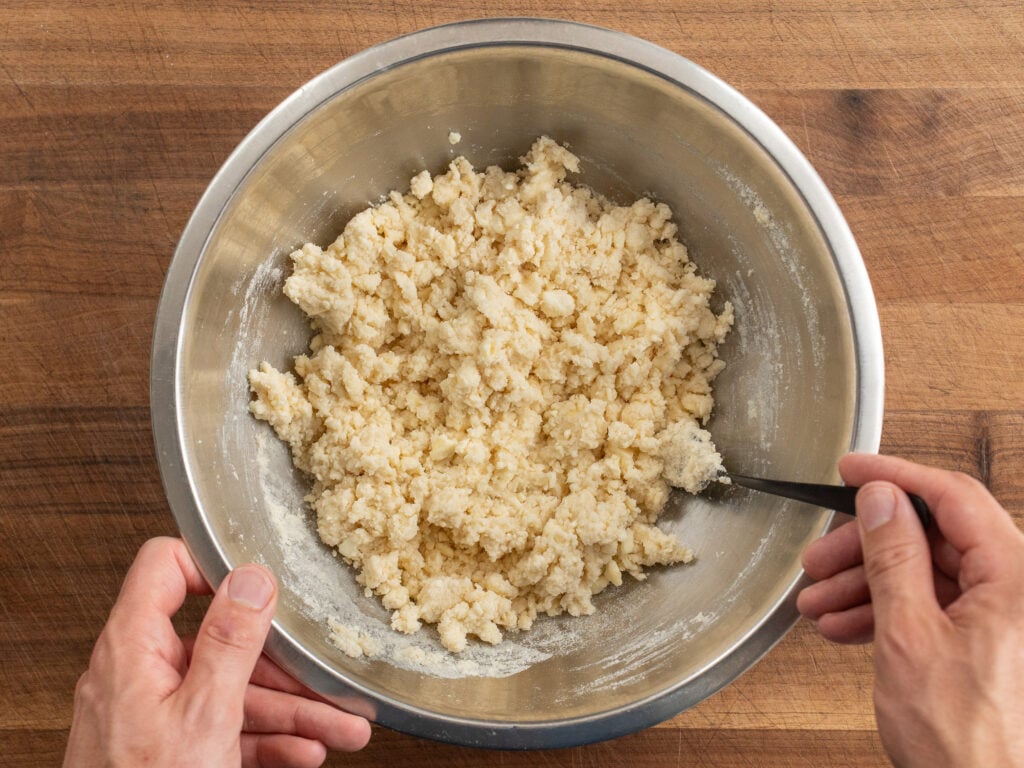
Why not add the buttermilk in the processor? This would build gluten which would make the biscuits tough.
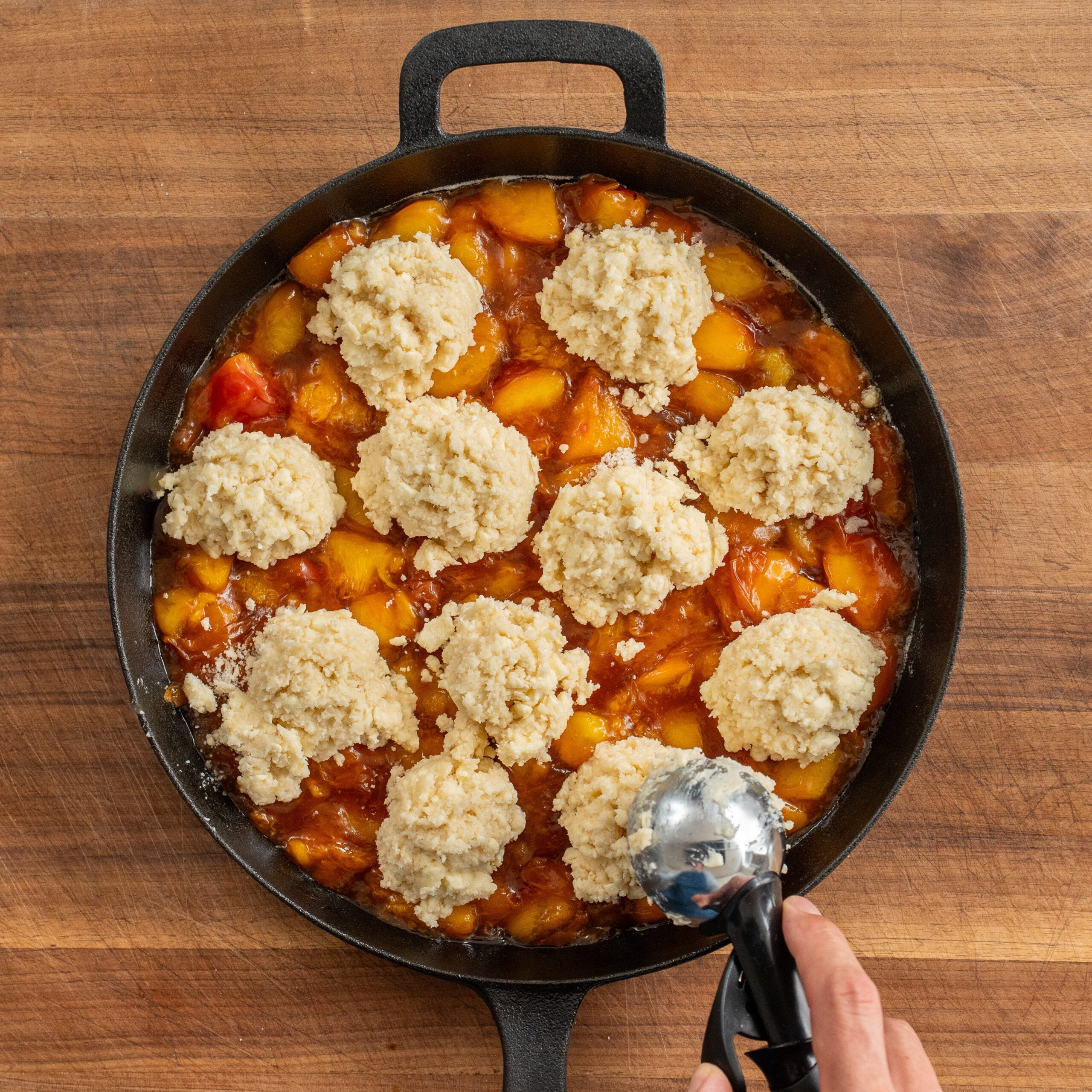
8. Portion the biscuits and bake. Drop the dough over the filling in 10–11 tall mounds, about 50–60g each, leaving roughly 2 inches between them. Sprinkle generously with demerara sugar. Bake at 425°F (218°C) with convection off for 25–28 minutes, until the biscuits are deeply golden, set in the center, and the filling is bubbling hard between them.
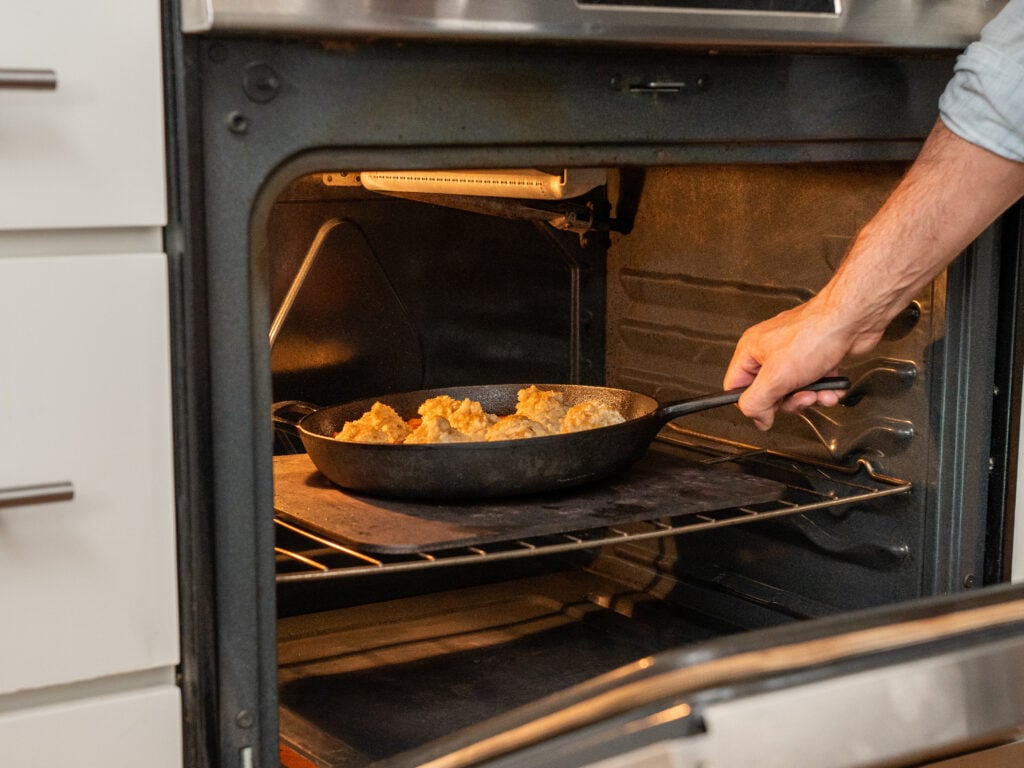
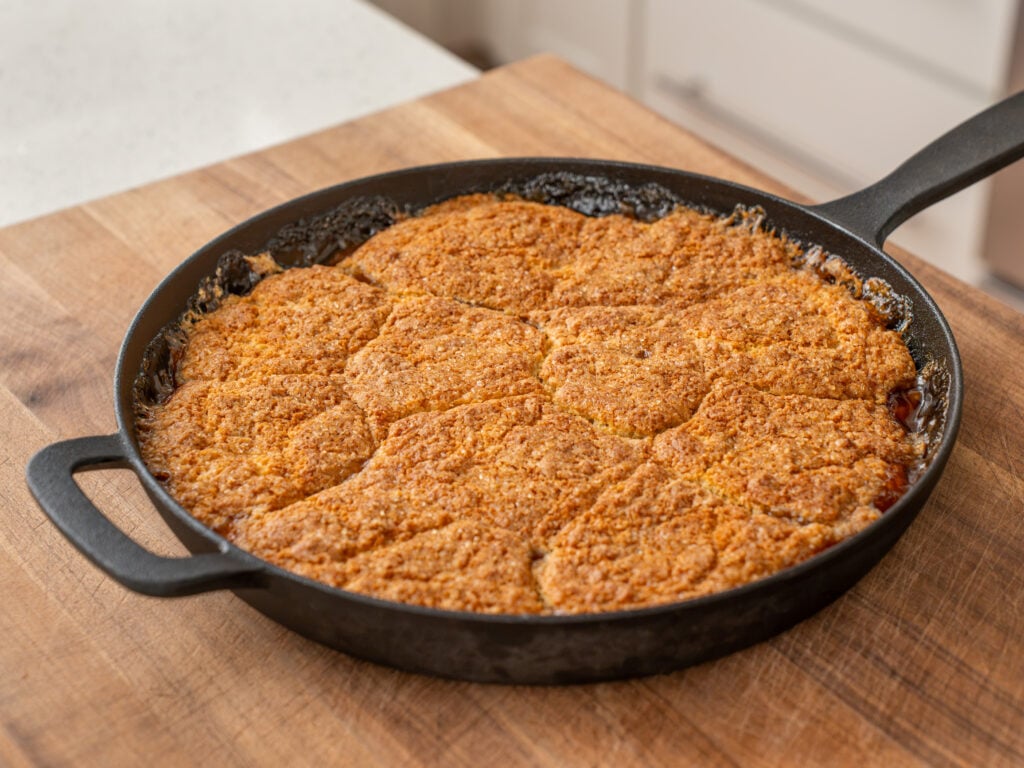
9. Rest and serve warm. Cool the cobbler for 45 minutes so the starch can finish setting. Serve while the fruit is still warm and the biscuit tops are crisp with vanilla ice cream melting over everything. Here is a link to my vanilla ice cream recipe.
What To Make next…
- Vanilla Ice Cream – the perfect pairing for peach cobbler
- Drop Biscuit Chicken Pot Pie – a savory biscuit recipe that’s just as comforting
Storage & Make-Ahead
Finished cobbler will stay good at room temp for 3 ish days. After the first 3-4 hours the topping will soften. If you are making ahead, I would refire in a 400F oven for 5-7 minutes to recrisp and slightly war fruit filling. In my opinion cobbler is best served warm.
You can cook the peach filling up to 2 days ahead and refrigerate it. Bring it back toward room temperature before adding the biscuit dough so the bottoms are not sitting on a refrigerator-cold layer.
Pin this now to find it later
Pin It
Fresh Peach Cobbler With Buttermilk Biscuits Recipe
Ingredients
For the Peach Filling
- 950 g ripe peach chunks
- 60 g granulated sugar
- 60 g brown sugar
- 5 g salt
- 25 g lemon juice
- 5 g vanilla extract
- 25 g cornstarch
- 20 g cold water, for cornstarch slurry
For the Buttermilk Biscuits
- 155 g unsalted butter
- 180 g all-purpose flour
- 145 g granulated sugar
- 3 g baking soda
- 7 g baking powder
- 7 g salt
- 120 g buttermilk
- Demerara sugar
For serving
- vanilla ice cream
Instructions
- Heat the oven to 425°F (218°C) then dice butter into rough 1/2-inch cubes and put it in the freezer while you make the filling.
- Cut peaches into roughly 2-inch chunks. Toss them with 60g granulated sugar, 60g brown sugar, and 4g salt, then let stand for 5 minutes.
- Transfer peaches and their liquid to a saucepan. Cook over medium-high, stirring occasionally, until the peaches begin to soften and peach liquid reduces by about half, 5–10 minutes. You should be able to mash a piece against the pan with a spoon with force, but the chunks should still hold together.
- Stir together cornstarch and water then stream the slurry into the simmering peaches while stirring constantly. Bring to a full boil and cook 1 minute until thickened. Remove from heat and stir in lemon juice and vanilla.
- Pour filling into an oiled 12” cast iron pan and set aside to cool while you make the biscuit topping.
- Add 145g sugar, flour, baking soda, baking powder, and 7g salt to a food processor. Pulse to combine. Add the frozen butter, and pulse in short bursts until the mixture looks like fine gravel with small irregular lentil sized butter pieces still visible.
- Move the butter-flour mixture to a mixing bowl, add buttermilk, and toss gently with a fork or just until no loose flour remains. The dough should hold together in rough, shaggy clumps. Mix it a little less than you think.
- Drop the dough over the filling in 10–11 tall mounds, about 50–60g each, leaving roughly 2 inches between them. Sprinkle each dough mound with demerara sugar.
- Bake at 425°F (218°C) with convection off for 25–28 minutes, until the biscuits are deeply golden, set in the center, and the filling is bubbling hard between them.
- Cool for 45 minutes. Top with a scoop of vanilla ice cream and serve while the fruit is still warm and the biscuit tops are crisp.
 Like this? Leave a comment below!
My Go-To Gear
Below are tools I actually use when making this recipe. Some of these are affiliate links, which means I may earn a small commission if you purchase through them at no extra cost to you.
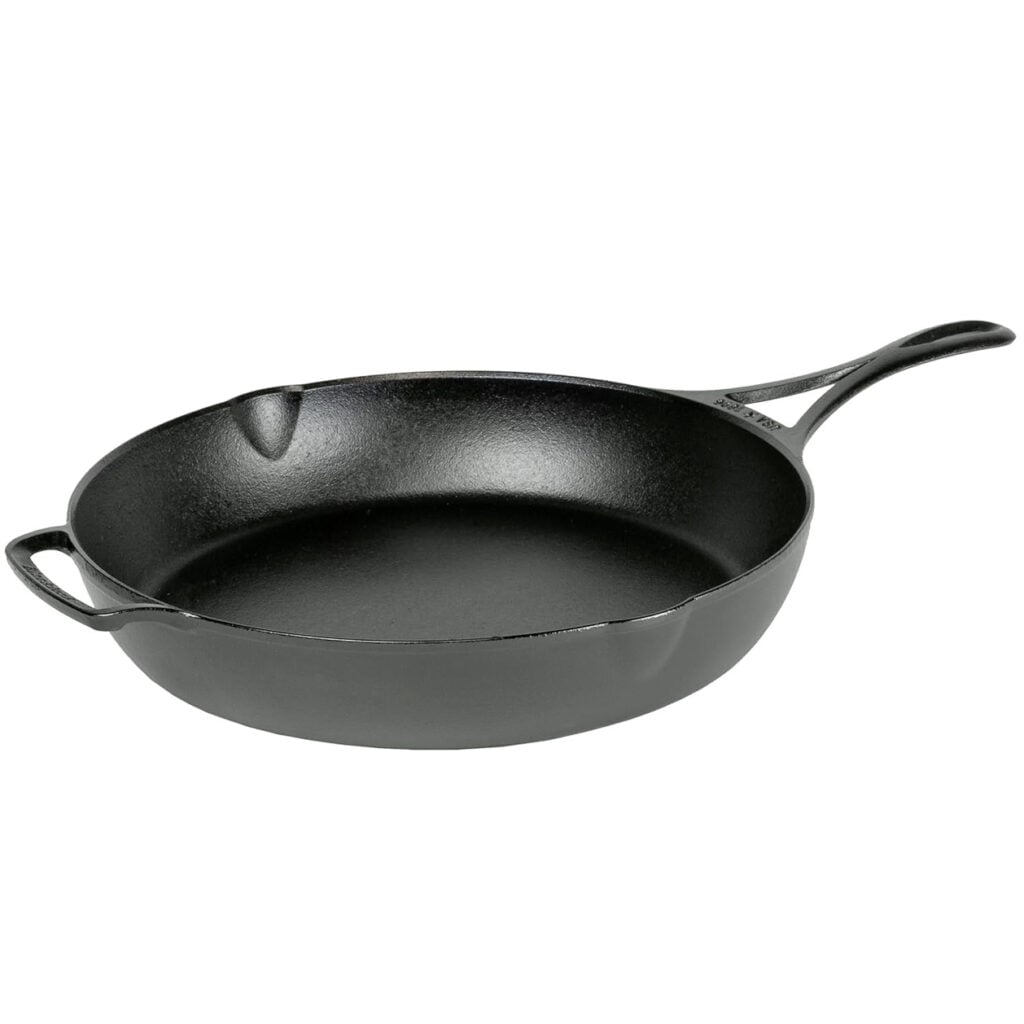
Cast iron holds enough heat to set the biscuit undersides and crisp the edges where the filling meets the pan. It also goes straight from oven to table and looks like cobbler is supposed to look.
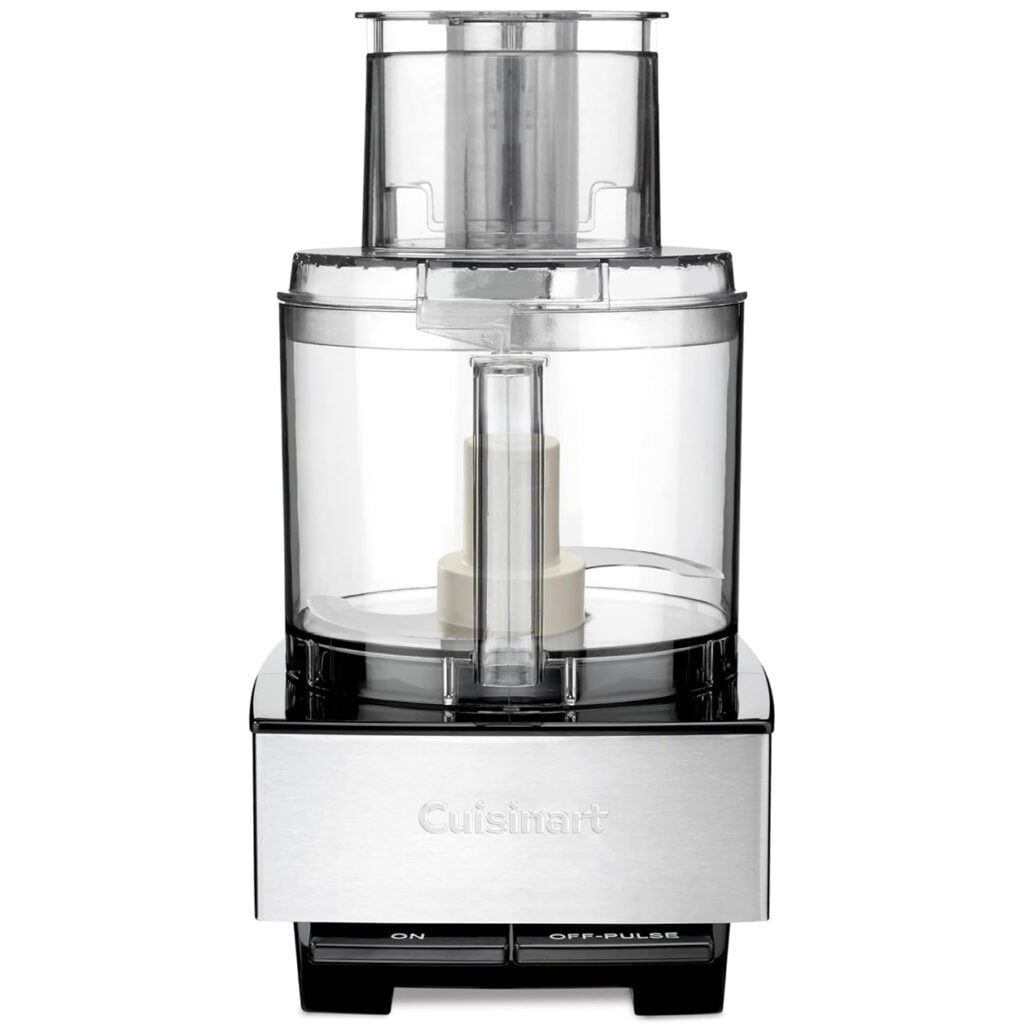
This is the fastest, most consistent way to cut frozen butter into the flour without warming it. Remember to pulse instead or run it continuously.
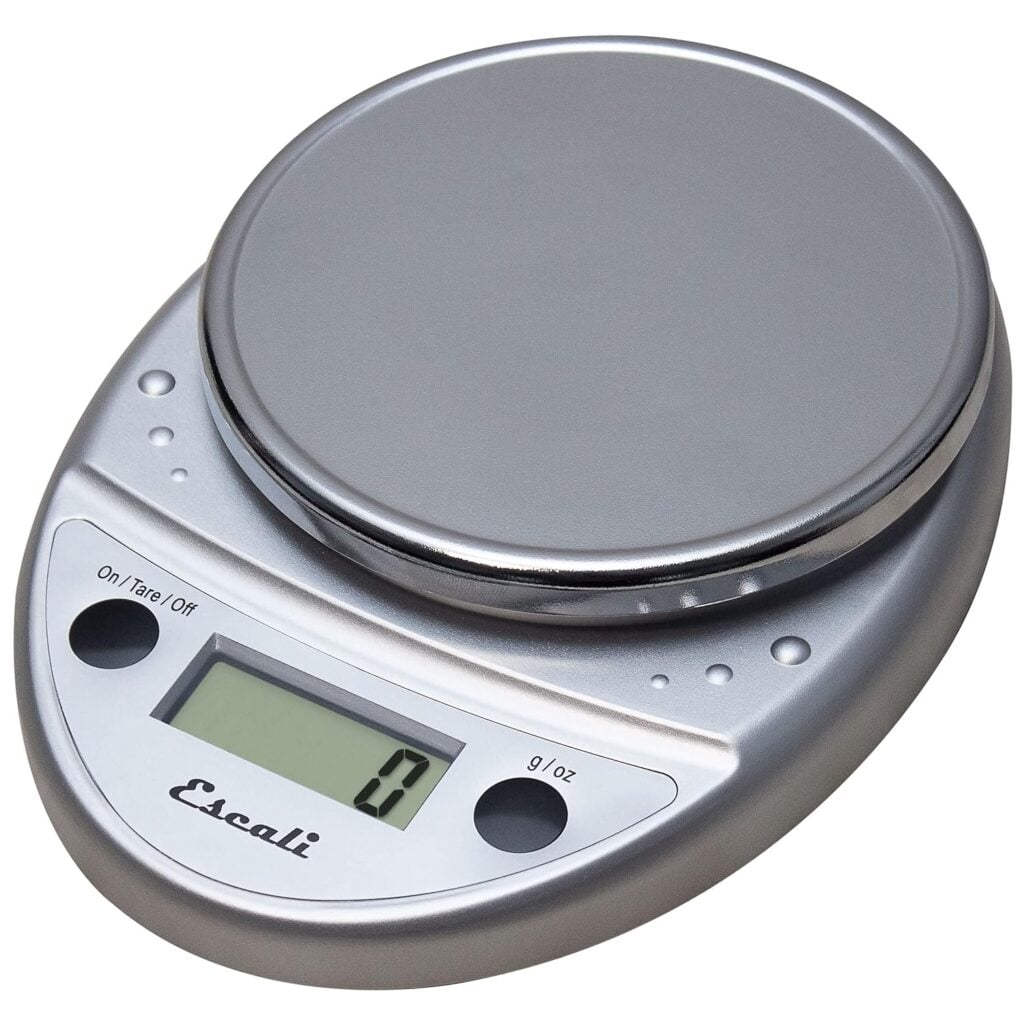
If you’re not new to my recipes you know that I prefer to weigh my ingredients, ESPECIALLY when baking. Plus, weighing makes it easy to measure ingredients straight into a bowl.
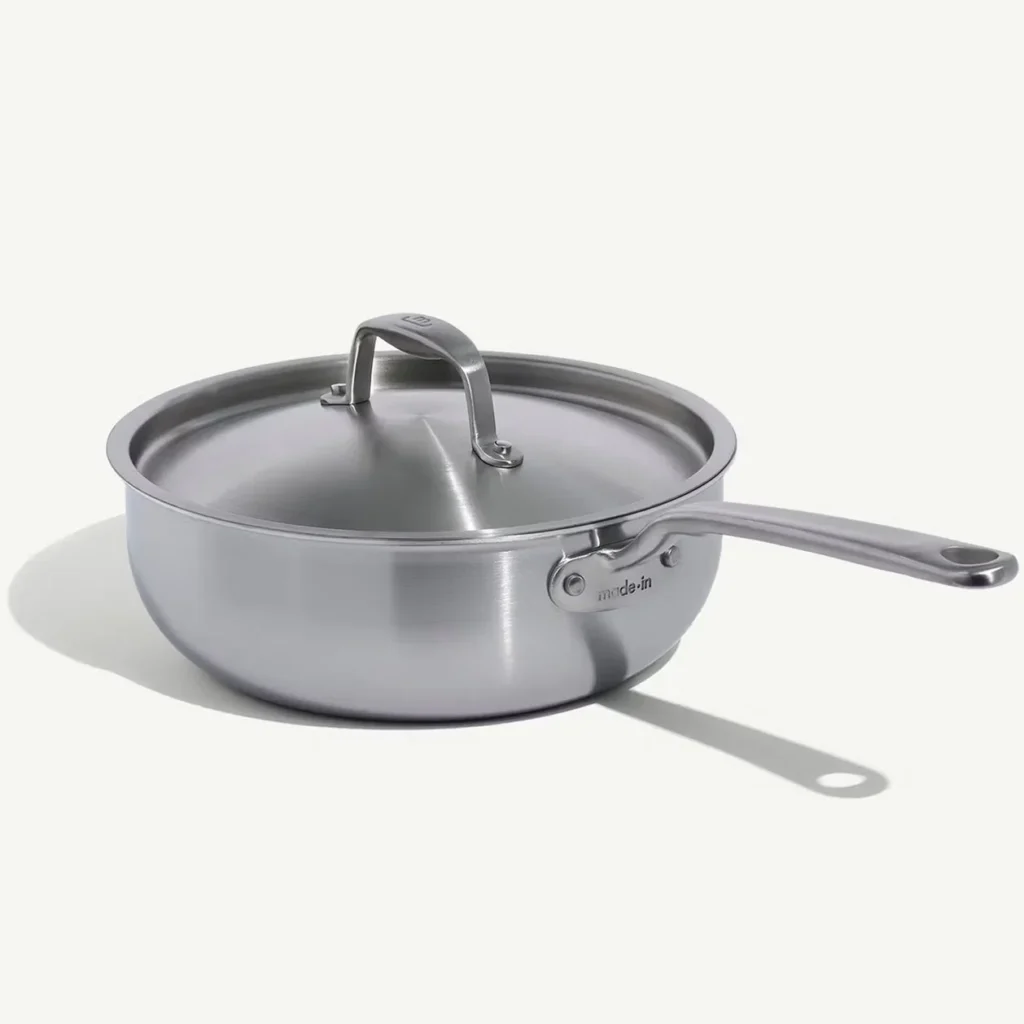
The rounded edges make it easy to stir the peaches and cornstarch slurry without leaving dry pockets stuck in the bottom edge. A medium saucepan works, but the saucier is nicer here.
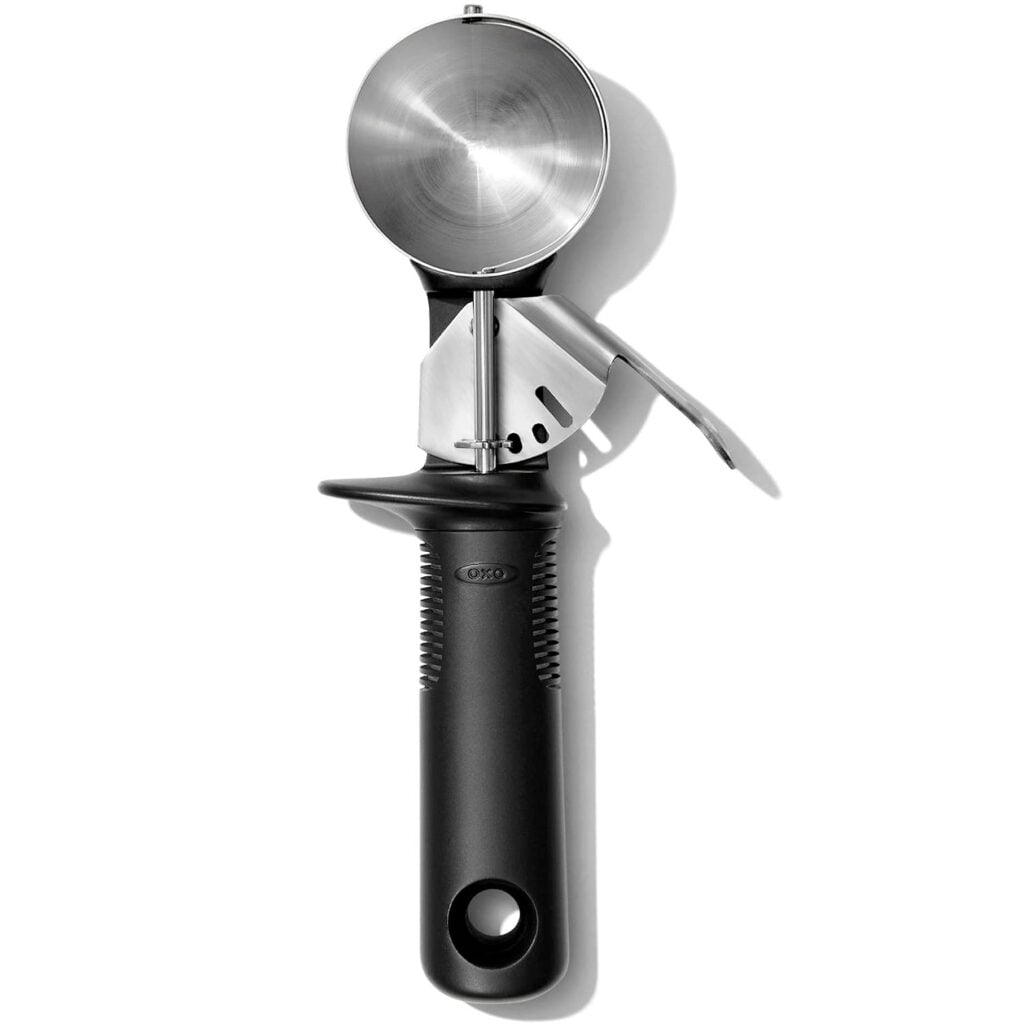
I like to use a 2oz scoop to get a nice, tall 50-60g biscuit ball. This also doubles as your iced cream scoop!
Frequently Asked Questions
No. I usually leave the skins on because they soften during cooking and give the filling better color and body. Peel them if you want a completely smooth texture, but it is extra work for a difference that I do not think matters.
Frozen peaches work well, they just release more liquid. Thaw and drain them first, then judge the liquid in the saucepan before adding any extra water. Canned peaches aren’t great in my opinion. If you do want to use them, drain off the syrup thoroughly, reduce the sugar in the recipe by 25%, and expect a softer final texture.
Combine 110g (about 7 Tbsp) milk with 15g (1 Tbsp) sour cream.






Good Recipe
Just a home cook here that made this EXACTLY as is. This was AMAZING! Don’t skip the cast iron, trust Brian. Excellent recipe sir.
This recipe doesn’t disappoint. The cookie on top is sooo good
Peak peach season is nearly over when I tried this so I switched peaches for pineapple. Pineapple season seems to be year round! I ended up taking the skin off the pineapple because it didn’t soften up with macerating. Took forever to pick out the spikeys. Pineapple and biscuits are amazing together! Will make this recipe again…. but with pineapple.