
This post contains affiliate links. Please see our disclosure policy.
This recipe only requires one-pan and ten minutes of real work, but the result is the kind of dinner that makes people think you tried way harder than you did.
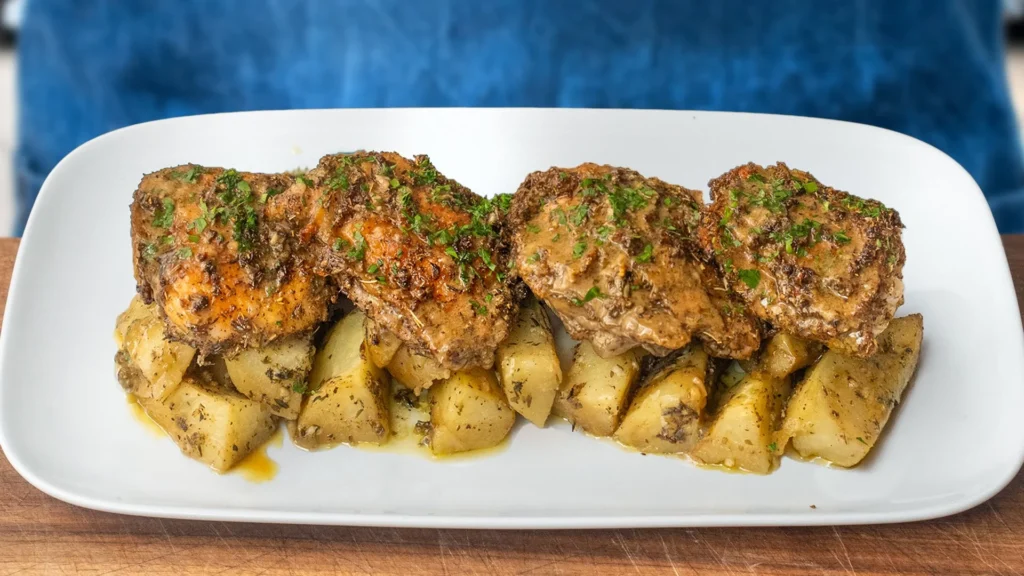
Table of Contents
What Makes This Greek Chicken and Potatoes Recipe Special
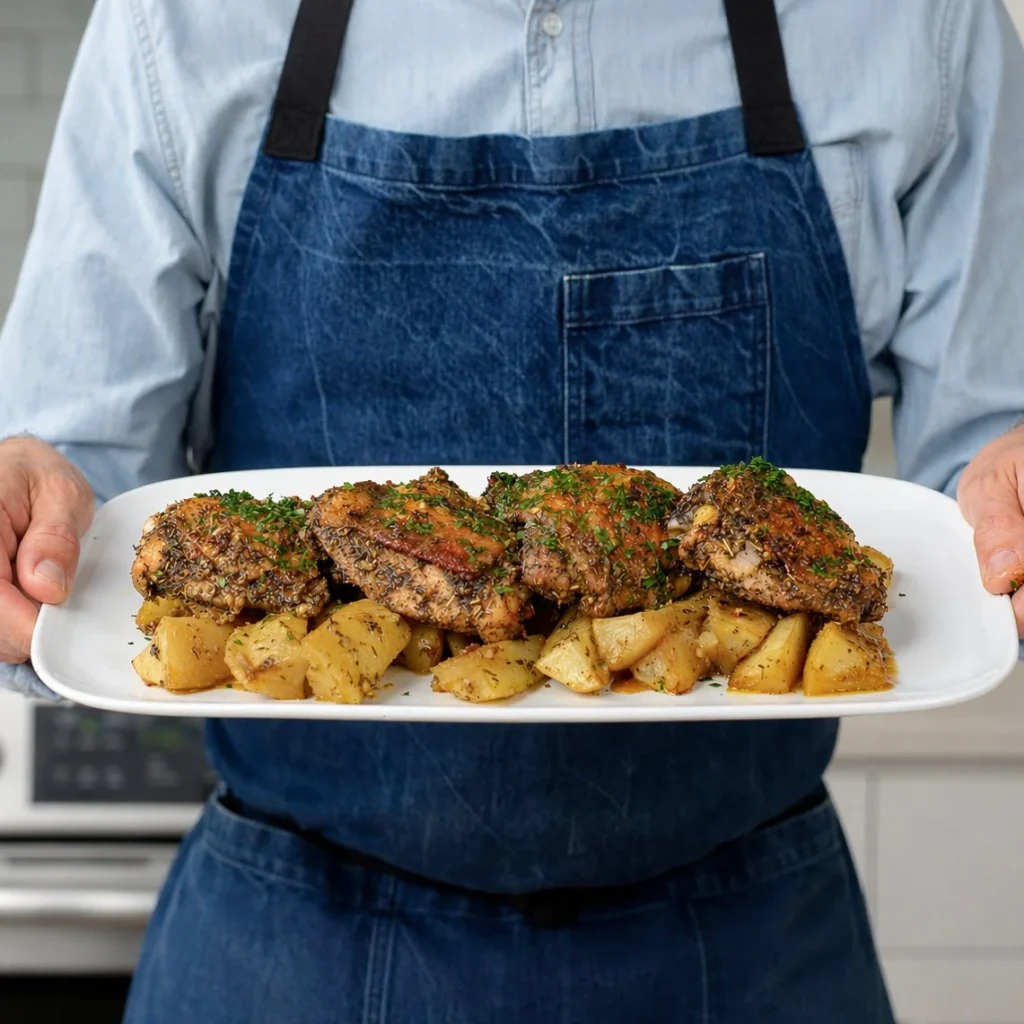
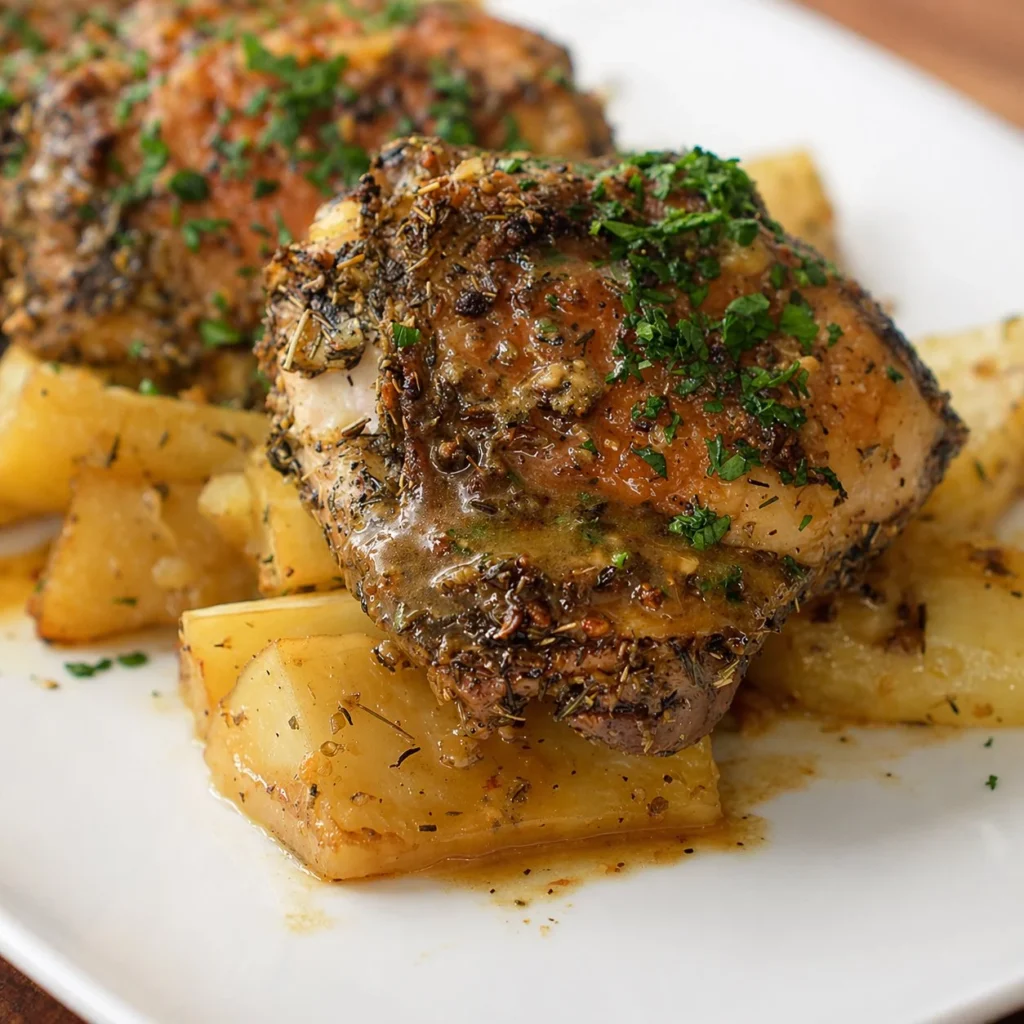
The chicken thighs in this recipe sit directly ON the potatoes, so every drop of rendered fat and lemony garlic oil drips down and soaks into the wedges as they roast. Chicken stock in the pan creates a shallow braise that cooks the potatoes through and lets them absorb all that flavor before the liquid reduces and the edges crisp. The result is one of a kind potatoes that are somehow waxy and firm but creamy and tender. All this with fall-apart-tender chicken thighs with deeply browned skin. A 30-second pan sauce at the end ties the whole thing together. One pan, minimal effort, absurdly good.
Brian’s Pro Tips
Pre Salt The Chicken – Even 30 mins makes a real difference. The salt draws out moisture which then gets reabsorbed, seasoning the meat throughout and helping it stay juicy during the long roast. Overnight works too if you want to prep the night before.
Trim the Thighs – Chicken thighs straight from the package usually have a lot of flabby fat and skin hanging off. Some rendered fat is a feature here – it’s what makes the potatoes incredible, but too much makes the whole dish greasy. Clean them up so each thigh has a tidy cap of skin.
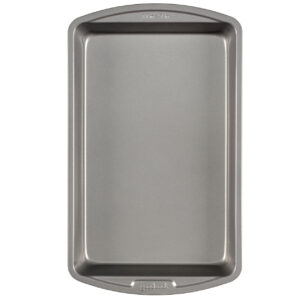
Use a Metal Baking Pan, Not Ceramic – Metal conducts heat faster and more aggressively, so you get better browning on the potatoes and faster moisture evaporation. Ceramic heats slowly and holds moisture which means softer, paler potatoes and a sloppy sauce. THIS is the inexpensive metal pan I use.
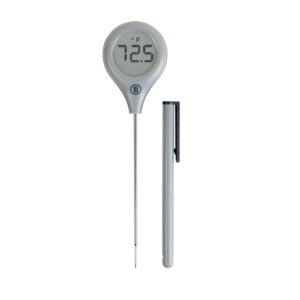
Pull the Chicken at 185°F (85°C) – Thighs are dark meat loaded with connective tissue. At 165°F (75°C) they’re safe to eat, but bouncy and a little chewy. You need 180-185°F for all that collagen and intramuscular fat to get rendered which gives you tender juicy meat.
Don’t Forget the Fond! – The fond on the bottom of the pan can be whipped up into kind of a chicken nectar just by adding a touch of dijon. Skipping it means leaving the best flavor stuck to the pan. Plus it moistens things up just a tiny bit and ties the potatoes and chicken together more.
Key Ingredient Notes & Substitutions
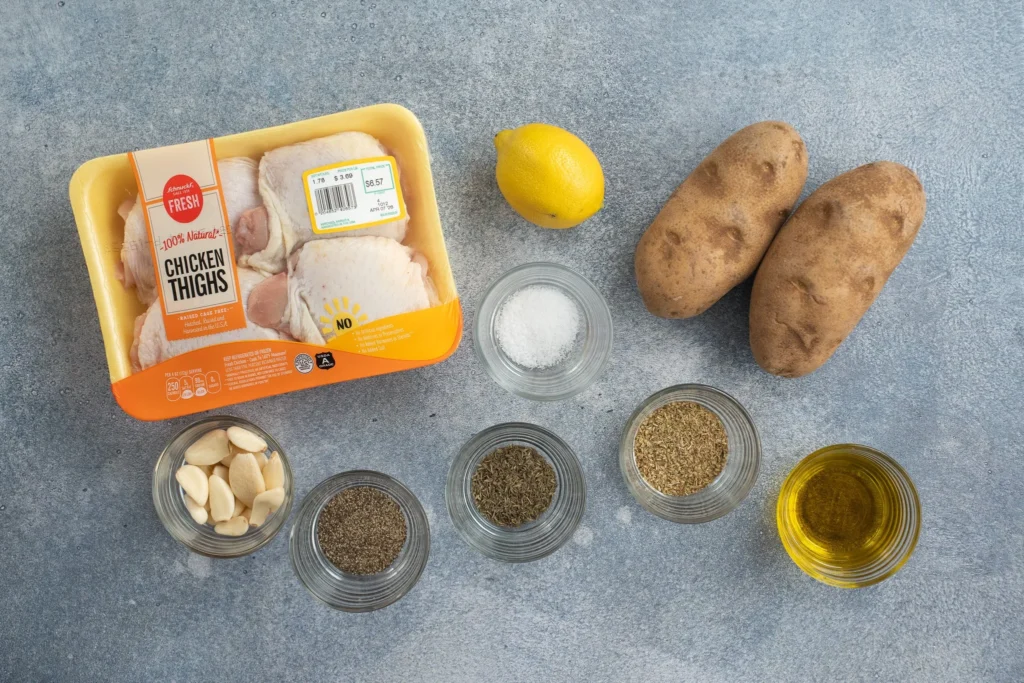
These are the important ingredients I want to call out. A full list of recipe ingredients and amounts can be found in the recipe card below.
Chicken Thighs
Thighs are the only option here. Chicken breast just doesn’t survive this style of cooking. 90 minutes in a lemony, high-heat environment would dry out breast and makes it tight and stringy. Thighs get better the longer they cook, rendering fat that bathes the potatoes while staying juicy and tender.
Russet Potatoes
Russets are high-starch and low-moisture, which means they get crisp, browned edges while staying fluffy inside. I wouldn’t sub for Yukon Golds. They hold their shape well but are higher moisture so they wont crisp and I think they are easier to overcook into mush.
Fresh Garlic
45 grams sounds like a lot, but it’s covering all the potatoes and all the chicken, and over 90 minutes the raw punch disappears completely. What you’re left with is a deep, sweet roasty garlic flavor. In a pinch you can sub in about 10g of garlic powder, but fresh is a different thing entirely. Don’t waste time peeling this much garlic. Buy pre-peeled garlic and freeze the extra if you aren’t going to use the rest soon.
How to Make Greek Chicken & Potatoes
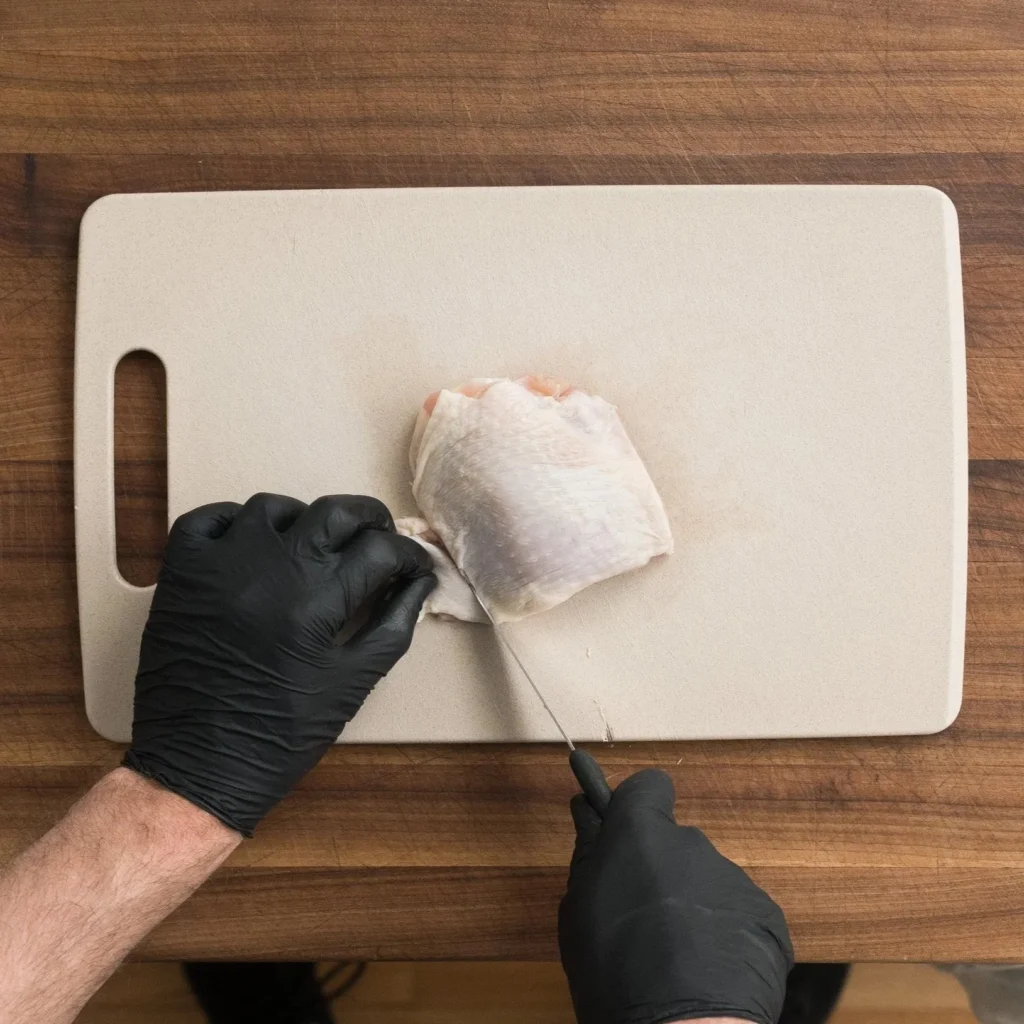
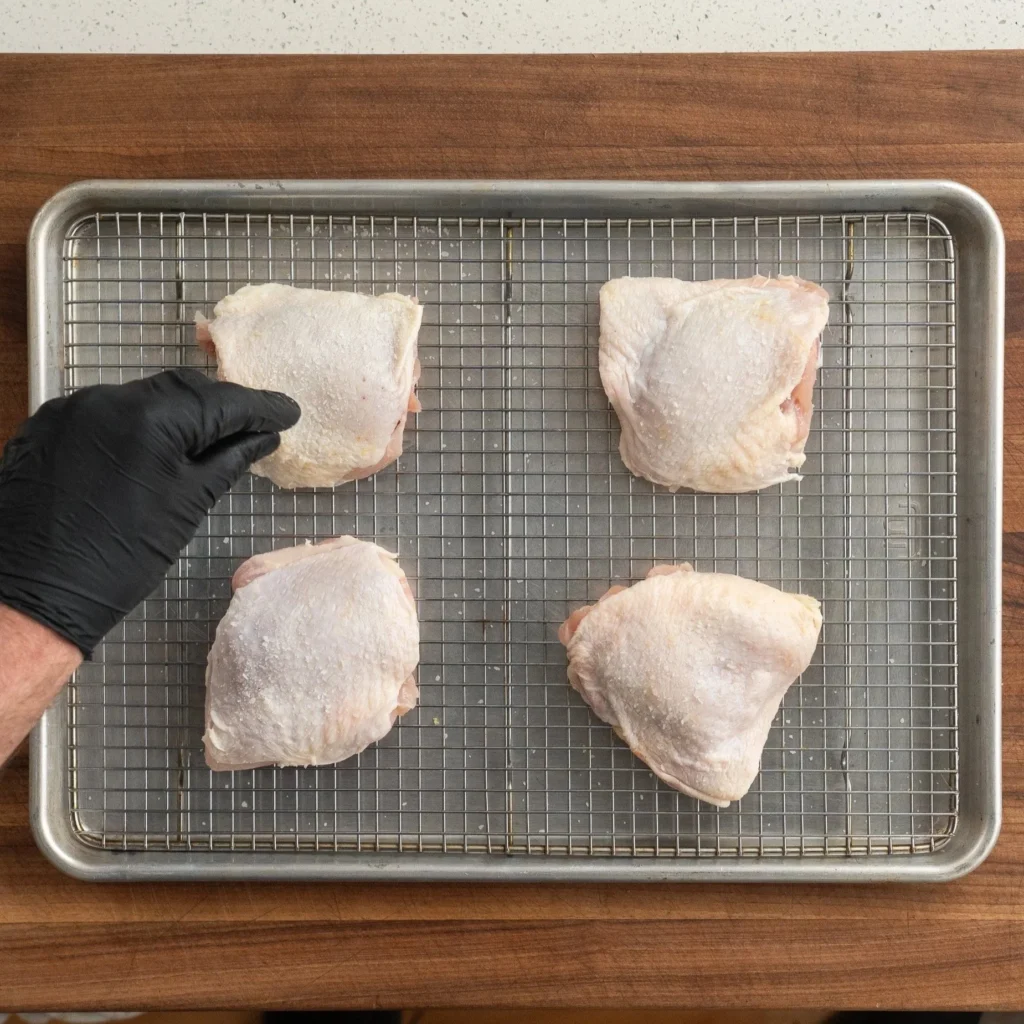
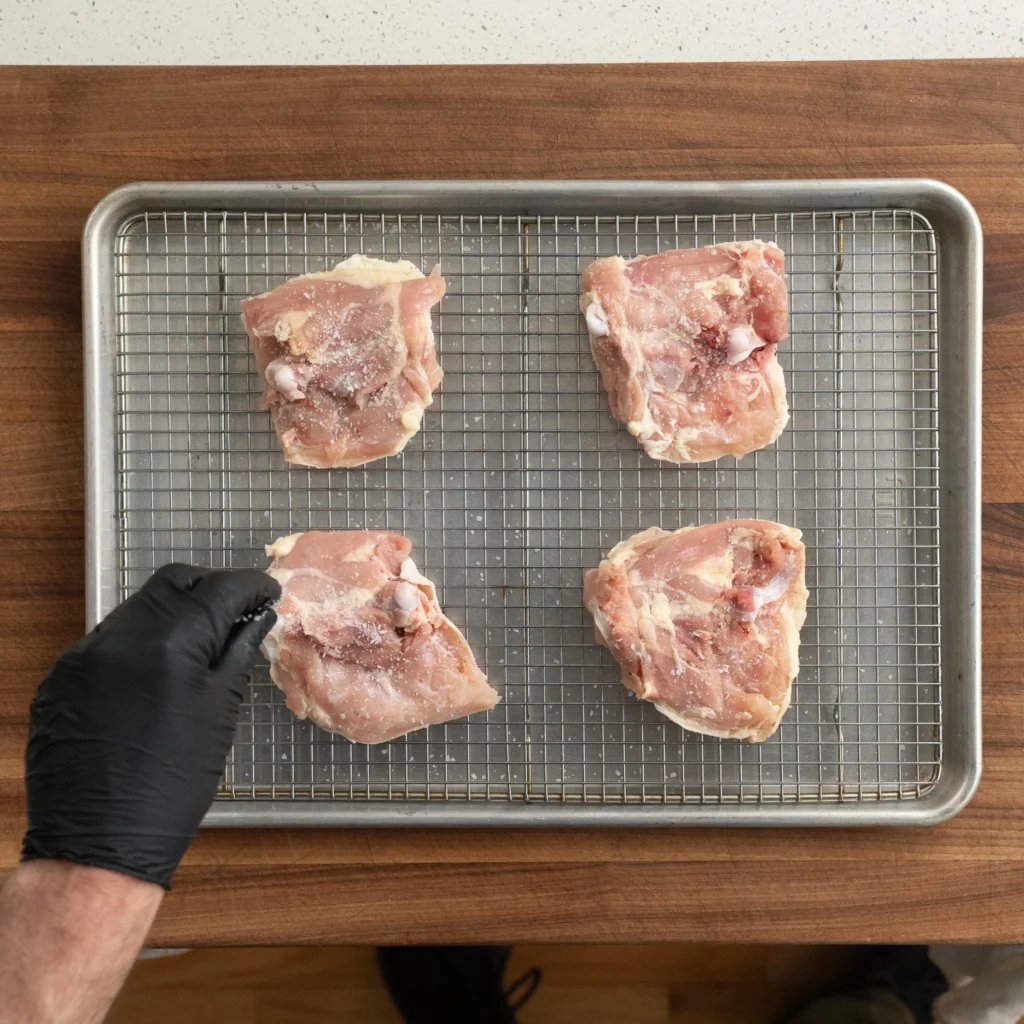
1. Trim and Salt the Chicken. Take your 2 pounds of bone-in, skin-on chicken thighs (about 4 large thighs) and trim off any flaps of excess skin or dangling fat around the edges. You want each thigh to have a clean cap of skin on top with no flabby bits hanging over. Season both sides with 10g (1 T) of salt and place in the fridge, uncovered, for 30 to 60 mins.
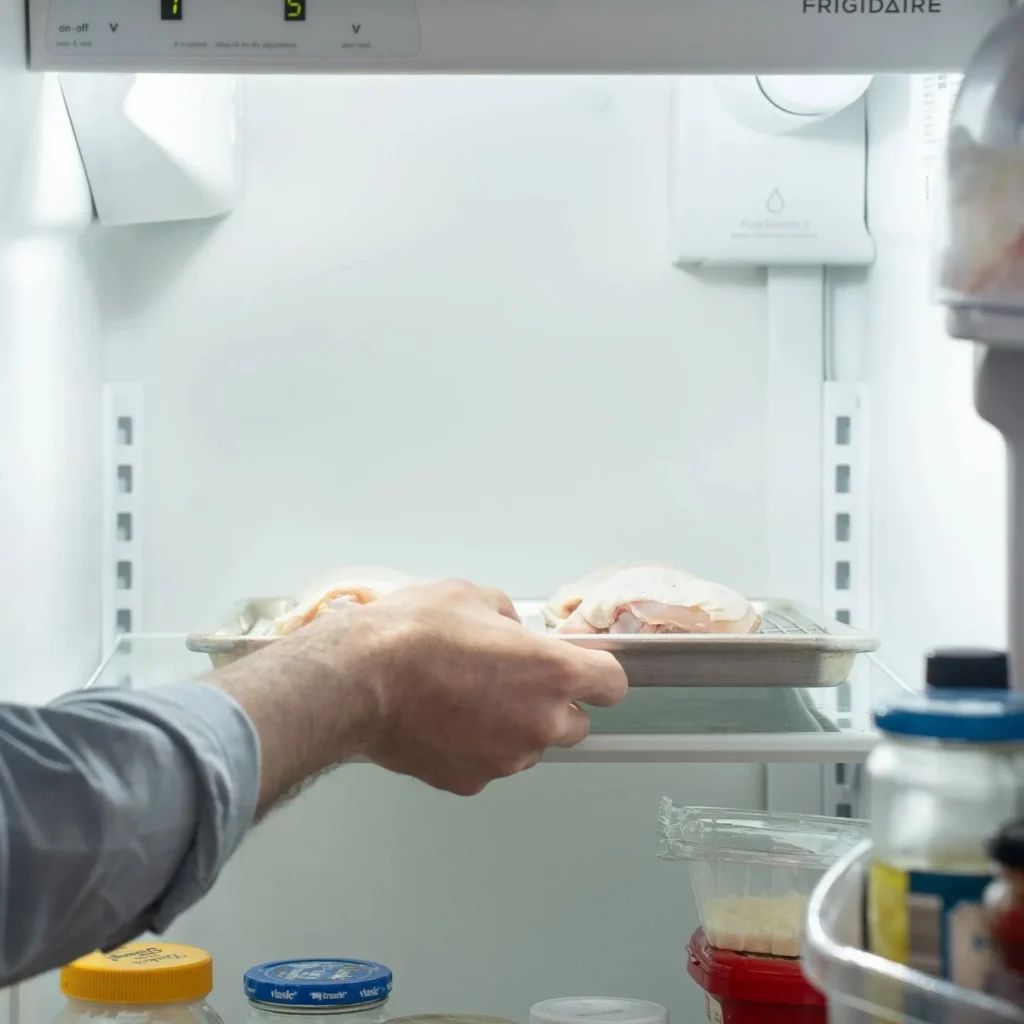
Can I skip the salting rest? You can go right into cooking, but since the chicken roasts for almost 90 minutes with dry heat, it can get a little dried out. Salting ahead helps the meat stay juicy and makes it more seasoned throughout. Overnight is also fine if you want to speed up day-of cook time.
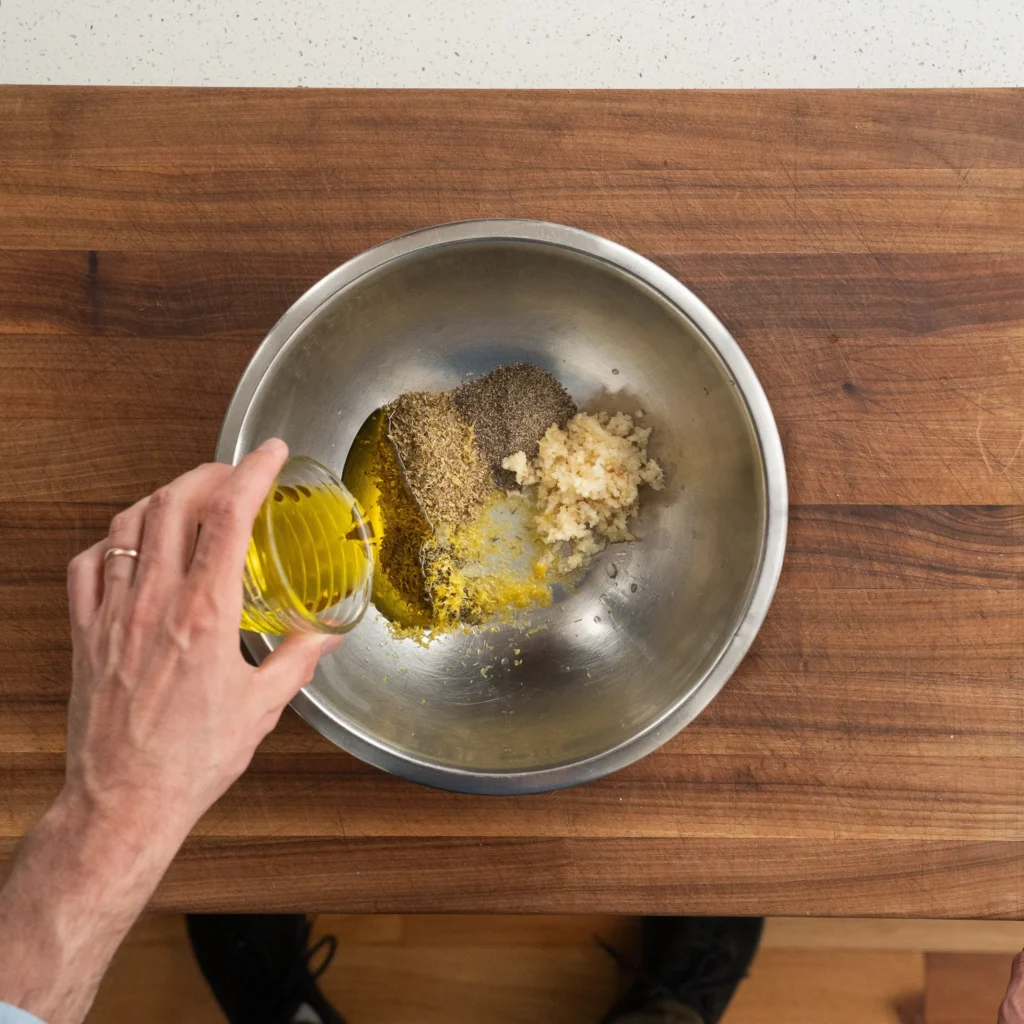
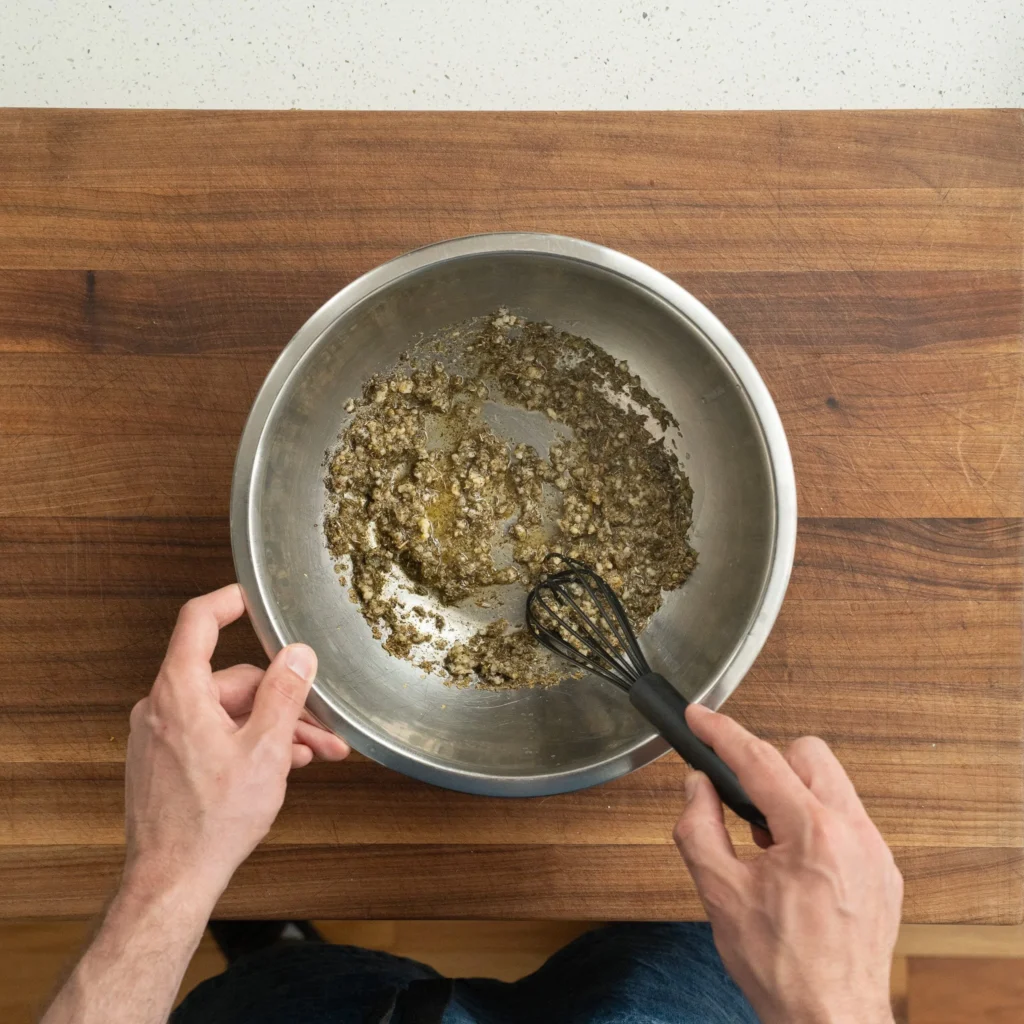
2. Make the Marinade. Grab a medium bowl. Combine olive oil, minced garlic, dried oregano, dried thyme, black pepper, the zest of 1 lemon, and the juice of 1 lemon (approximately 20–30g). Stir everything together until combined.
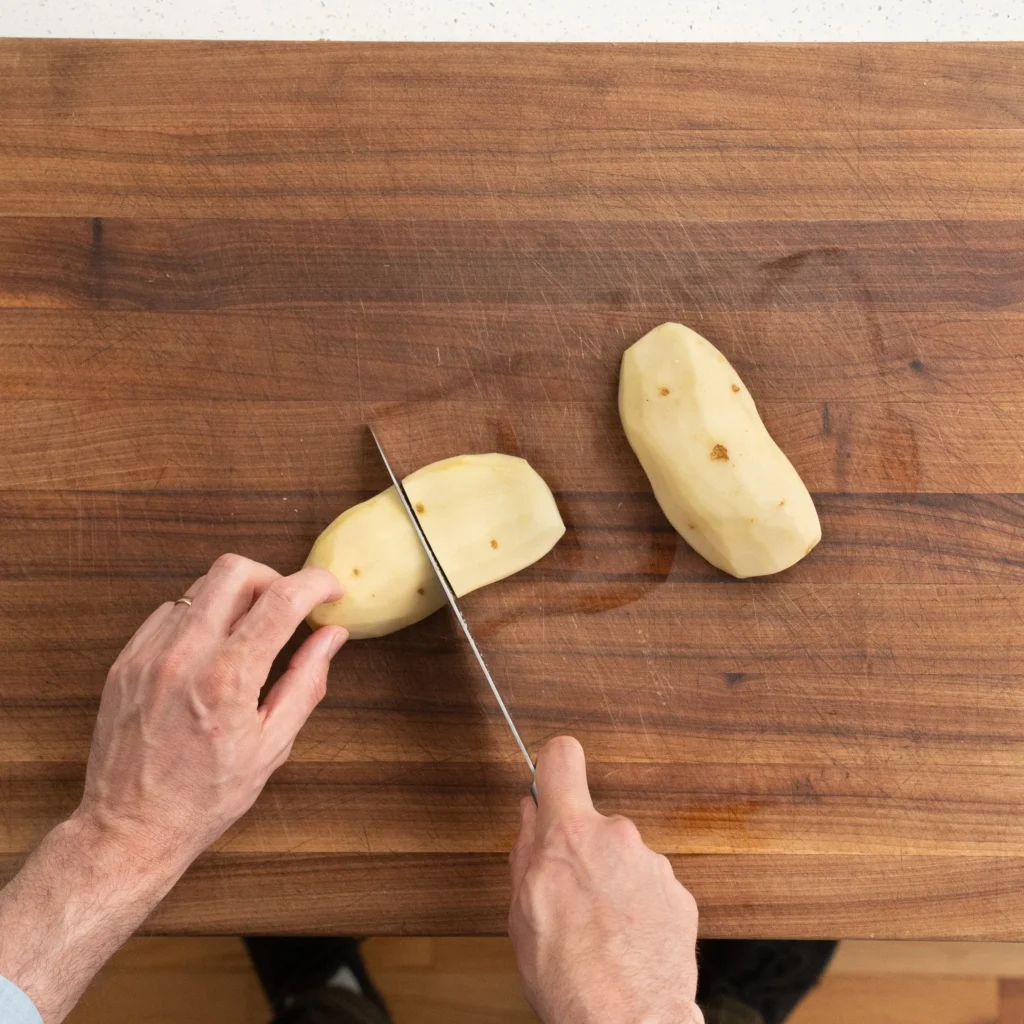
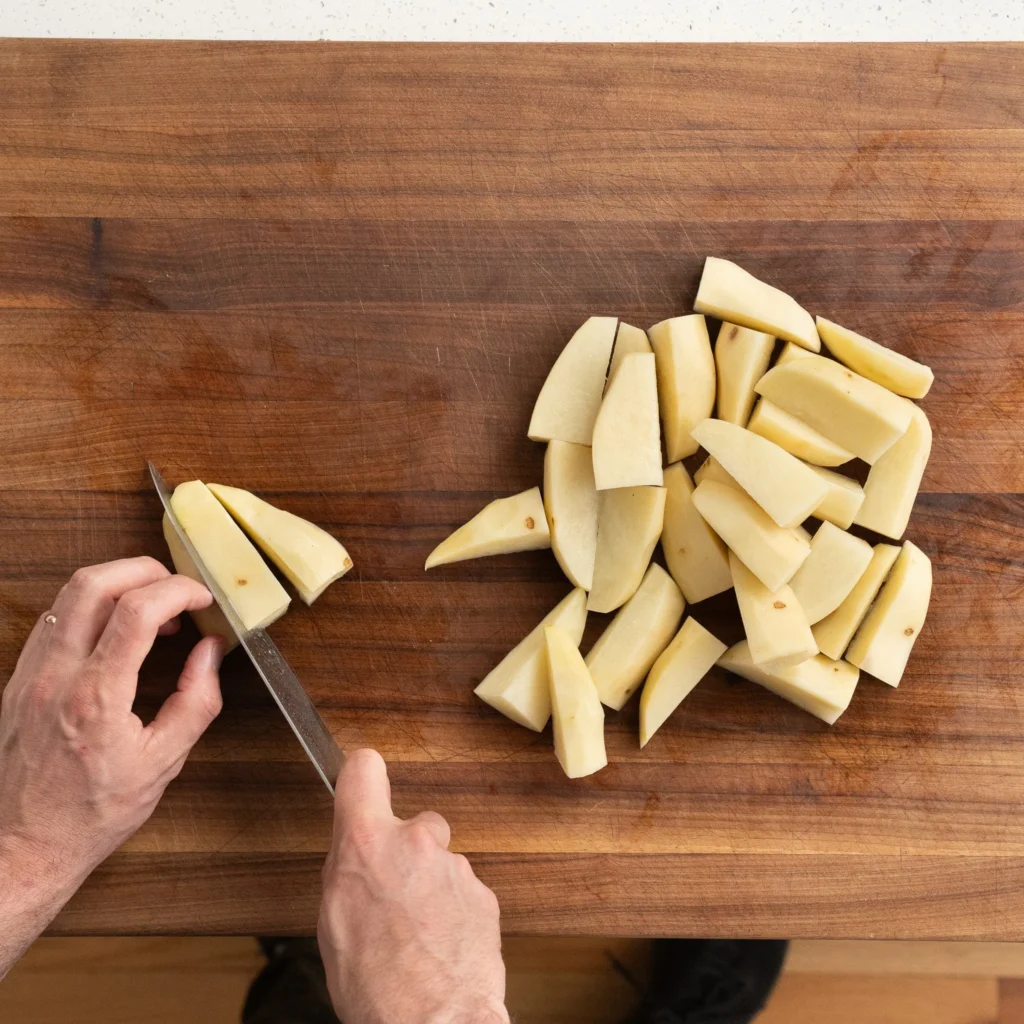
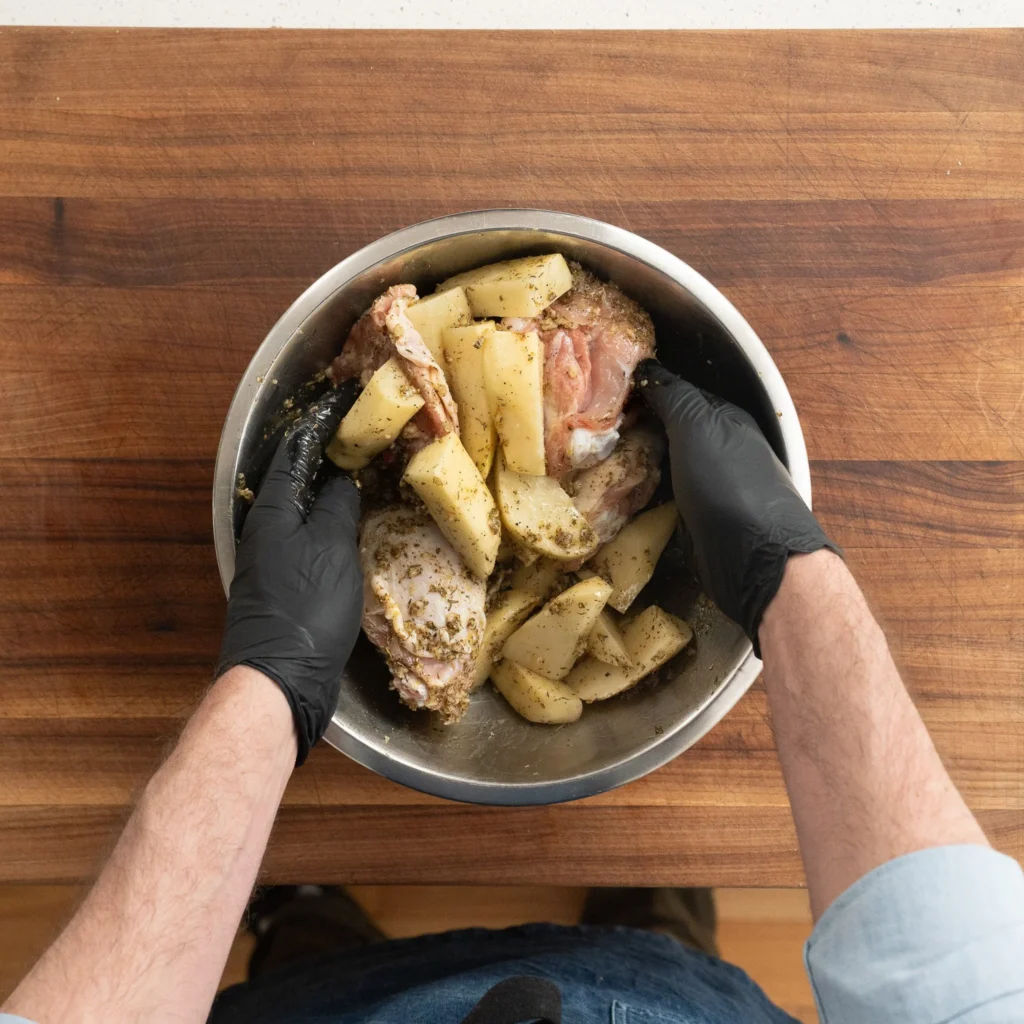
3. Cut Potatoes and Combine with Marinade. Peel 750g (about 2.5 large) russet potatoes and cut them into large wedges. Toss the potato wedges and the salted chicken thighs into the bowl with the marinade and coat everything well. Make sure to get all the marinade out of the bowl.
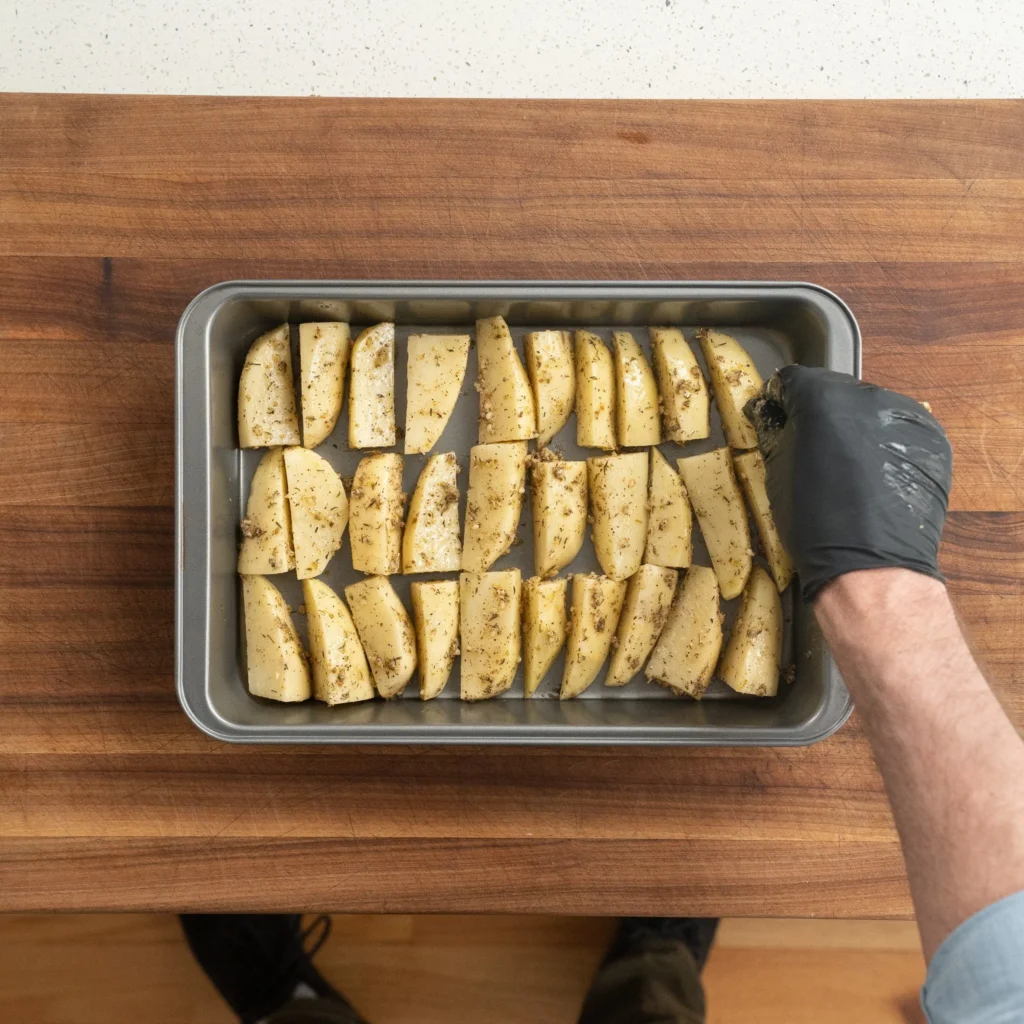
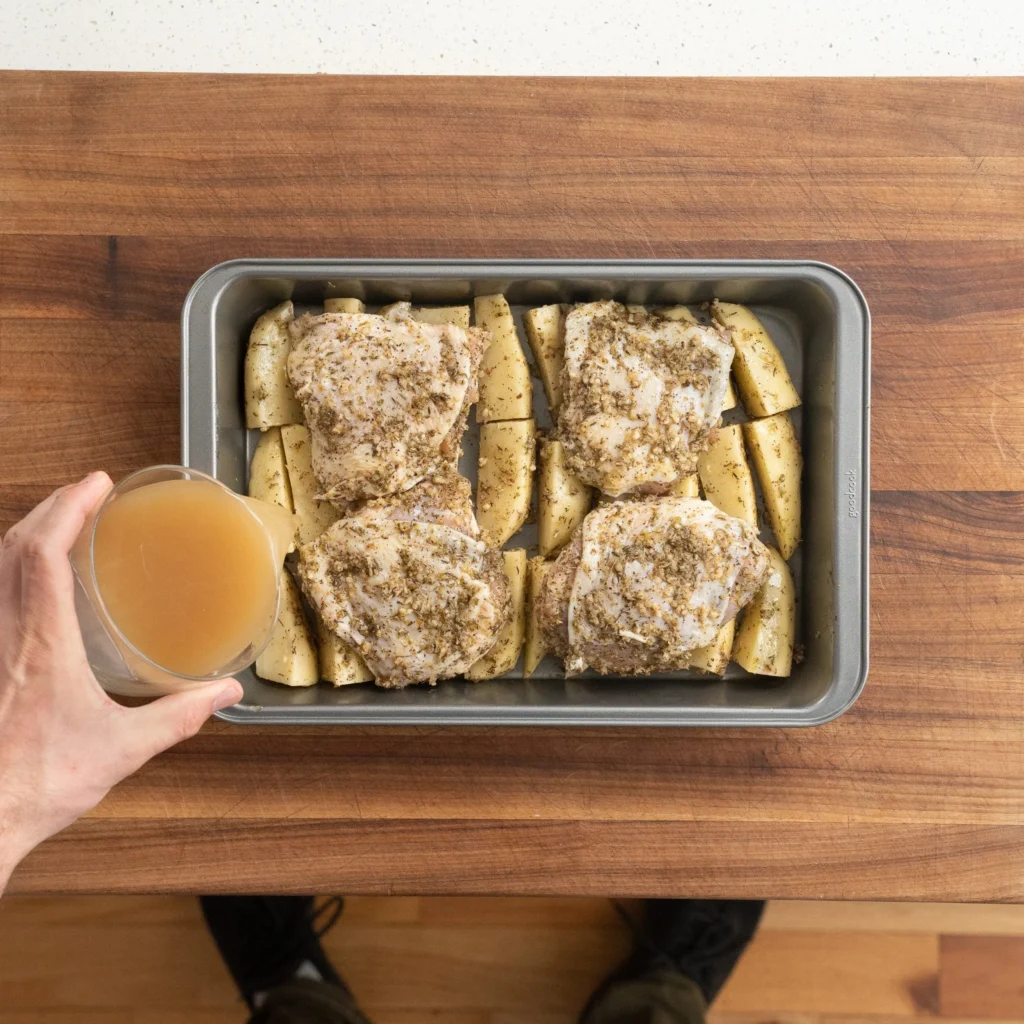
4. Arrange in the Pan and Add Stock. Spray or lightly oil a metal baking pan. Lay the potato wedges in a single layer on the bottom of the pan, then nestle the chicken thighs on top, skin side up. Pour 150g of chicken stock into the pan around the potatoes.
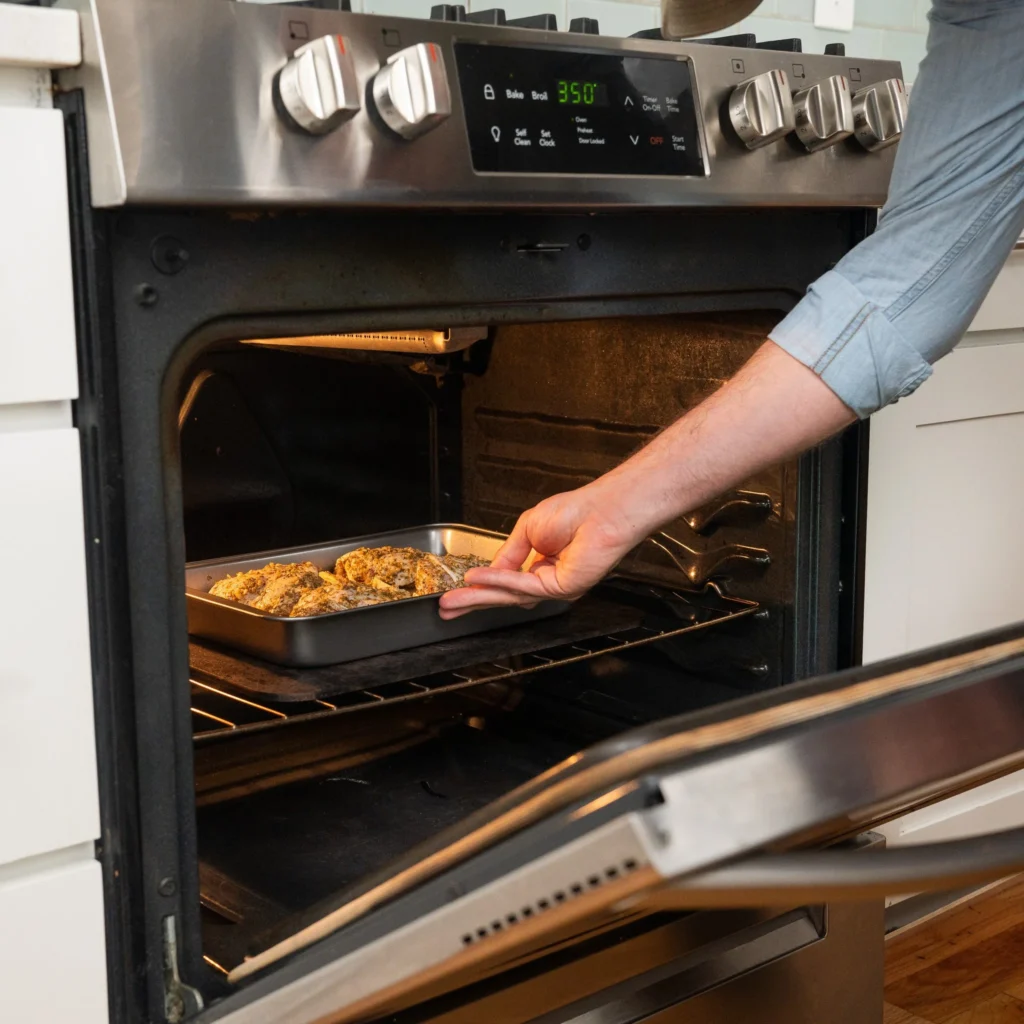
5. Roast. Place the pan in the oven uncovered and bake at 350°F (175°C) for 75 to 90 minutes.
Why 350°F and not higher? 350°F for 90 minutes gives the potatoes time to cook through, absorb the lemony chicken juices, and then gradually caramelize without burning. The moderate heat also renders the chicken fat and cooks the meat evenly so it stays juicy. Higher heat would brown faster but risk undercooked centers or burnt edges before the flavors fully develop.
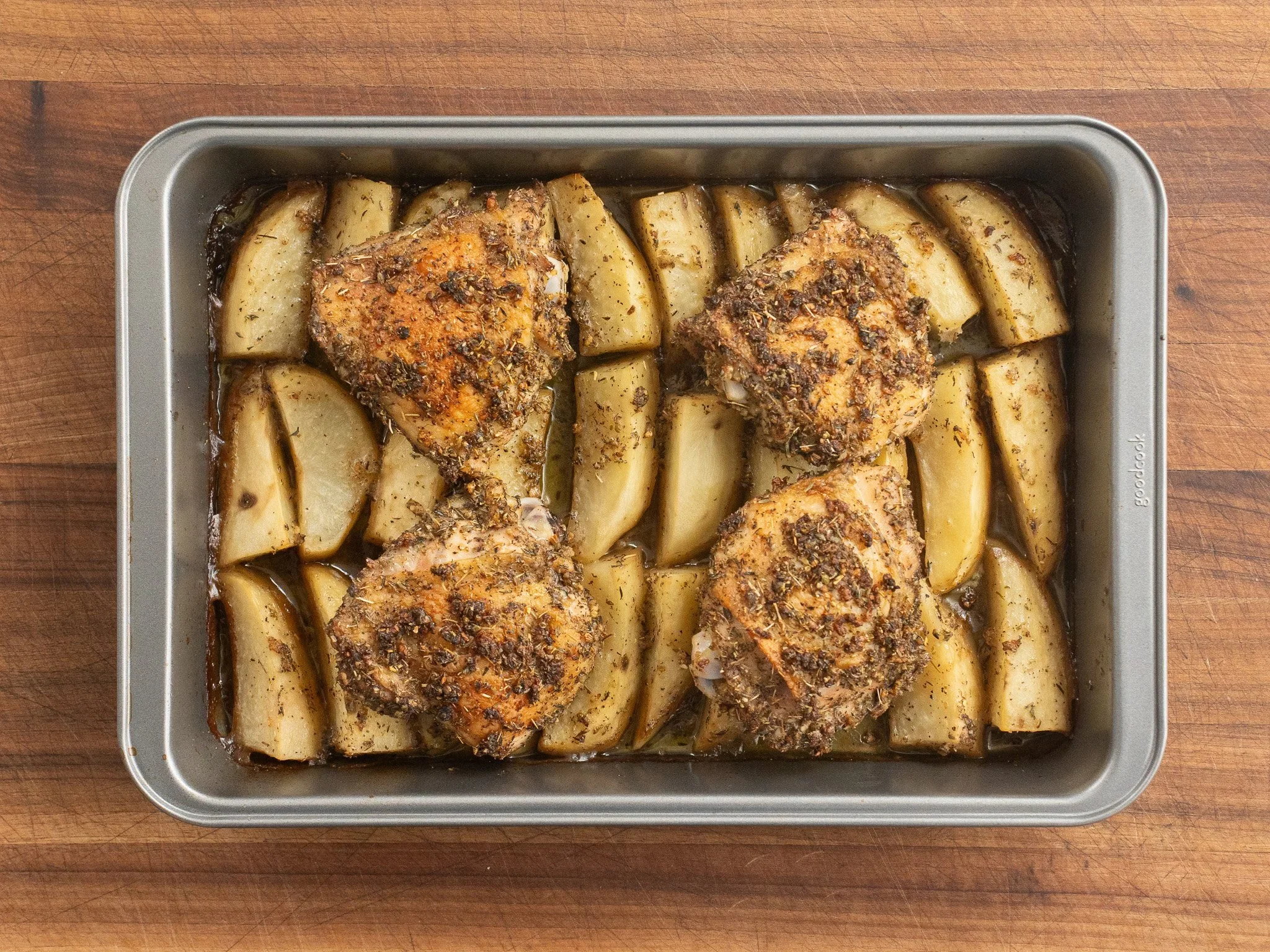
6. Check Temperature and Rest. Remove the pan when the chicken reaches an internal temperature of 185–190°F (85°C). Let everything rest in the pan for at least 15-25 Minutes in a warm place.
Why rest? Resting lets the juices redistribute so the chicken stays moist instead of running out when you cut it. More importantly it gives the potatoes time to cool slightly so their pectin can set, creating the incredible waxy, firm-but-tender texture that I think is the signature aesthetic detail of this dish.
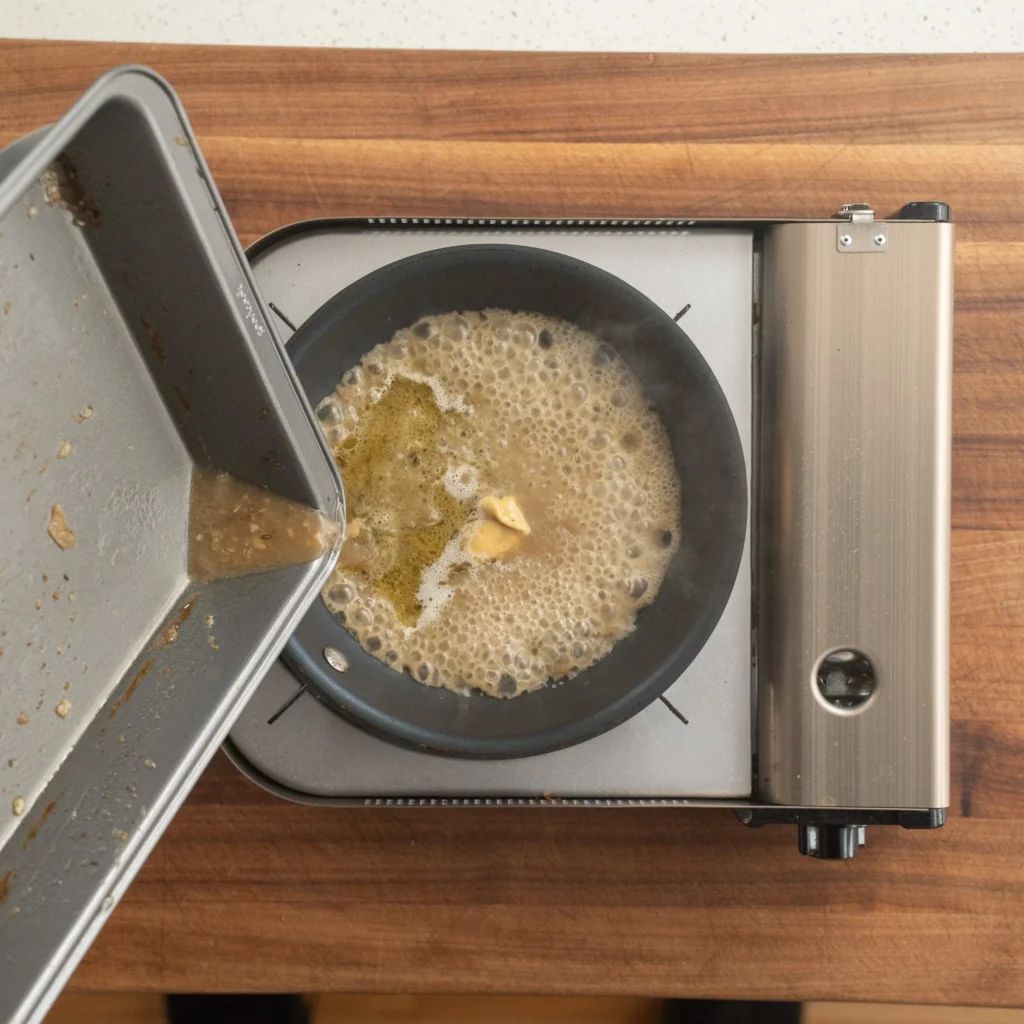
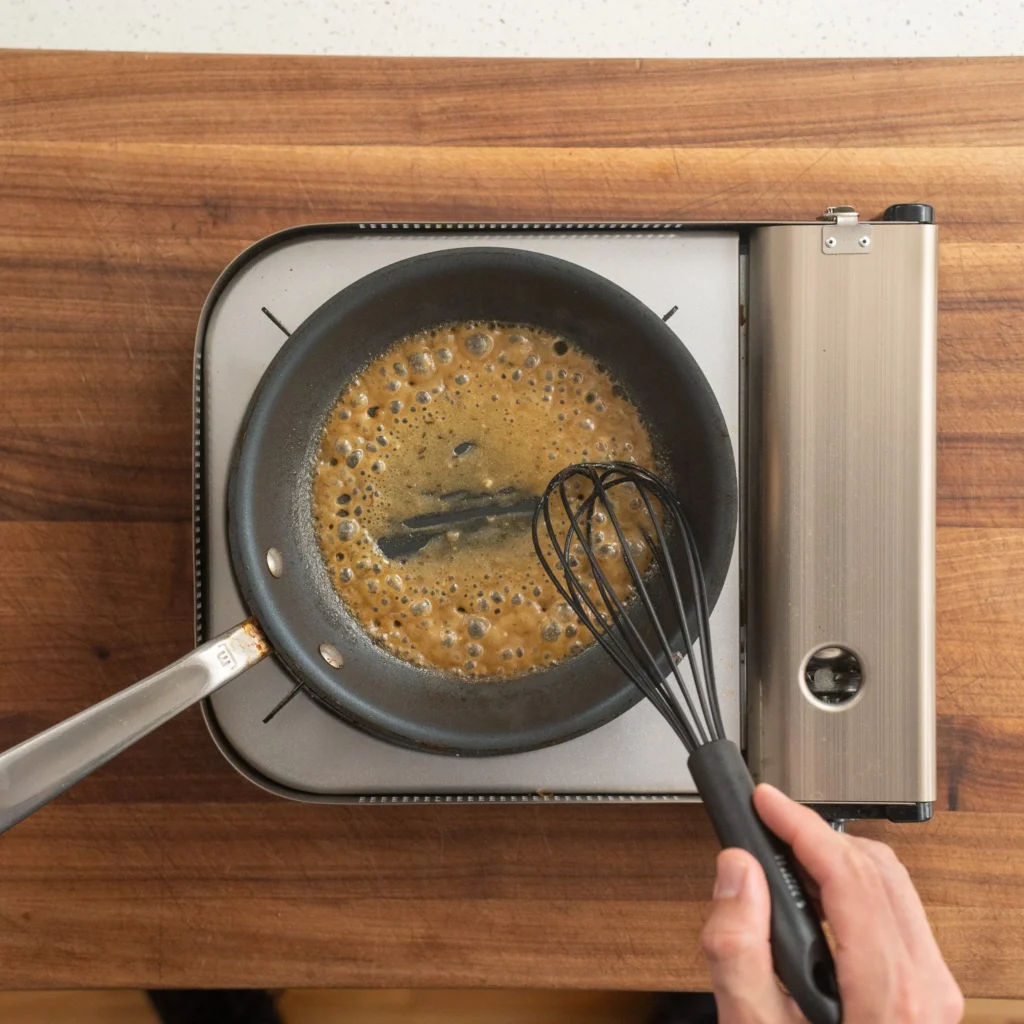
7. Make the Pan Sauce. Transfer the chicken and potatoes from the pan to a serving platter and keep warm in a very low oven.
Pour 50 g (1/4 c) + of chicken stock into the roasting pan and scrape up the browned stuff on the bottom and around the sides. Move to a small saucepan or saute pan and add in a small teaspoon or 5g dijon mustard. Whisk to combine and reduce for 2-3 minutes over high heat until the sauce is a touch thickened and a drawing a spatula through it leaves a trail.
Pour the sauce over the finished chicken and potatoes.
8. Serve. Top with chopped fresh chopped parsley and a squeeze of fresh lemon juice.
Pin this now to find it later
Pin ItStorage and Make-Ahead
Greek chicken and potatoes leftovers keep well in an airtight container in the fridge for 3–4 days. Reheat in a 350°F/175°C oven for 10–15 minutes. The microwave works in a pinch but you’ll lose the texture.
This dish doesn’t freeze particularly well because the potatoes can go mealy. You can salt the chicken up to overnight ahead of time, and the marinade can be made a day in advance and stored in the fridge.
Greek Chicken & Potatoes
Ingredients
For the Marinade
- 50 g olive oil
- 45 g garlic (5-6 cloves)
- 5 g dried oregano
- 2 g dried thyme
- 5 g ground black pepper
- zest of 1 lemon
- 25 g fresh lemon juice
For the Chicken and Potatoes
- 900 g chicken thighs (about 4), bone in, skin on
- 10 g salt
- 750 g russet potatoes (2.5 large)
- 150 g chicken stock
- 50 g additional chicken stock , for the pan sauce
- 5 g Dijon mustard
- pan spray or oil
- fresh parsley for garnish, chopped
- additional lemon for serving
Instructions
- Trim excess skin or dangling fat off the chicken thighs. Season both sides with salt and place in the fridge, uncovered, for 30 to 60 mins
- Stir together olive oil, minced garlic, dried oregano, dried thyme, black pepper, the zest of 1 lemon, and the juice of 1 lemon (approximately 20–30g) in a medium bowl.
- Peel and cut potatoes in half, then cut into large wedges. Toss the potato wedges and the salted chicken thighs into the bowl with the marinade to coat thoroughly.
- Spray or lightly oil a metal baking pan. Lay the potato wedges in a single layer on the bottom of the pan, then nestle the chicken thighs on top, skin side up. Pour 150g of chicken stock into the pan around the potatoes
- Bake uncovered at 350°F/175°C for 75-90 minutes.
- Remove the pan when the chicken reaches an internal temperature of 185–190°F (85°C). Rest in the pan for 15-25 minutes.
- Transfer the chicken and potatoes to a serving platter and keep warm in a very low oven. Pour 50 g (1/4 c) chicken stock into the roasting pan and scrape up the browned stuff on the bottom and around the sides. Move this liquid to a small pan and whisk in dijon mustard. Reduce for 2-3 minutes over high heat until the sauce is thickened and a drawing a spatula through it leaves a trail.
- To serve, pour the sauce over the finished greek chicken and potatoes. Top with fresh chopped parsley and a squeeze of lemon juice.
 Like this? Leave a comment below!
My Go To Gear
No. Chicken breast doesn’t survive 90 minutes in a lemony, high-heat environment—it dries out and turns tight and stringy. Thighs have more connective tissue and fat, so they actually get better the longer they cook, rendering fat that bastes the potatoes along the way.
You can, but the results will be different. Yukon Golds hold their shape well but they’re higher in moisture, so they won’t crisp on the edges the way russets do plus and they’re easier to overcook. Russets are the move here—high-starch, low-moisture, crispy edges, fluffy inside
165°F is the safe temperature, but thighs are dark meat with a lot of connective tissue. At 165°F they can still be chewy and a little unpleasant. You need 185–190°F to render all that collagen and get truly fall-apart tender meat.
Metal is better here. It conducts heat faster and more aggressively, so you get better browning and crisping on the potatoes. It also evaporates moisture more efficiently. Ceramic heats slower and holds moisture, which means softer, less caramelized potatoes.
I wouldn’t go longer than 24 hours. The acid in the lemon juice can start to break down the chicken texture and make it mealy if it sits too long. An hour or two is the sweet spot if youre prepping ahead.