
This post contains affiliate links. Please see our disclosure policy.
Peppery, smoky, juicy brisket, piled on aromatic caraway rye with spicy mustard. This recipe for homemade Pastrami makes the lower east side experience accessible to the home cook.
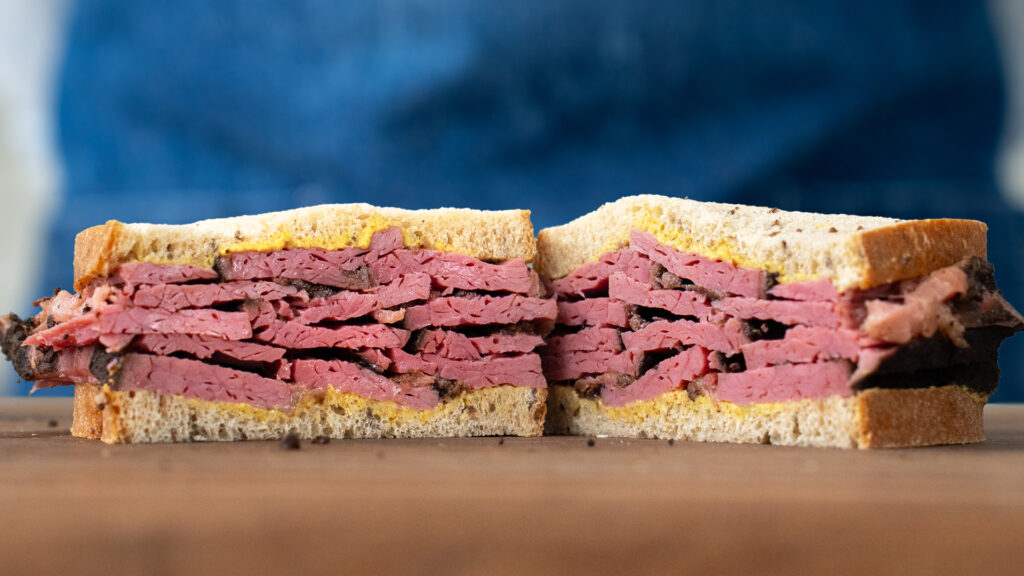
Table of Contents
What Makes This Pastrami Recipe Special
When I ran a bread bakery/cafe, every Sunday we would run the same special “NY PASTRAMI ON RYE” And so I got to refine my process and recipe over the course of 3 years. At this point I think it’s “finished” meaning I can’t really make it better. Every detail that I want is accounted for: Barky, peppery crust, juicy, meltingly tender brisket that doesn’t fall apart, and of course thick slices piled high on the “right” kind of seeded caraway rye.
The process does take 2 days, but it’s not a hard 2 days. It’s only about 45 minutes of active work, spread out a little bit at a time. It’s time consuming but if you commit, the results are worth it x100. You are king for a day, and no one will be eating as good as you.
Brian’s Pro Tips
Rinse and Aggressively Dry the Corned Beef – Corned beef comes out of its packaging coated in a thick, gelatinous brine residue similar to the liquid in a can of SPAM. Its important to wipe that off. If you skip this step, the rub won’t adhere well, the exterior will be overly salty, and the wet surface will repel smoke flavor instead of absorbing it.
Toast Whole Spices Before Grinding – Toasting peppercorns and coriander seeds in a dry pan releases the essential oils trapped inside them. Pre-ground spices have already lost much of this volatility through exposure to air and time. The toast takes about 3–4 minutes and the payoff is a perceptibly deeper, more aromatic rub.
The Overnight Uncovered Rest – Leaving the rubbed meat uncovered in the fridge overnight creates what’s called a “pellicle” which is a slightly tacky, dried surface layer that forms as the rub draws moisture out and the exterior air-dries. This is not optional. The pellicle is what smoke bonds to. Without it, smoke slides off and you get a gray, under-flavored exterior instead of a proper bark. Placing the meat on a rack during this step allows air to circulate all around, which dries the surface even more thoroughly.
Two-Phase Cooking: Smoke Then Foil Roast – The smoker and the oven do fundamentally different things. The smoker builds the exterior flavor and the oven actually cooks the meat by slowly breaking down the collagen and fat into the silky, nearly falling apart texture that makes NYC style pastrami so iconic. The foil wrap in the oven creates a steam environment around the meat which approximates the way Katz’s Deli in NYC steams their brisket.
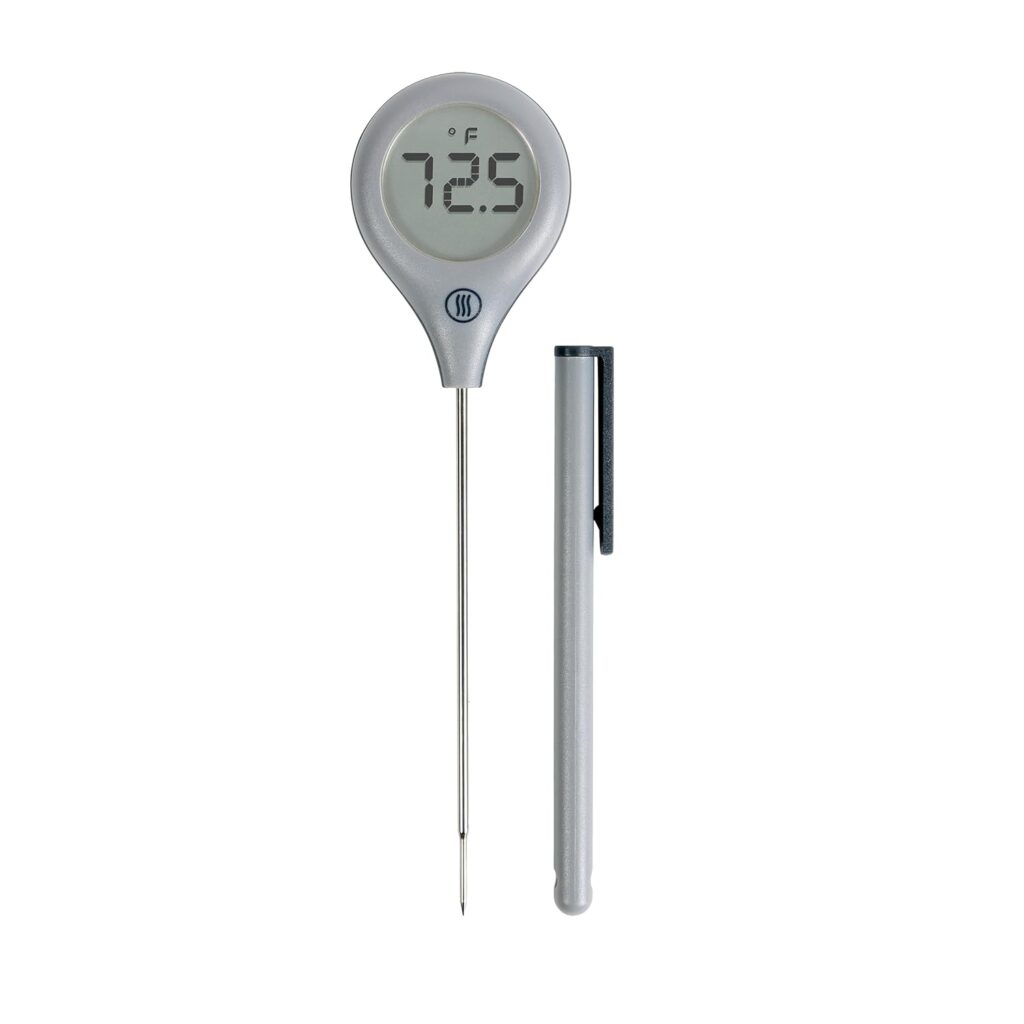
Trust the Temp, Not the Clock – 4-5 hours in the oven is a rough estimate. Two brisket flats of identical weight can be done 45 minutes apart depending on fat distribution and how the specific cut was processed. What you’re looking for is a probe or thermometer to hit over 195°F (90°C), preferably 198-202°F. From there you’ll want to cook for another 90 mins to 2 hours. Th final texture should be give way to the pressure of pulling it apart, but should not be falling apart.
Slice at ¼ Inch, Not Super Thin – Lame pastrami sandwiches rely on precooked, thinly sliced meat. It is not treated like Texas brisket, cooked low and slow until juicy and tender. Instead, it is processed more like deli turkey: firm and a little bouncy, which only works when it is shaved thin. Proper New York deli pastrami should eat like a slab of real meat, juicy and meltingly tender.
Key Ingredient Notes & Substitutions
These are the key ingredients I want to call out in this recipe. A full list of ingredients and amounts can be found in the recipe card below.
Corned Beef Flat
You can absolutely corn your own beef. Here’s a link to my corned beef and cabbage recipe for anyone who wants to go that route. But honestly the quality difference from corning it yourself isn’t so significant that you HAVE do it to have a great pastrami sandwich. A store-bought flat gets you 90% of the way there with a fraction of the effort. Look for flat cuts (not the point) around 2.5-3 lbs (1.25kg) each. Brisket points are good, but fatty, and can taste a little too hot doggy. They are too heavy for me.
The Bread
Rye bread flavor doesn’t really come from rye grain. The grain itself tastes almost identical to wheat. The flavor people associate with rye comes entirely from the caraway seeds. So for this sandwich You want a firm Jewish-style caraway rye. I like it because it’s leaner and a little firmer than “Beefsteak” rye, which is good, but it’s very soft. Basically white bread with caraway and tends to fall apart when you add 8 ounces of hot thick meat piled up on it.
Spicy Brown Mustard
Yellow is too tart. Straight Dijon is too sharp and one dimensional. Grainy mustard is too crunchy. Spicy brown hits the right balance. it’s hot, it has enough body to stand up to a 4:1 meat-to-bread ratio, and it’s not so aggressive that it takes over.
How to Make Pastrami on Rye
- Rinse and Dry the Corned Beef. Remove the corned beef from its packaging and rinse it thoroughly under cold water. Then dry it very well with paper towels
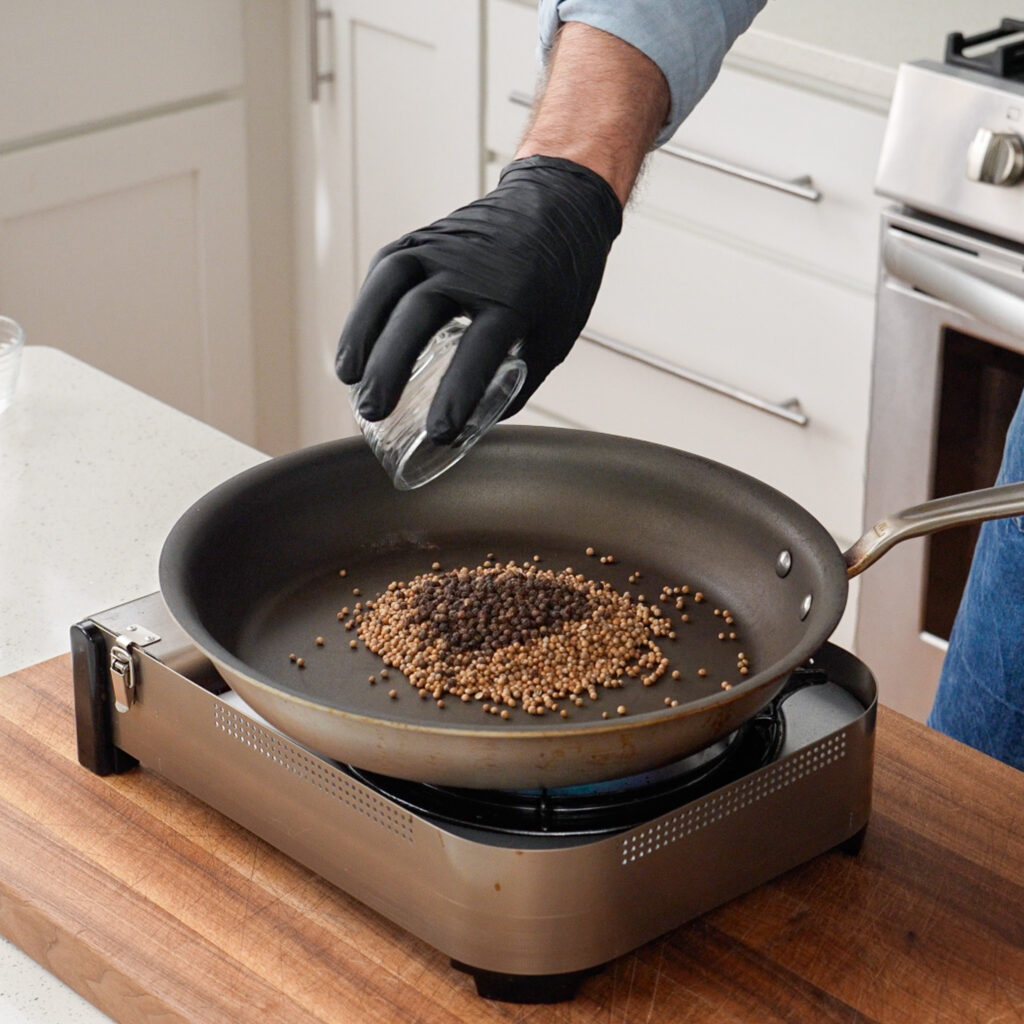
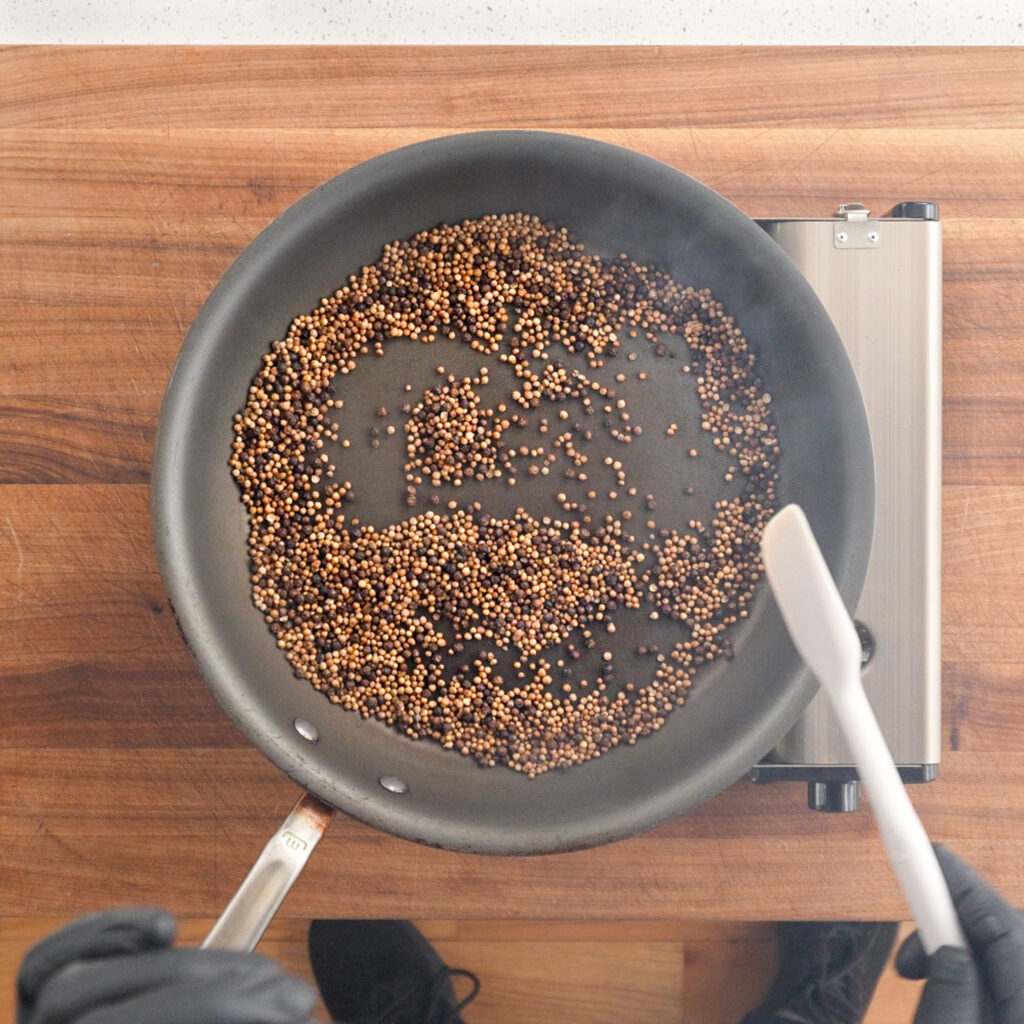
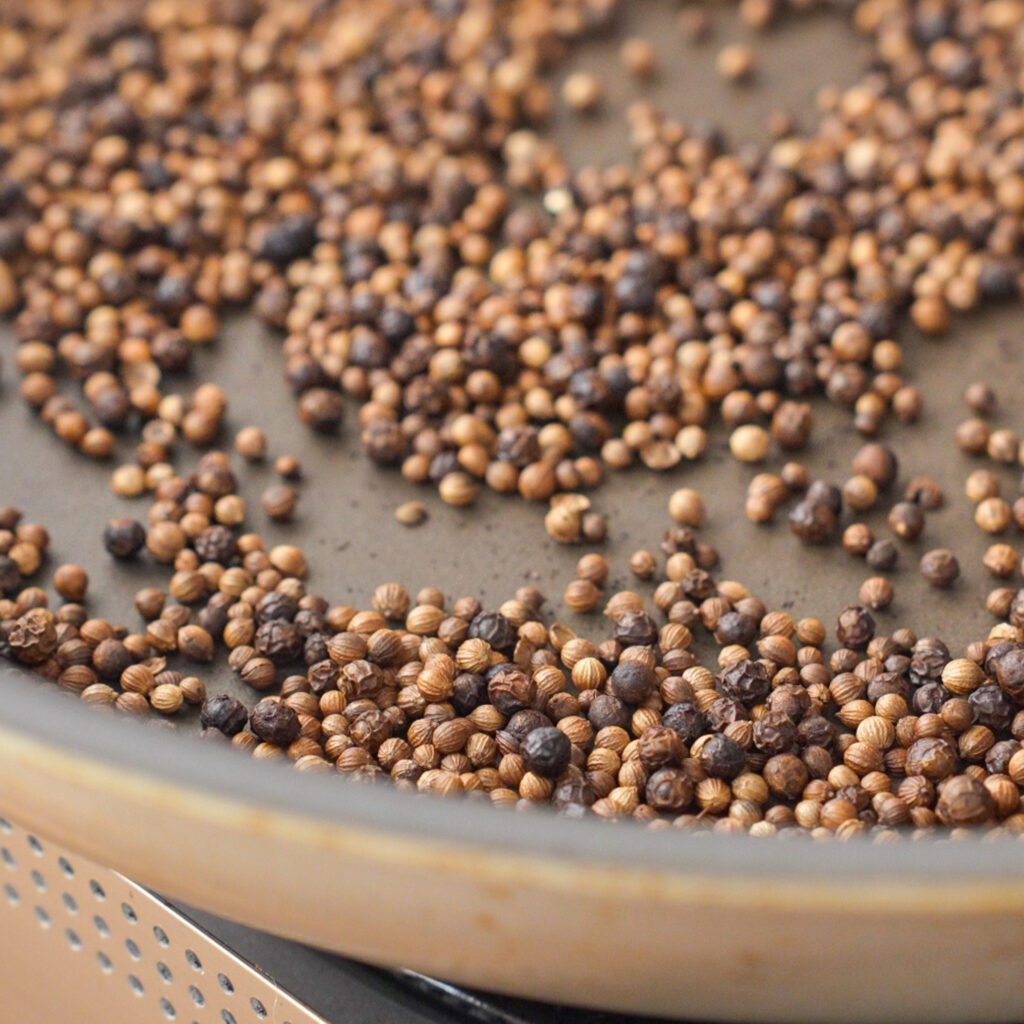
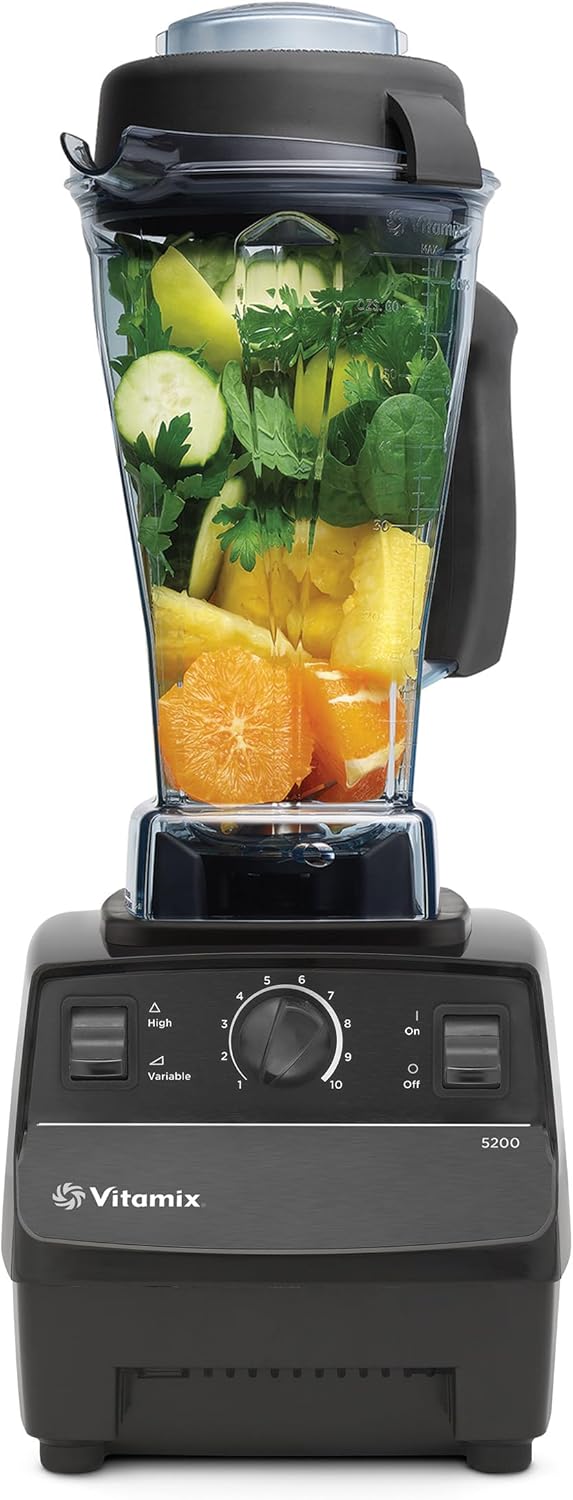
- Toast & Grind Spices and Make the Rub. Add the peppercorns and coriander seeds to a dry pan over medium heat. Toast for 3–4 minutes, stirring occasionally until the pan starts to smoke lightly and the coriander begins to take on a toasty color. Stay frosty, these will burn if you walk away. Remove from heat and let cool a few minutes. Next, grind the peppercorns and coriander in a blender or spice grinder to a medium fine grind with a bit of a coarse texture, not a powder. You want some grit in there. Combine with the sugar, garlic powder, and chili flake.
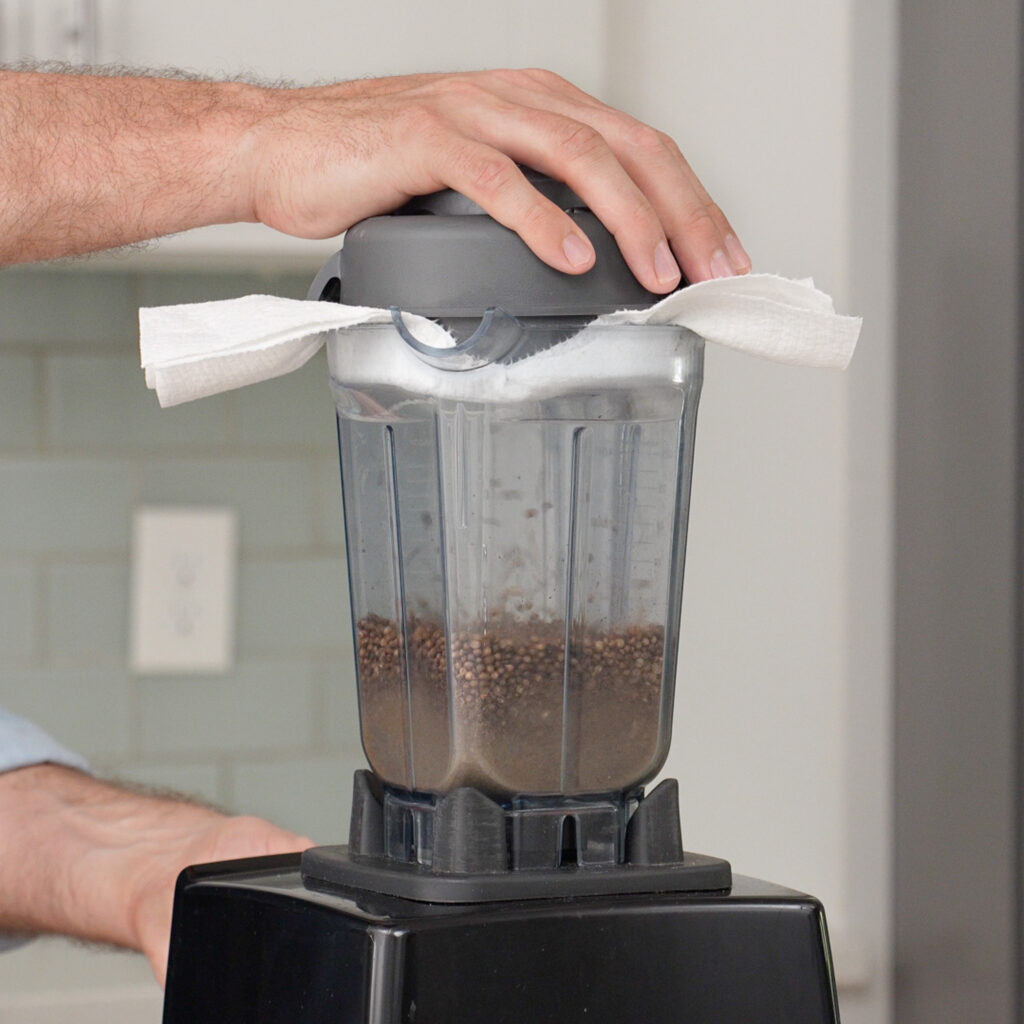
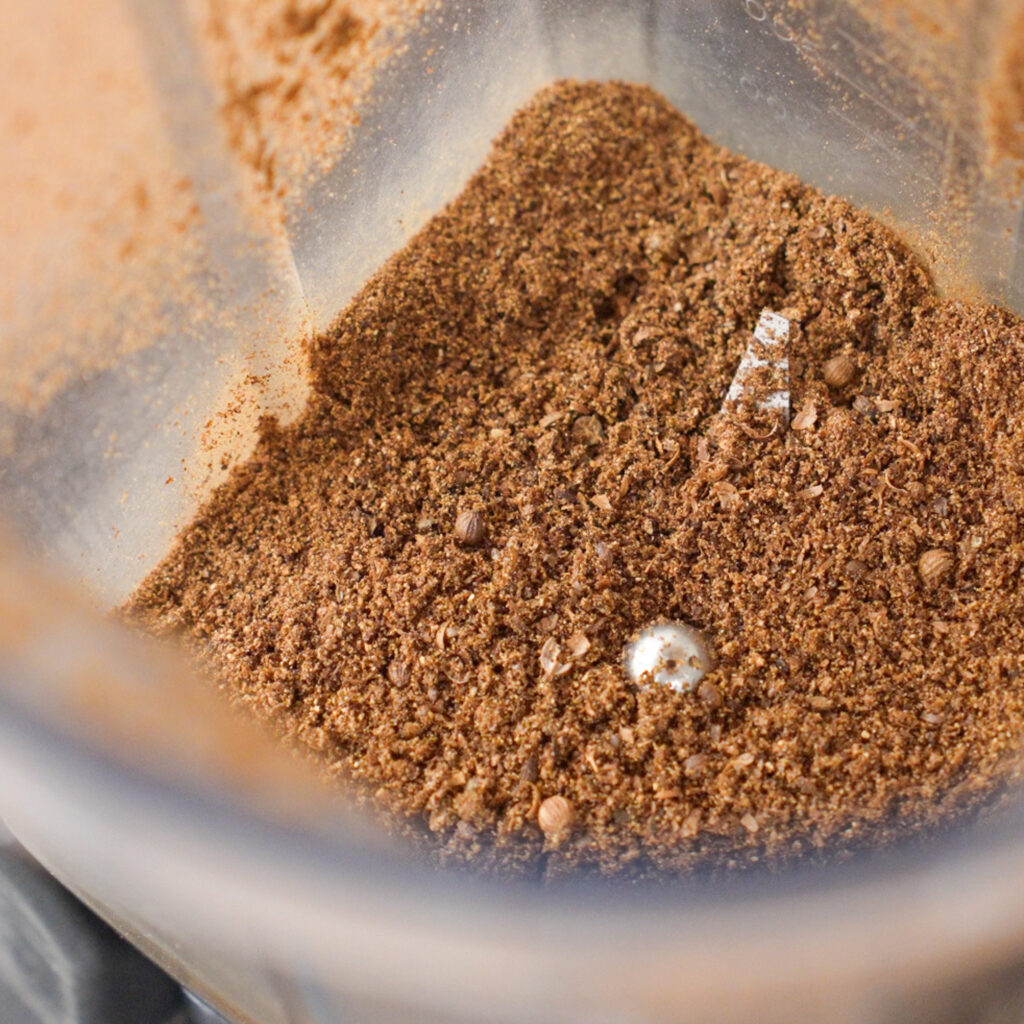
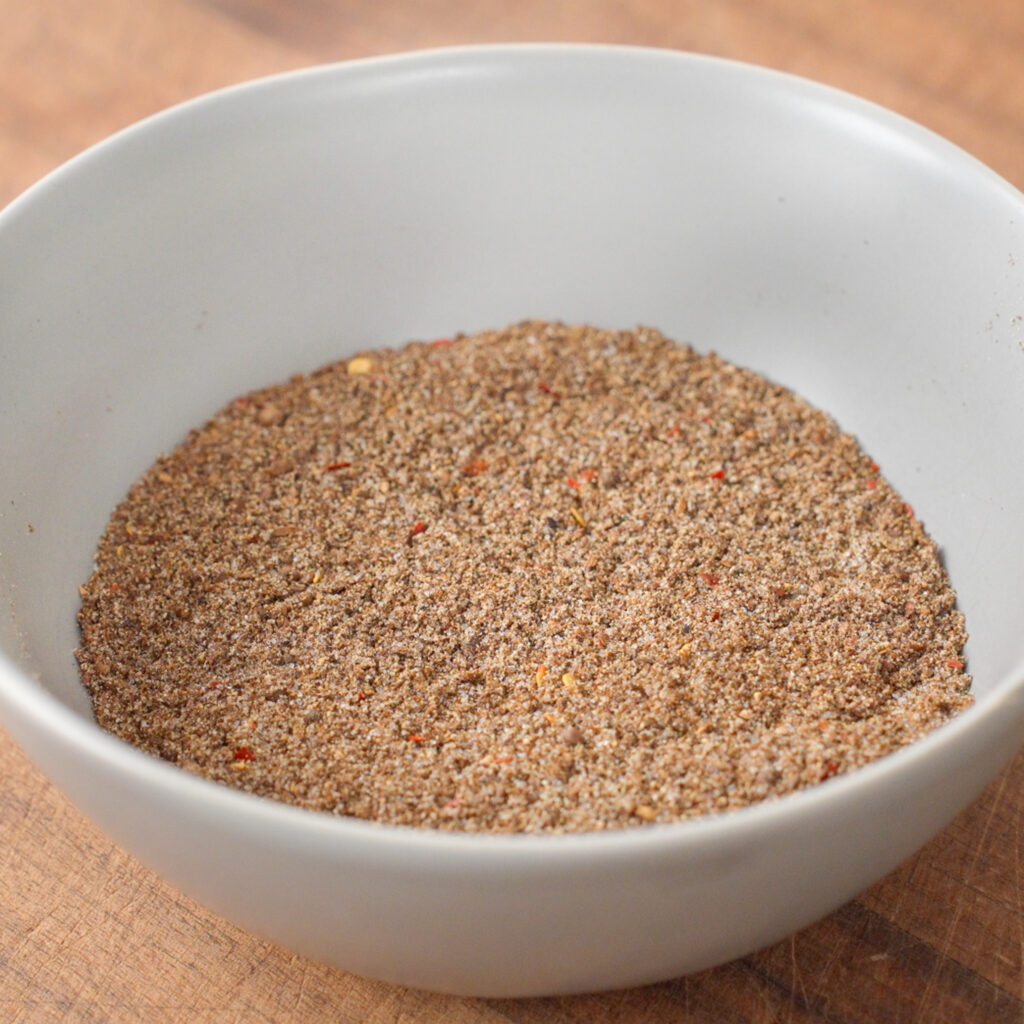
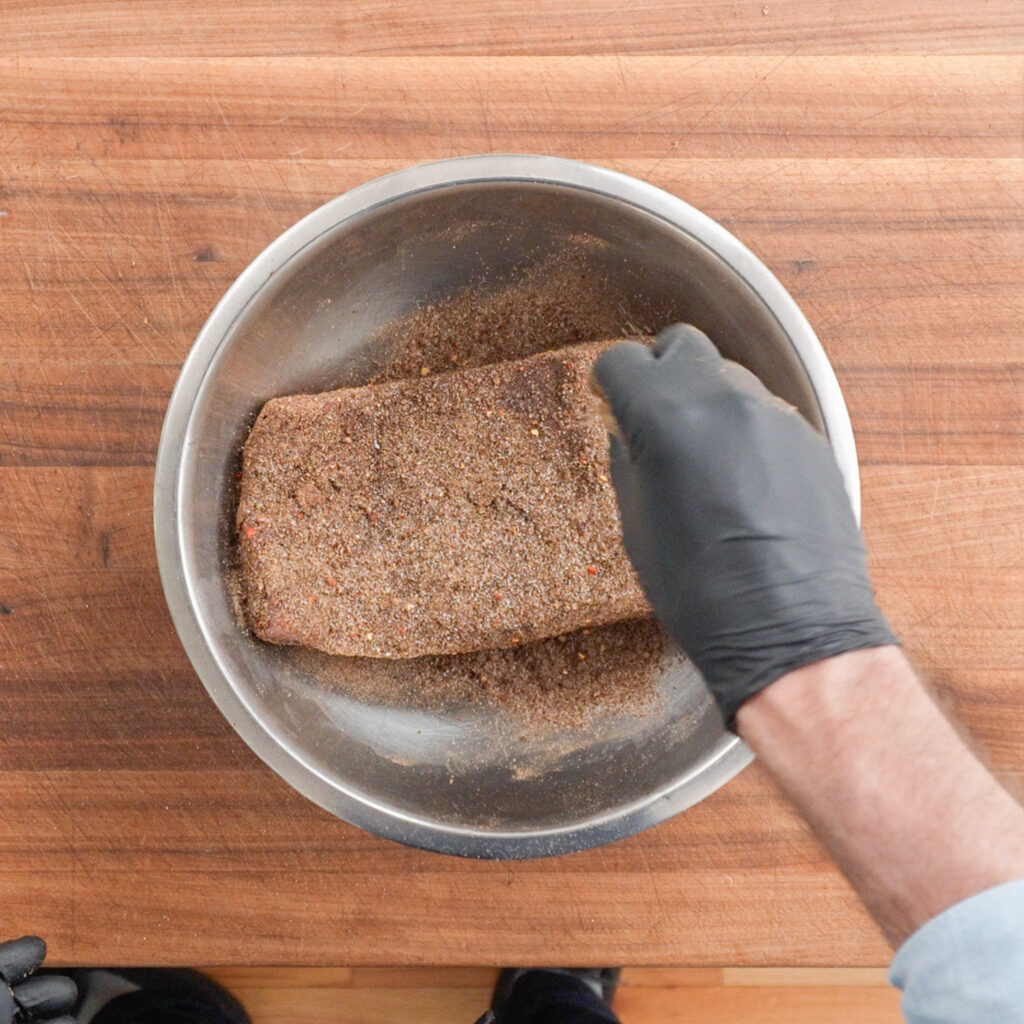
- Rub the Meat. Press the rub into all six sides of the beef. It should be completely covered in spice
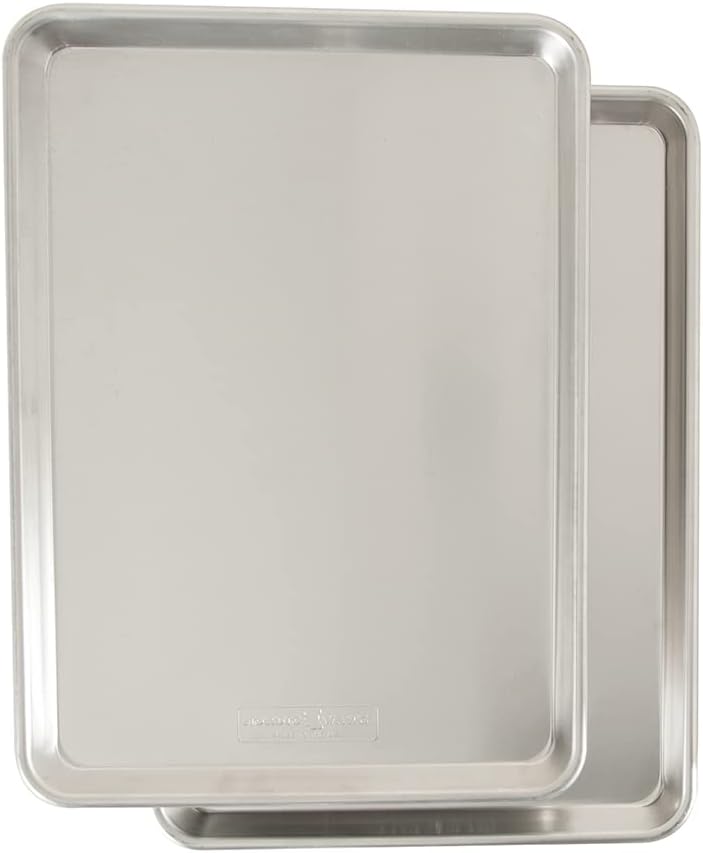
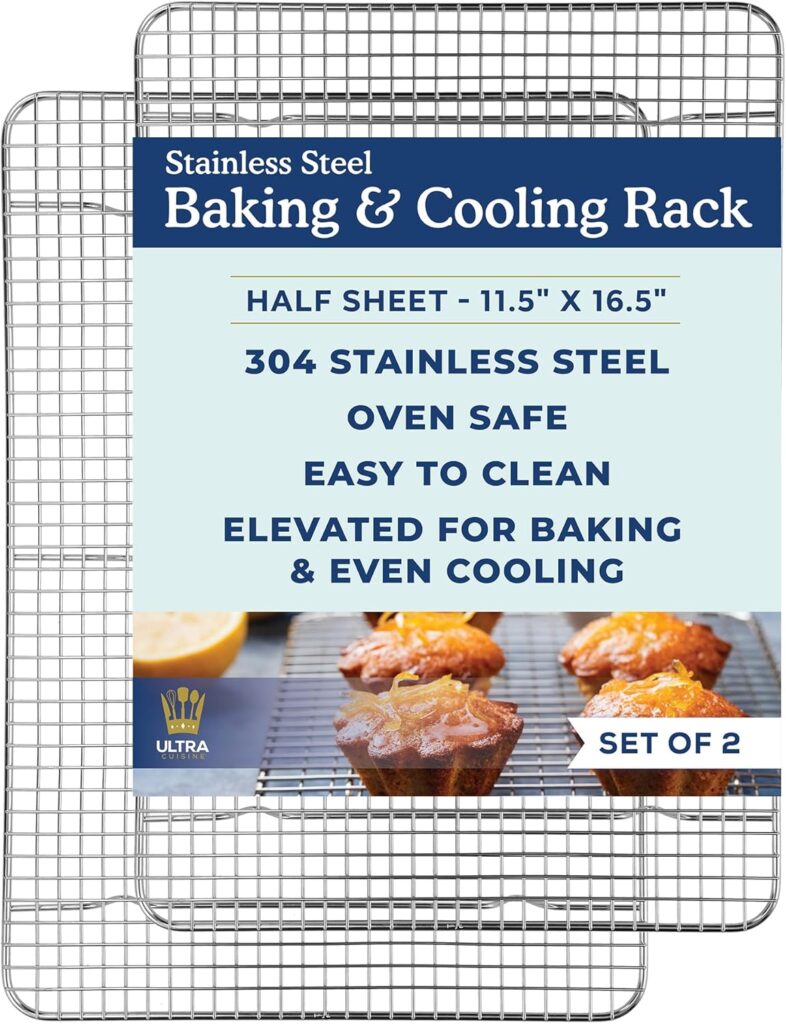
- Refrigerate Overnight, Uncovered. Place the rubbed flat on a wire rack over a sheet tray and refrigerate uncovered for at least 8 hours, ideally overnight. Leaving it uncovered with the rack underneath is important. Air circulation all around helps the surface dry more completely. This is how you build the pellicle that your smoke will bond to.
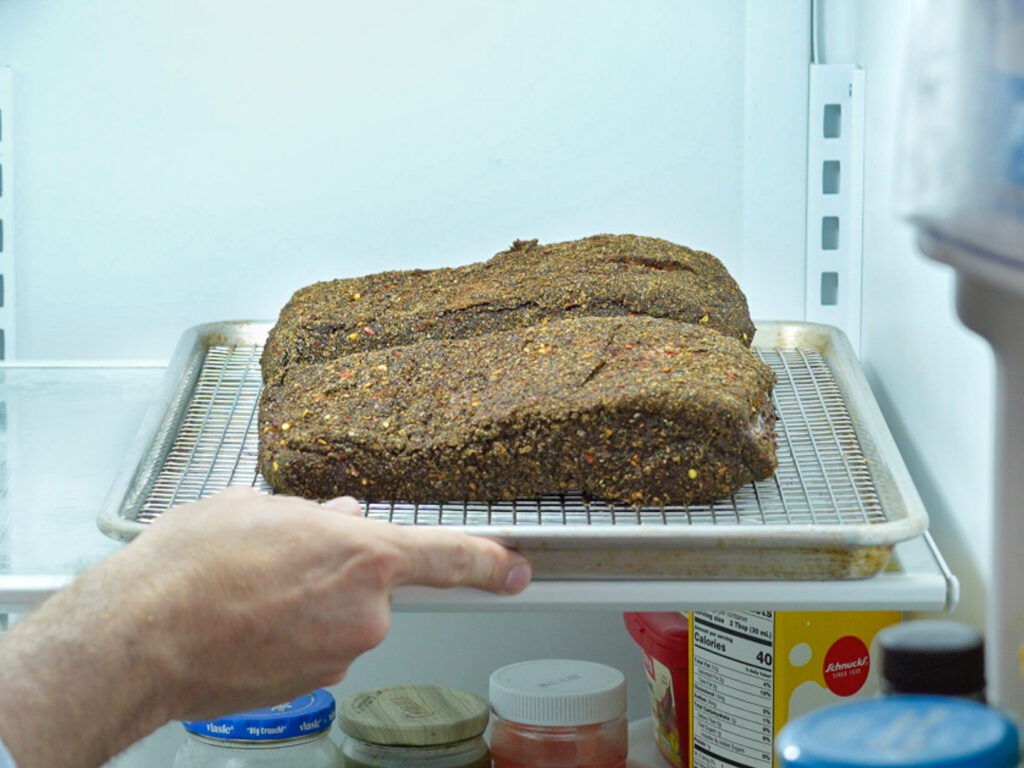
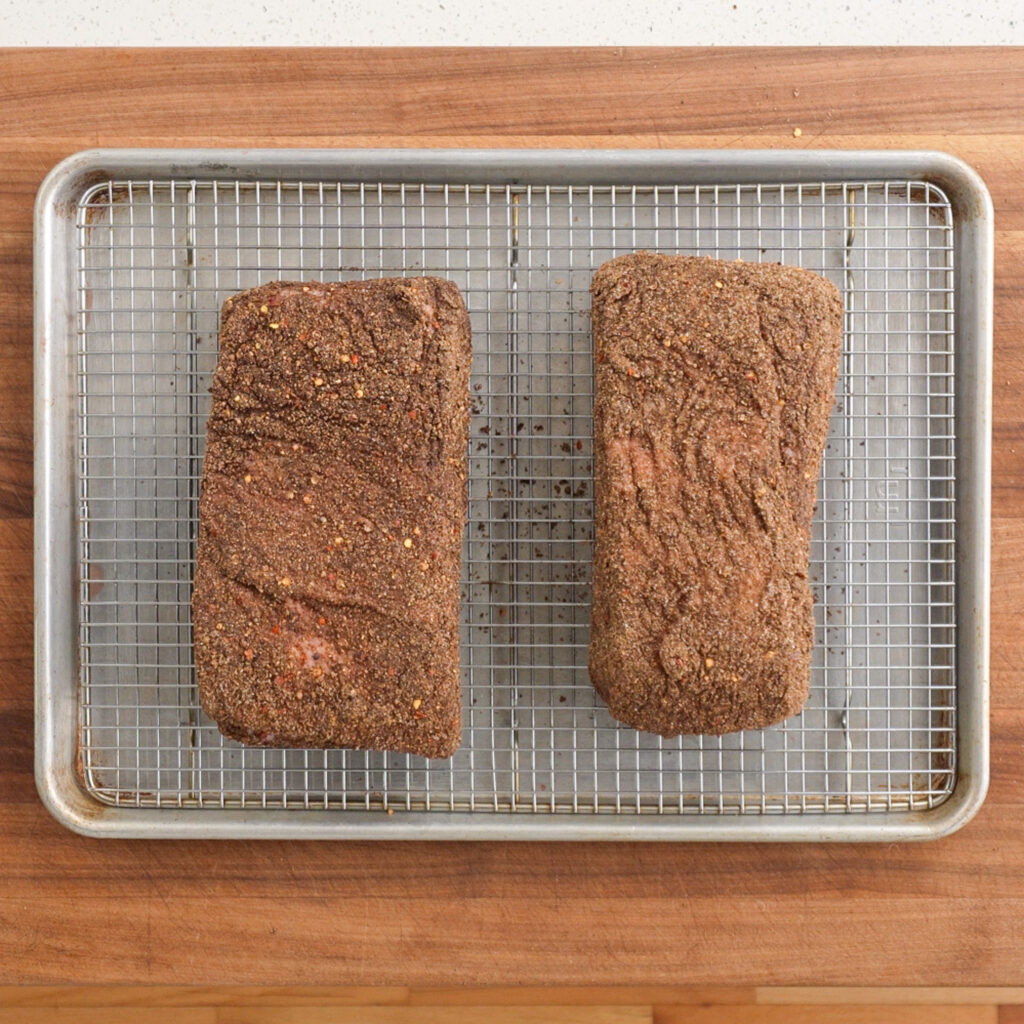
Can I shorten the rest to just a few hours? You can go right to the smoker in a pinch, but expect about 30–40% of the rub to fall off while handling it, and it won’t absorb nearly as much smoke flavor. I wouldn’t skip it if you can help it.
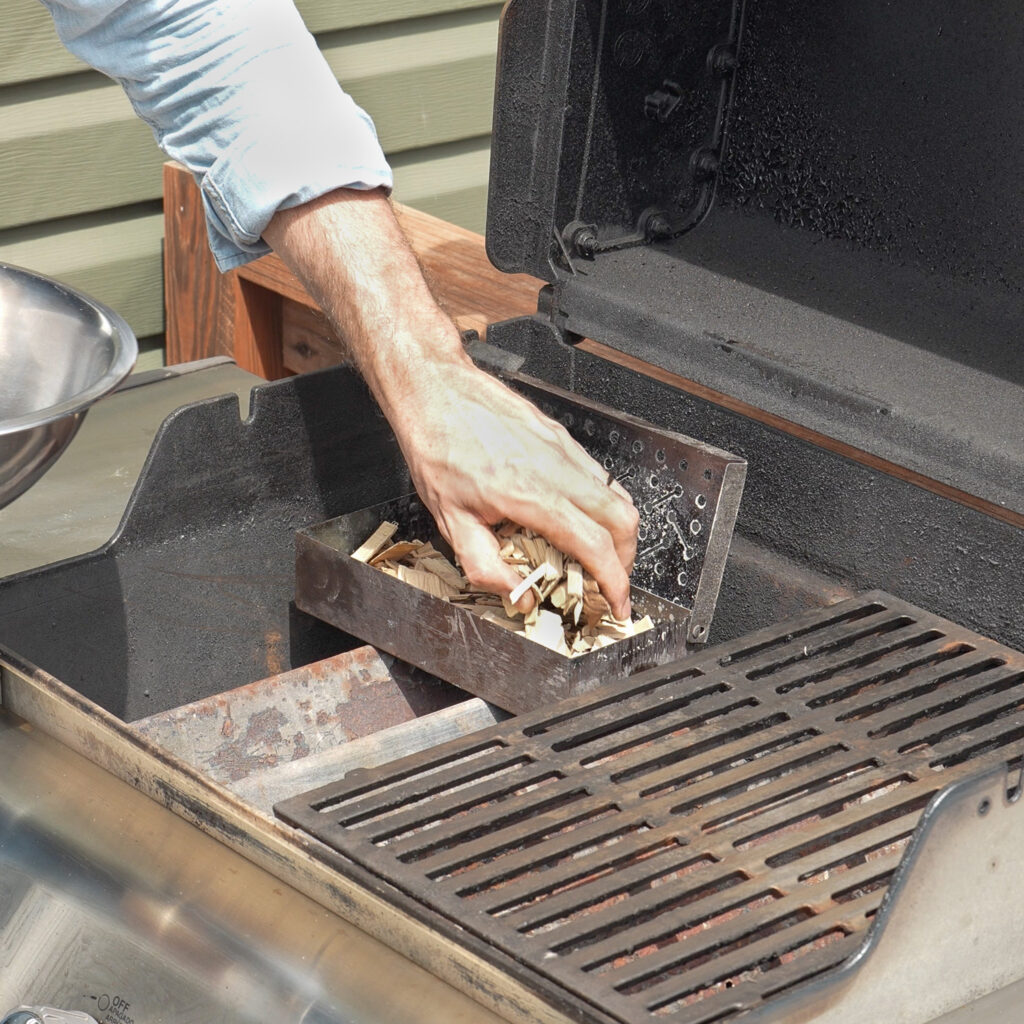
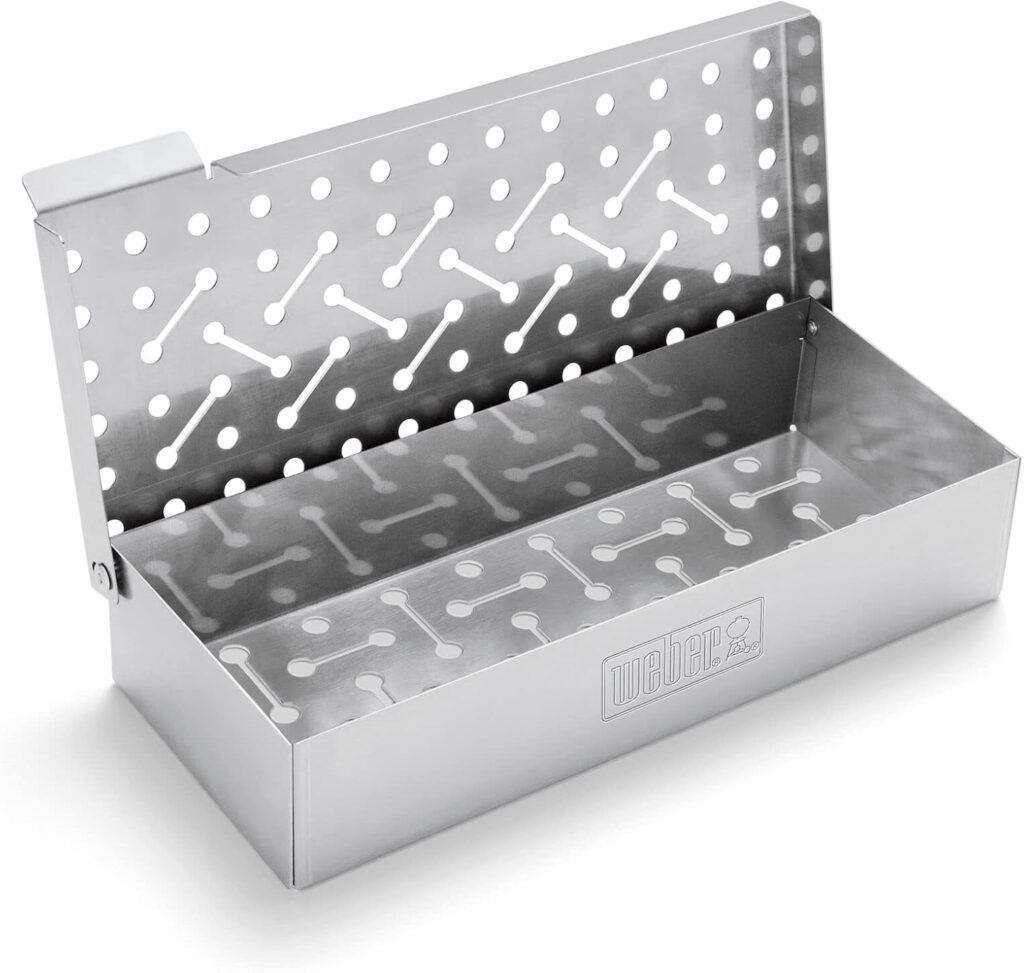
- Set Up the Grill as a Smoker. You’ll use indirect heat for this method. To set that up, lift off one grill grate and place a smoker box directly on the active burner set to high heat. The other burner(s) will remain off.
- Fill the smoker box with wood chips. I used dry, unsmoked hickory, but any woodchip works. I used dry chips rather than pre-soaking in water for this recipe and changed them out every 30 minutes. Dry chips burn hotter, but don’t last as long which is why we’ll need to change them out a few times throughout the process.
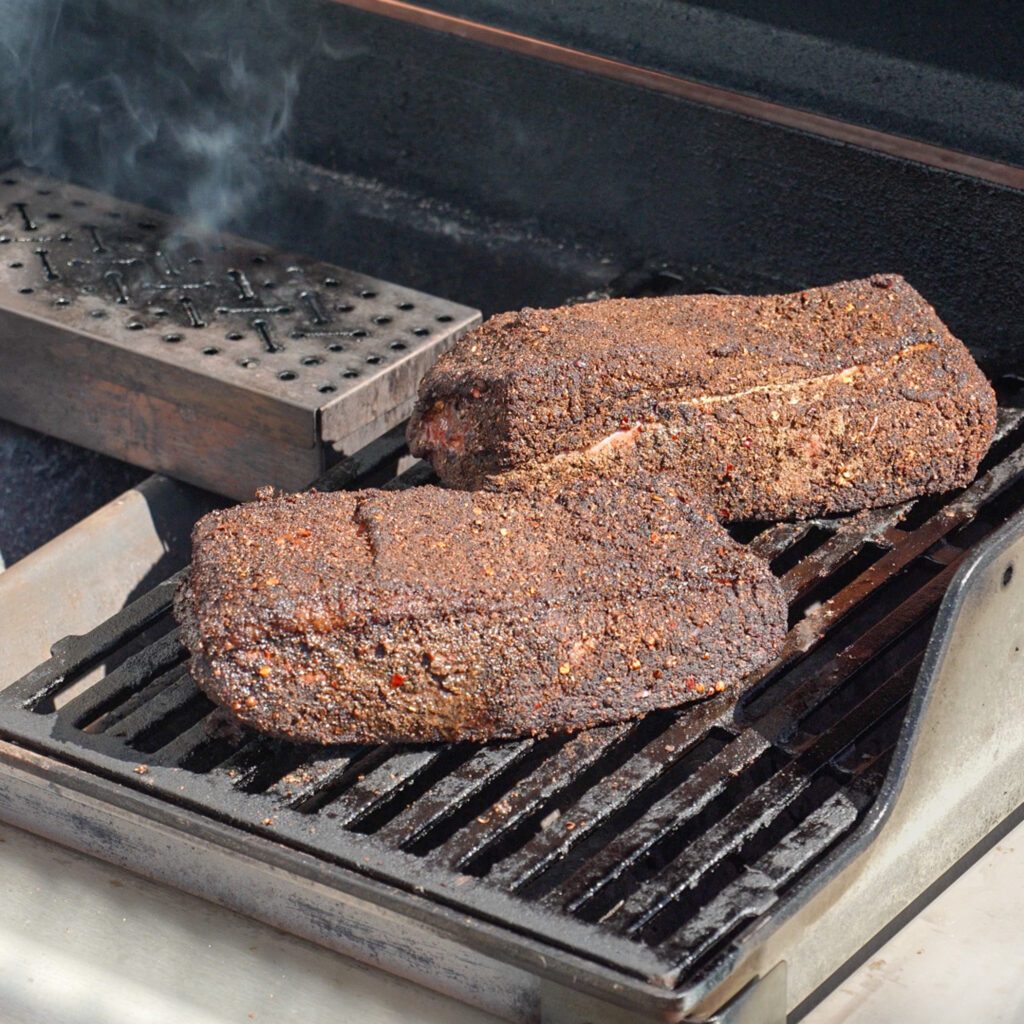
- Smoke the Pastrami for 90 Minutes. Once smoke is rolling, add the pastrami to the inactive side of the grill opposite the smoker box and close the lid. You’ll need to swap the wood chips 2–3 times over the 90 minutes to maintain smoke. Otherwise, resist the urge to peak at your smoking meat and keep the lid closed. You want to try to maintain a temp of around 225–250°F (120°C) inside the grill during this process. 300°F (145°C) is the absolute ceiling. Anything hotter will start squeezing moisture out of the meat too aggressively.
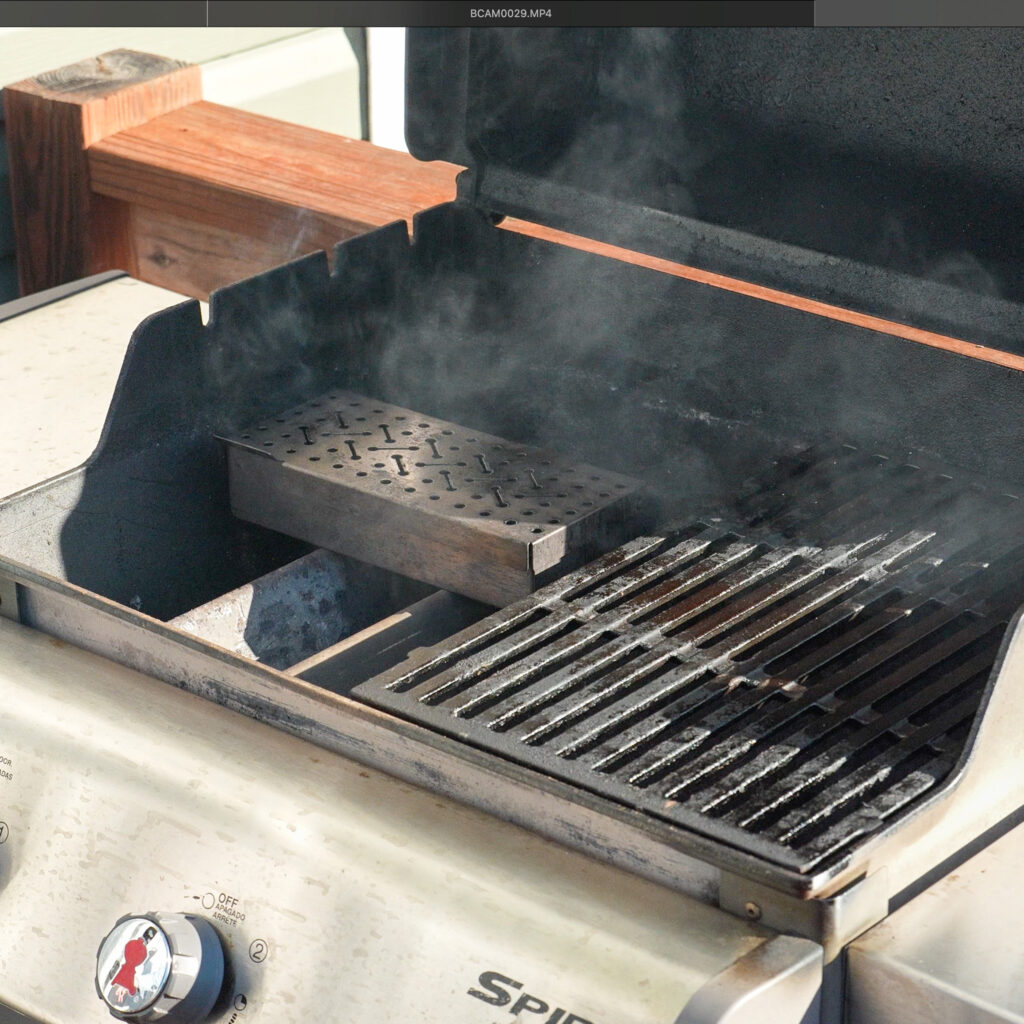
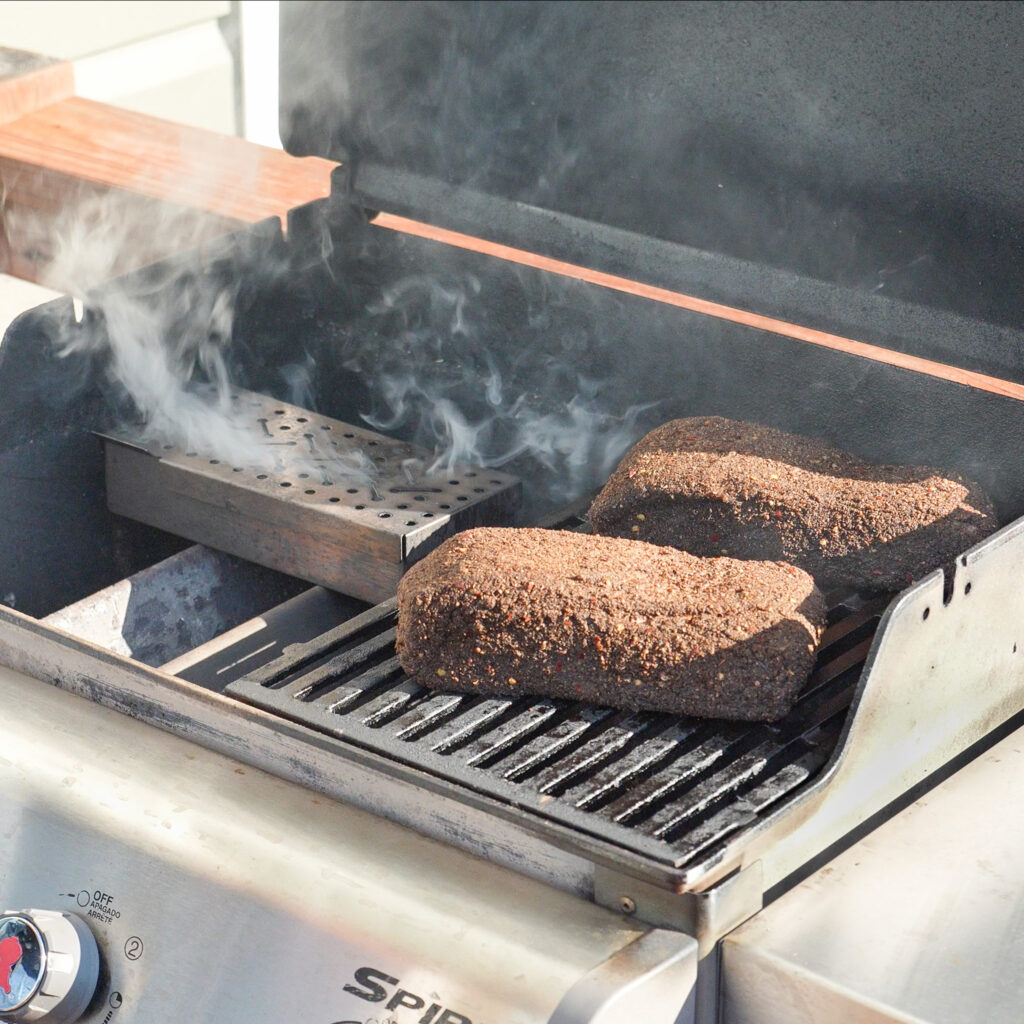
- What you’re looking for when you pull it off the grill: the surface should feel dry and slightly firm to the touch, not wet or sticky. The color should be a deep reddish-brown mahogany. That’s the bark setting in.
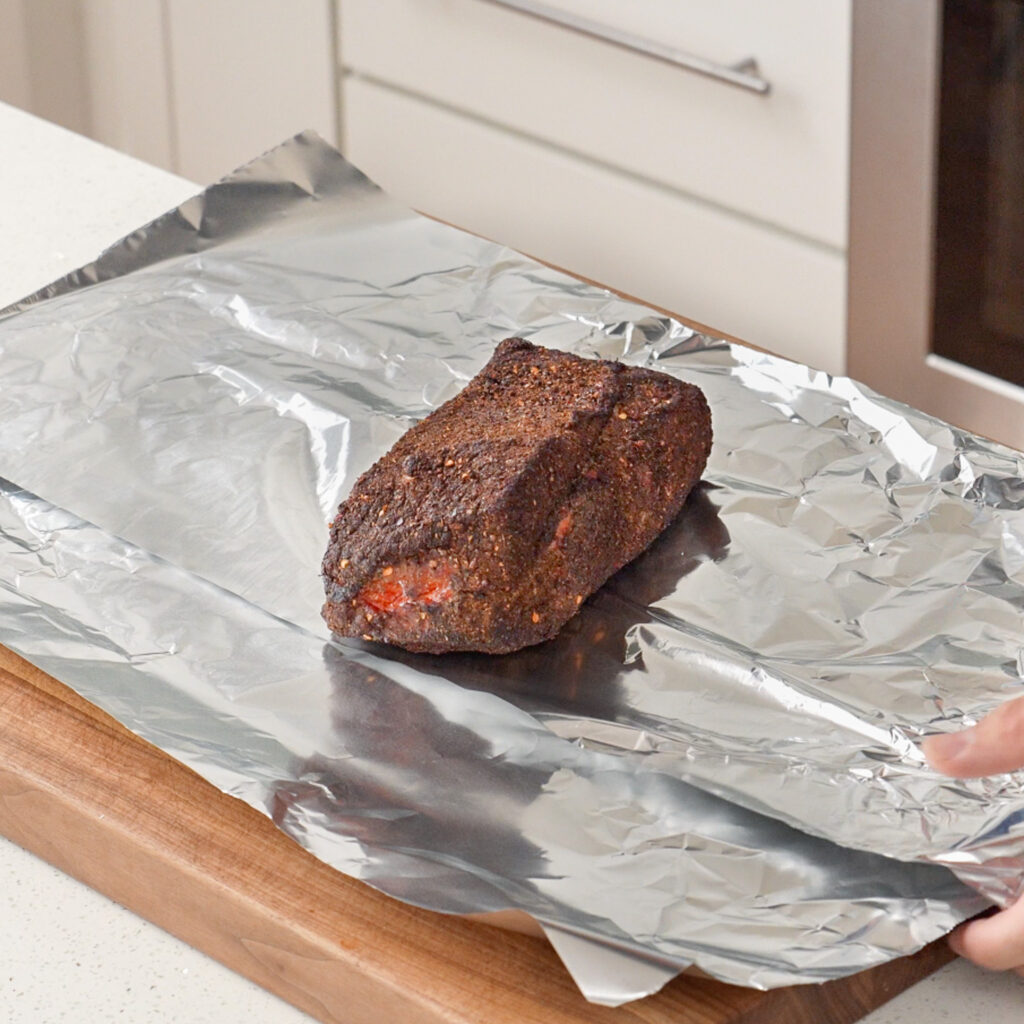
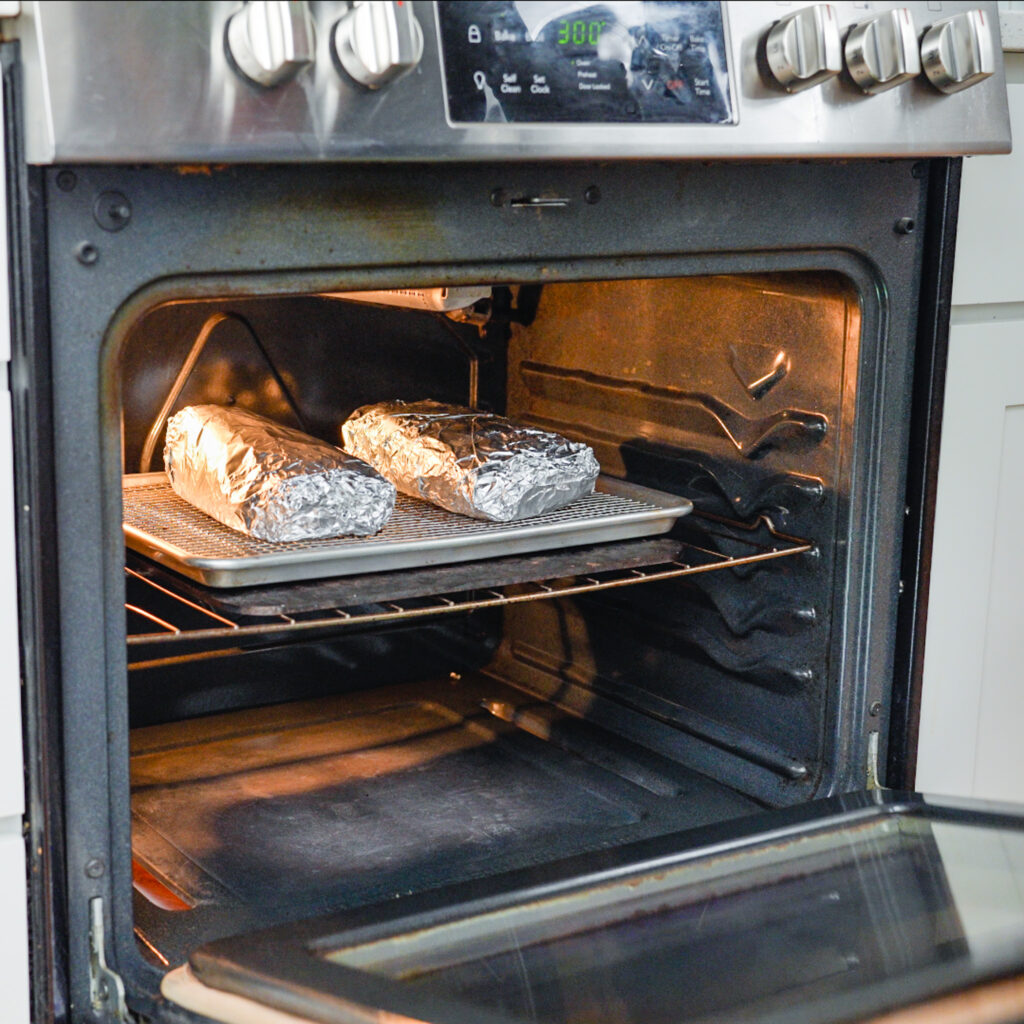
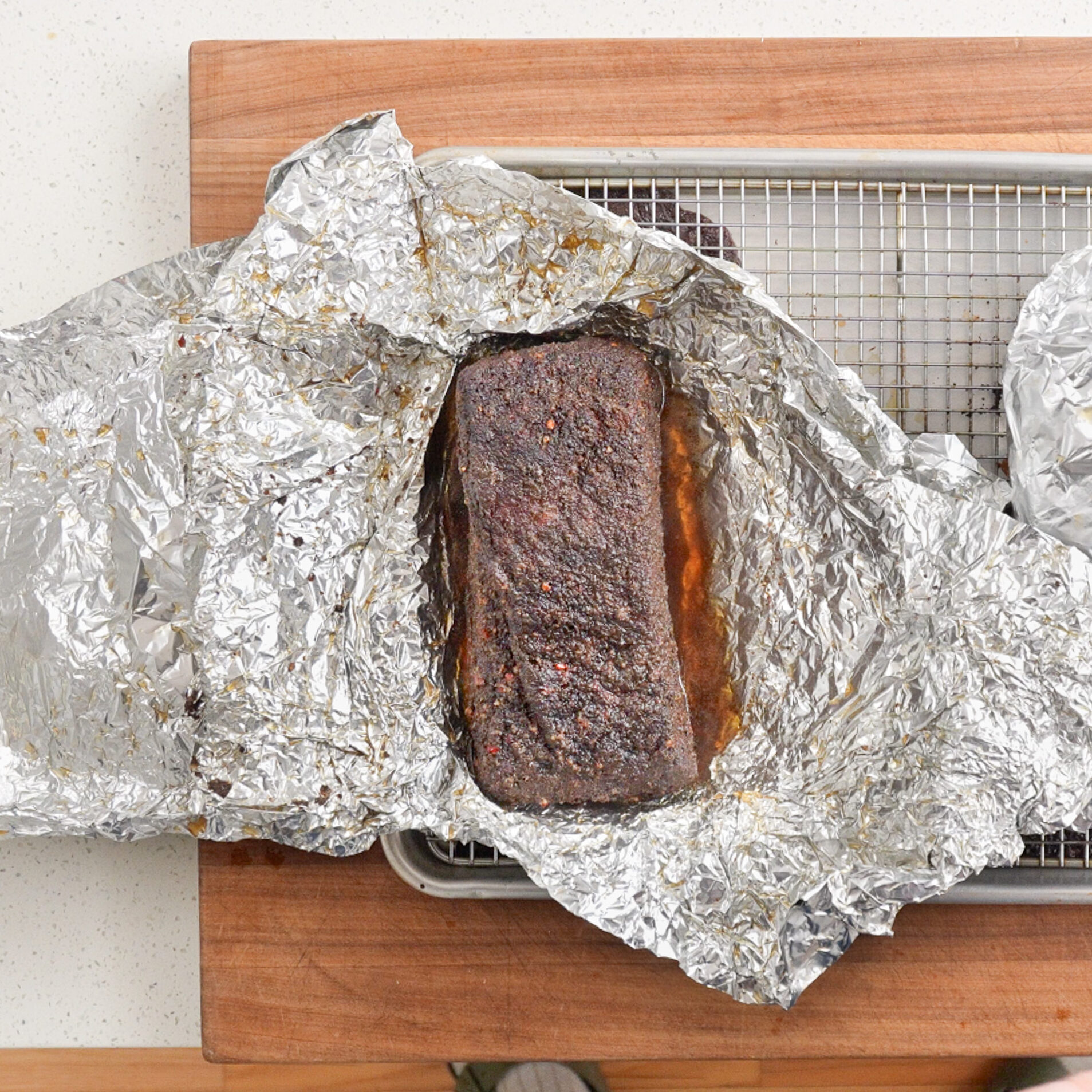
- Wrap and Roast at 300°F (150°C) for 4-5 Hours. After taking the pastrami off the smoker, wrap it tightly in 2 layers of foil, and place it on a rack over a roasting pan. Roast until the internal temperature hits 200-205°F (95°C) and then keep roasting for another 90 minutes to 2 hours. This will take 4-6 hours in total depending on your oven and how much the pastrami cooked in the smoker.
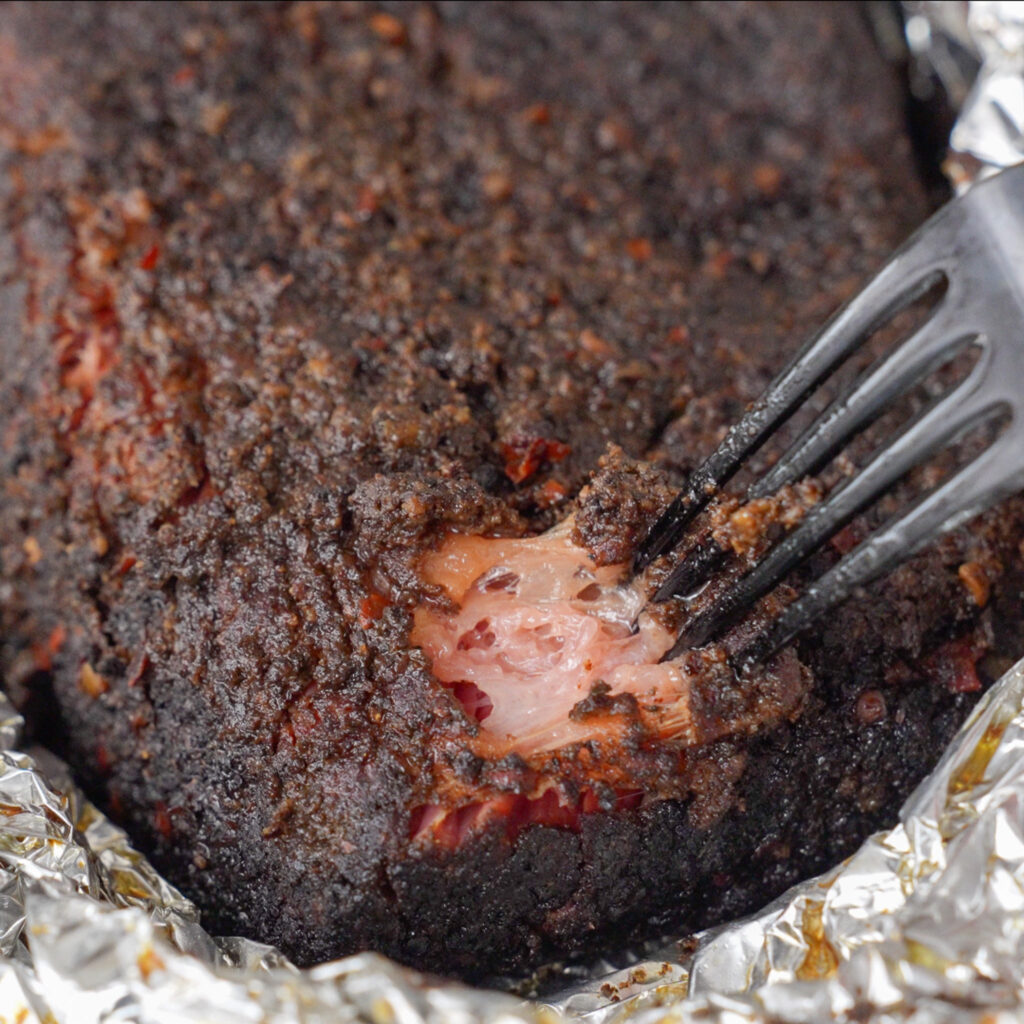
- Pull the pastrami from the oven and rest it. Pull your pastrami from the oven and test to be sure it’s done by using forks to gently try pulling apart the meat. It’s done when the pastrami is tender enough to be juuust pull-apart but not SO tender it falls apart. Before you cut into it, let it rest in the foil for at least 45 minutes.
Recipe Tip
For even better results, allow the meat to come down to room temperature, refrigerate it overnight (or between 8-12 hours), then reheat it in a 350°F (175°C) oven until it reaches an internal temperature of 135°F (55°C).
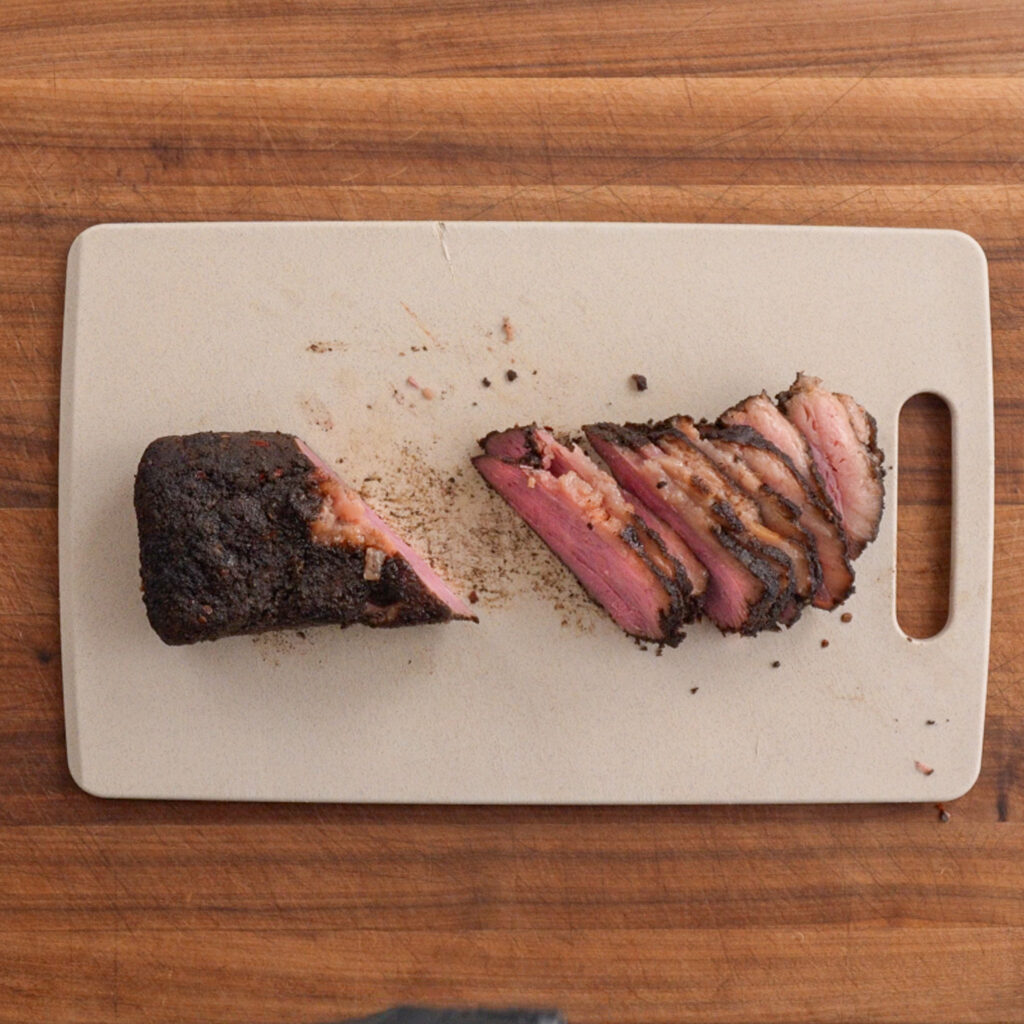
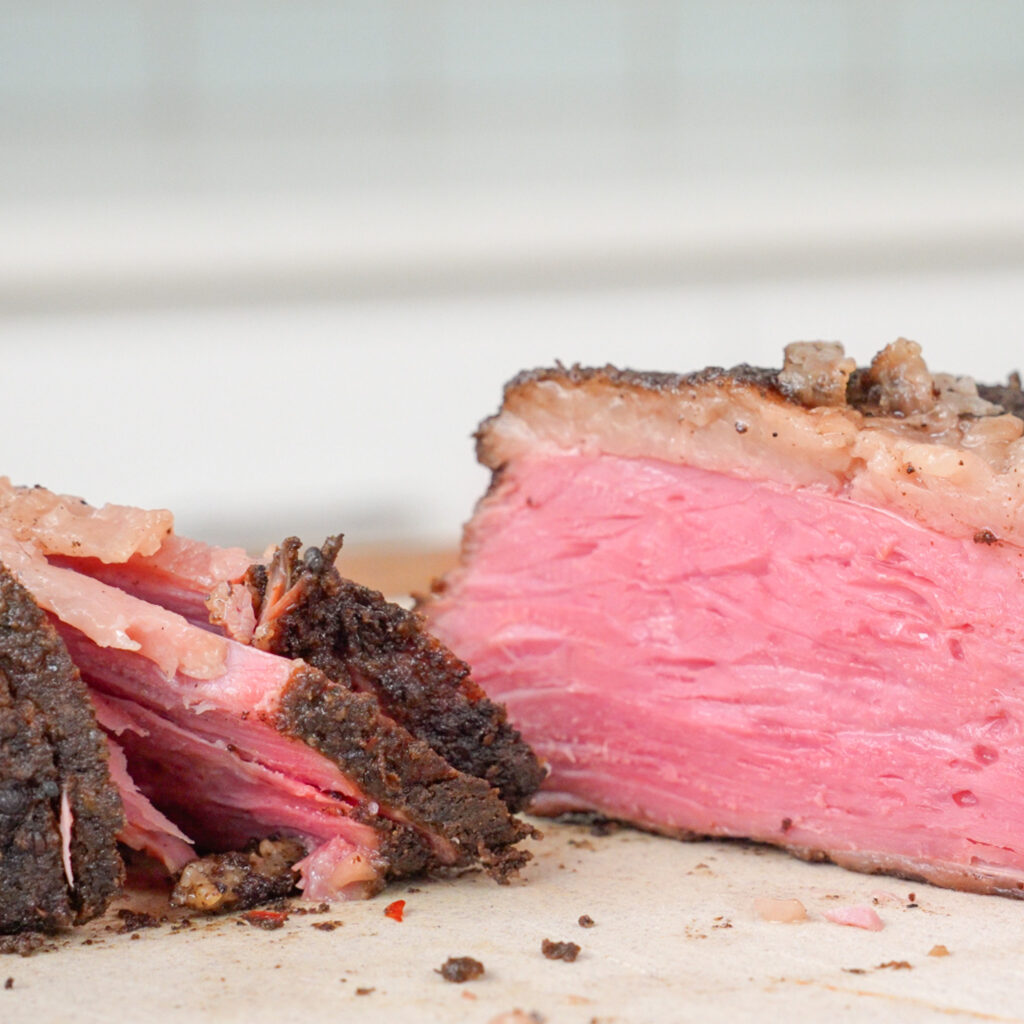
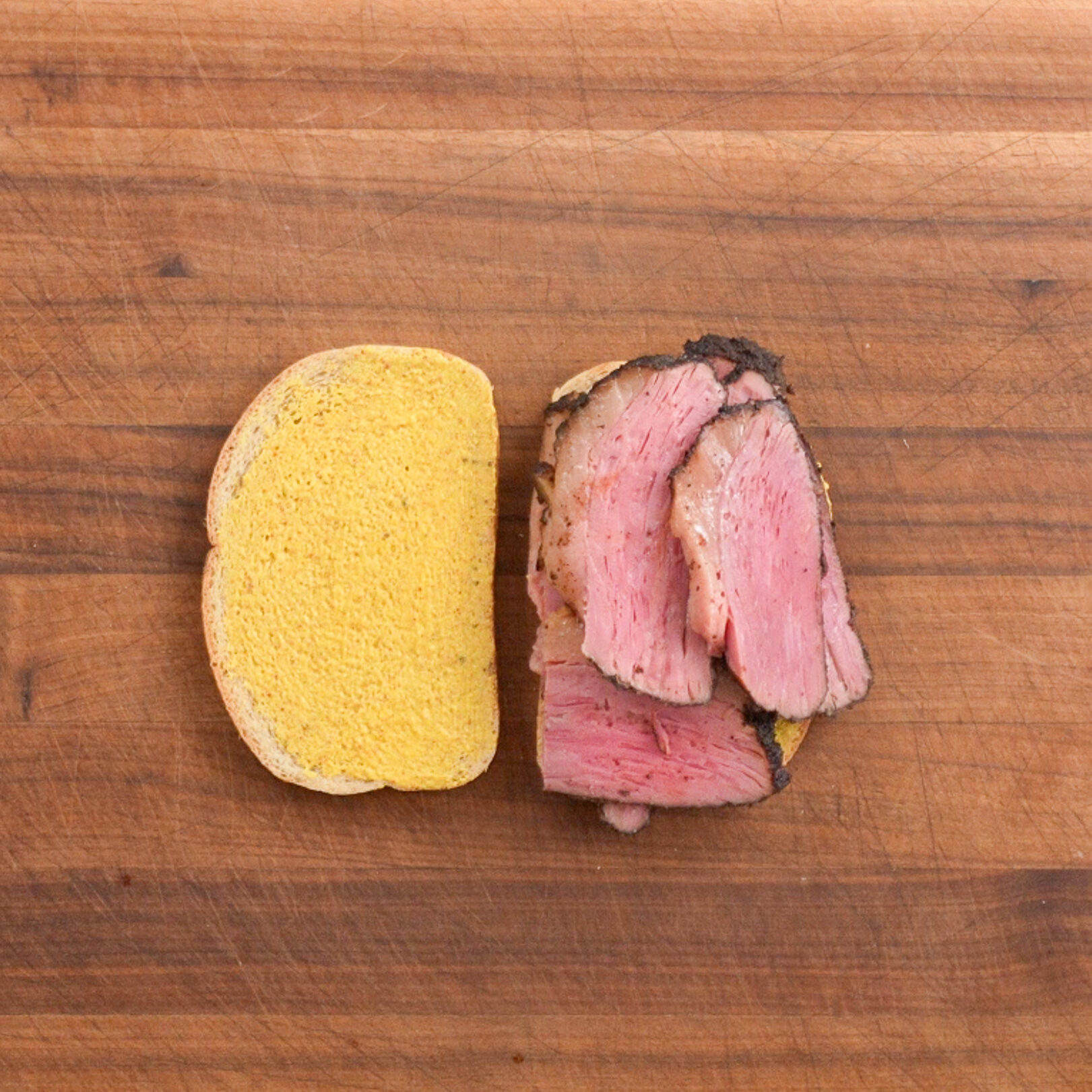
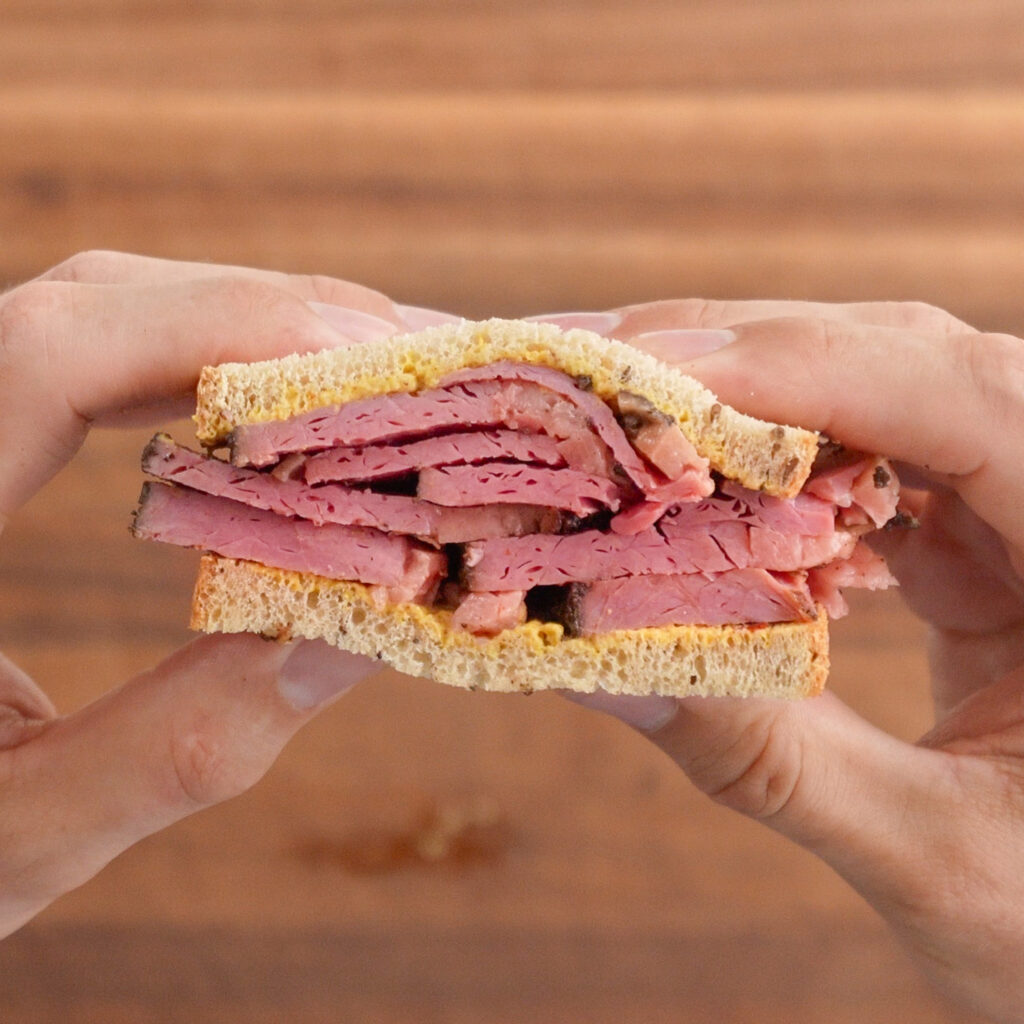
- Cut the pastrami and assemble the sandwich. Find the grain of the meat and cut perpendicular to it. You want slices that are about ¼ inch thick. Spread spicy brown mustard generously on both slices of rye then pile the meat 4-5 slices high. I personally like about a 4 to 1 meat-to-bread ratio. This recipe makes about 4 giant sandwiches.
How do I find the grain of the meat? Look at the flat end of the brisket, you can see the direction the fibers are running. Run your finger along the surface and you can feel them. Cut perpendicular across them, not parallel along side them.
Storage & Make-ahead
Pastrami keeps refrigerated for 5–6 days, sliced or whole. Like most smoked and braised meats, it actually gets better after a day or two as the smoke and spices continue to settle into the meat.
To reheat: Bake in foil in a 350°F (175°C) oven until the internal temp reaches 135°F (57°C). I do not recommend you microwave or pan-fry.
Pin this now to find it later
Pin It
Homemade Pastrami on Rye Sandwich
Ingredients
For the Pastrami
- 5 lb corned beef brisket flat, (I used 2 pieces for my recipe, but 1 larger piece will also work)
- 30 g whole black peppercorns
- 30 g whole coriander seeds
- 30 g granulated sugar
- 5 g garlic powder
- 2 g chili flakes
To Assemble the Sandwich
- Jewish caraway rye bread
- spicy brown mustard
Instructions
- To prep the beef, rinse the corned beef under cold water to remove excess brine. Pat it aggressively with paper towels until completely dry.
- Toast peppercorns and coriander in a dry pan over medium heat for 3–4 minutes until fragrant and lightly smoking. Cool slightly, then grind to a medium-coarse texture (not a powder).
- Mix the toasted spices with the sugar, garlic powder, and chili flakes.
- Press the spice blend firmly into all sides of the meat until fully coated.
- Place meat on a wire rack over a tray. Refrigerate uncovered for 8–24 hours to allow the surface to dry (crucial for smoke adhesion).
- Set up your grill for indirect heat with a smoker box directly on top of the active burner over high heat. Once the smoke starts rolling, reduce heat to med-high, add the pastrami to grill grates on the inactive side of the grill and smoke it for 90 minutes, replacing wood chips every 30 minutes. Keep the lid closed as much as possible and aim to keep grill temperature between 225-250°F (110°C). Remove pastrami when the bark is deep mahogany and dry to the touch.
- Wrap the meat in a double layer of foil and place it on a rack in a roasting pan. Roast at 300°F (150°C) until the internal temperature hits 200–205°F. At that point, continue cooking for another 90–120 minutes until tender and pull-apart, but not fall-apart.
- Let the meat rest in the foil for at least 45 minutes. Slice the pastrami 1/4-inch thick against the grain and serve on a nice jewish rye style bread with plenty of spicy brown mustard on both sides. You want at least a 4 to 1 meat to bread ratio.
 Like this? Leave a comment below!
My Go To Gear For Pastrami
Frequently Asked Questions
Corned beef is brisket that’s been cured in a wet brine with salt and nitrates. Pastrami is corned beef that’s been coated in spices and smoked.
You can, but the setup is different enough that I’d point you toward a video specifically on charcoal smoking for brisket rather than rushing through it here. Maintaining 225–250°F on charcoal requires different fuel management and more attention than gas. A pellet grill or Traeger is actually the easiest of all — just set it and walk away.
Yes, and I have a full walkthrough in my corned beef and cabbage video. Honest answer though: the quality improvement from corning it yourself isn’t large enough to make it a requirement for great pastrami. A store-bought flat covers 90% of the result with a fraction of the effort. If you want to go full from-scratch, great. But don’t feel like you have to.